



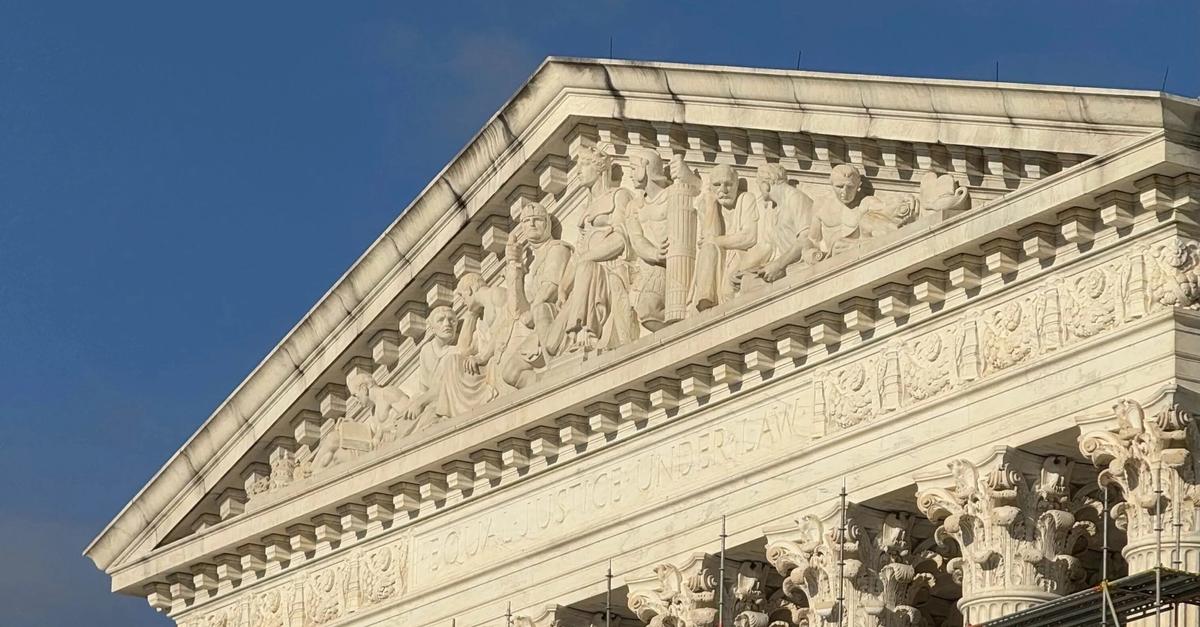


Last year on its interim docket, the court considered multiple disputes over President Donald Trump’s firing of independent agency heads. The justices agreed to hear argument in one of those cases – Trump v. Slaughter, on the president’s effort to remove Rebecca Slaughter from the Federal Trade Commission without cause – as well as in Trump v. Cook, on the president’s effort to remove Lisa Cook, a member of the Federal Reserve’s Board of Governors, for cause. The court cleared the way for several of the firings, including Slaughter’s (but not Cook’s), to take effect while the lawsuits play out.
The court’s eventual rulings in Slaughter and Cook, which are expected by early July, may redefine the limits of executive power and determine the future of independent agencies. And the Slaughter decision will likely also influence how the court responds to the petition for review in Harris v. Bessent, which addresses Trump’s February 2025 firing of Cathy Harris from the Merit Systems Protection Board and which is scheduled to be considered during the justices’ private conference on Thursday.
Harris was appointed to the MSPB, which oversees the federal government’s personnel practices, in 2022 by then-President Joe Biden, and she was set to serve on the board until 2028. But on Feb. 10, 2025, Trump terminated her. Harris filed a federal lawsuit the next day, emphasizing that, under federal law, members of the MSPB can only be removed by the president for “inefficiency, neglect of duty, or malfeasance in office.”
U.S. District Judge Rudolph Contreras sided with Harris, holding that MSPB leaders can only be removed “for cause” and that such removal protections are constitutional. The Trump administration appealed his ruling to the U.S. Court of Appeals for the District of Columbia Circuit, where it was consolidated with a dispute over Trump’s effort to remove Gwynne Wilcox from the National Labor Relations Board. (Like Harris, Wilcox had won the right to return to her job before a federal district court.) A D.C. Circuit panel initially granted the administration’s request to be able to fire Harris and Wilcox while their lawsuits continue, but the full court vacated the panel’s order and denied the government’s request.
In April 2025, the Trump administration came to the Supreme Court on its interim docket and asked the justices to pause the orders allowing Harris and Wilcox to continue working. The court granted that request in late May in a two-page, unsigned order that included a brief discussion of the majority’s views on executive control over federal agencies – views that will likely be more fully fleshed out in the upcoming Slaughter and Cook rulings.
“Because the Constitution vests the executive power in the President … he may remove without cause executive officers who exercise that power on his behalf, subject to narrow exceptions recognized by our precedents,” the order said. “The stay reflects our judgment that the Government is likely to show that both the NLRB and MSPB exercise considerable executive power.” (At the same time, the court noted that the Fed, as “a uniquely structured, quasi-private entity,” is distinct from these other federal agencies, and that the for-cause removal protections for Fed governors should therefore not be viewed through the same lens.)
Justice Elena Kagan dissented from the court’s decision, in an opinion joined by Justices Sonia Sotomayor and Ketanji Brown Jackson, and described the order as “nothing short of extraordinary.” “The President,” Kagan wrote, “has no legal right to relief. Congress, by statute, has protected members of the NLRB and MSPB (like Wilcox and Harris) from Presidential removal except for good cause.”
In December 2025, the D.C. Circuit issued its ruling in Wilcox’s and Harris’ cases. Echoing the Supreme Court’s interim order, the court held that “Congress may restrict the President’s ability to remove principal officers who wield only quasi-legislative or quasi-judicial powers.” However, the court continued, “Congress may not restrict the President’s ability to remove principal officers who wield substantial executive power,” and thus Trump could remove Wilcox and Harris without cause.
In her petition for review, Harris contends that the D.C. Circuit failed to recognize the difference between policymaking agencies, like the FTC, and agencies, like the MSPB, “that do[] not make policy, and instead appl[y] the law to facts in discrete cases.” Those two categories of agencies wield significantly different amounts of executive power, according to the petition, and Congress can offer leaders of agencies that fall into the latter group for-cause removal protections without limiting the president’s authority to control the executive branch. Even if leaders of the MSPB wield some executive power, Harris adds, the appropriate legal remedy is not to invalidate the removal protections, but to adjust the MSPB’s scope of authority.
Harris presents her case to the justices as a natural follow-up to Slaughter that will allow them to determine “whether Congress may enact a for-cause removal statute for a purely ‘adjudicatory body.’” At the very least, she contends, her case should be remanded to the D.C. Circuit for reconsideration once the Slaughter ruling is released.
In the government’s reply to Harris’ petition, U.S. Solicitor General D. John Sauer counters that the D.C. Circuit’s decision was correct because the MSPB “plainly exercises executive power” and further argues that Harris’ suggested exception for “adjudicatory bodies” “is flawed in principle and contrary to precedent.”
The justices are scheduled to consider Harris v. Bessent for the first time during Thursday’s conference, but they will likely wait until the Slaughter ruling is released to take action on it.





