


- News
- As Volkswagen puts 100 sheep to work at its plant in Europe, director Marzena Pillich-Gronska says: Sheep project demonstrates that modern industry can …
As Volkswagen puts 100 sheep to work at its plant in Europe, director Marzena Pillich-Gronska says: Sheep project demonstrates that modern industry can …
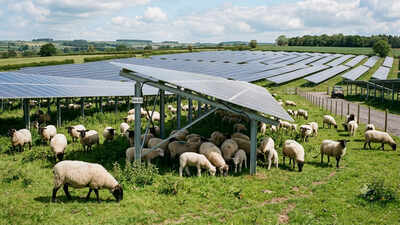

Volkswagen replaced lawnmowers with 100 sheep at its Poland solar farm
Volkswagen has traded lawnmowers for a flock of 100 sheep at its massive solar farm in Poland. According to a report, the automotive giant is using the animals to keep the grass short around the facility while working on a major scientific study on how heavy industry and agriculture can work together. The flock has been deployed beneath more than 31,000 solar panels that power Volkswagen’s manufacturing plant in Poznań, where the company builds vehicles like the VW e-Crafter commercial van.The Electrik reported that beyond saving on landscaping bills, the initiative is being seen as an eco-friendly blueprint for the future of clean energy management.“Today, the photovoltaic farm delivers much more than green electricity. It has also become a place that supports biodiversity, local agriculture, and scientific research. The sheep grazing project demonstrates that modern industry can work in harmony with nature,” said Marzena Pillich-Grońska, director of Volkswagen Poznań.
Agrivoltaics
: Powering production with sheep grazing
The 18.3-megawatt (MW) solar installation was constructed and is currently managed by Berlin-based green firm Quanta Energy. On peak sunny days, the array generates enough electricity to meet 100% of the Volkswagen factory’s power demands. Over the course of an entire year, it covers roughly 25% of the plant’s total energy consumption.By introducing livestock to manage the landscape, Volkswagen is testing agrivoltaics, which is a growing environmental movement that combines solar energy generation with active agriculture on the exact same piece of land.While employing sheep to graze around solar panels is a growing trend in the US and the UK, Volkswagen notes that this Polish initiative stands out as one of Europe’s most advanced industrial agrivoltaics projects due to its heavy integration with academic science.
What is the science behind the herd
The sheep will live at the solar farm through the fall season under the protection of professional breeders, the report said. By eating the grass down naturally, the flock completely eliminates the need for gas-powered mechanical mowers, simultaneously cutting maintenance costs and reducing corporate carbon emissions. Additionally, natural grazing avoids the risk of flying debris from traditional mowers damaging the sensitive panels. To study the long-term impacts of the program, Volkswagen has partnered with the Poznań University of Life Sciences from where a team of researchers will track the site to evaluate how the presence of the solar infrastructure impacts the animals and the land.“Agrivoltaics allows us to look at photovoltaic farms from a much broader perspective than energy generation alone,” explained Dr. Joanna Składanowska-Baryza from the university’s Department of Animal Breeding.The university research team is analysing whether the expansive shade created by thousands of solar panels helps reduce dangerous heat stress in grazing animals; the overall impact of the herd on local soil quality, microclimates and regional vegetation; and thirdly, how the setup creates new, thriving habitats for local insects and native wildlife.According to flock owner Justyna Nowak-Gajek, the sheep have adapted to their industrial home: “We can clearly see that the flock feels safe – the sheep naturally split into smaller groups and graze calmly in different parts of the solar farm. This is the best evidence that they have adapted well to these conditions, because a flock that feels threatened always stays together.”
Latest Mobiles
Photostories



