

Bridging the gap: empowering Veterinary Paraprofessionals through blended learning in sub-Saharan Africa
07/05/2025
In sub-Saharan Africa, the shortage of veterinarians has left a critical gap in animal health services, particularly for rural smallholders and pastoralist farmers. Structural adjustments have further limited government-provided livestock health services, leaving many communities underserved. Veterinary paraprofessionals (VPPs) play a vital role in filling this gap, yet they face challenges such as limited training opportunities, remote work environments, and regulatory hurdles. To address these issues, FAO piloted an innovative blended learning training programme – Growing your business through preventive livestock healthcare in Nigeria, Uganda, and South Africa. This initiative equipped VPPs with the skills needed to deliver preventive care and build sustainable businesses.
Blended learning, combining online and in-person training, emerged as a highly effective model for VPPs. Hosted by the FAO Virtual Learning Centers (VLCs) platform, the programme included self-paced online modules, a live discussion forum, assignments and live online training sessions through which trainees developed a sound knowledge base on business skills and preventive livestock healthcare. Short workshops were then used to apply this knowledge in practical ways through field visits and group activities. Workshops were delivered by local training partners, and work to enhance the capacity of these local institutes contributes to the sustainability of the approach. The online components were optimized for smartphones, low-bandwidth environments, and offline access to ensure accessibility even in rural areas. By integrating digital platforms, such as WhatsApp, for secondary communication with the FAO Virtual Learning Centers, the programme fostered peer-to-peer support and continuous engagement. The blended approach shortened the time that VPPs needed to spend in face-to-face training, allowing participants to balance learning with business and family commitments. This is especially important for private sector VPPs who often cannot leave their businesses for long. This flexibility was also particularly beneficial for women VPPs, who often face mobility constraints and caregiving responsibilities. Combining online and face-to-face training also significantly reduces training costs incurred during face-to-face training, making the blended model particularly cost-effective and sustainable.
The blended approach achieved a remarkable 98 percent completion rate. Trainees praised the ability to study at their own pace and the practicality of the workshops, which reinforced theoretical knowledge with hands-on skills. Challenges such as intermittent internet access and technological barriers were mitigated through downloadable content, data allowances, and local support networks. The programme also addressed gender disparities by providing childcare during workshops and family welcome packages to secure household support. These tailored strategies ensured inclusivity and maximized participation across diverse contexts.
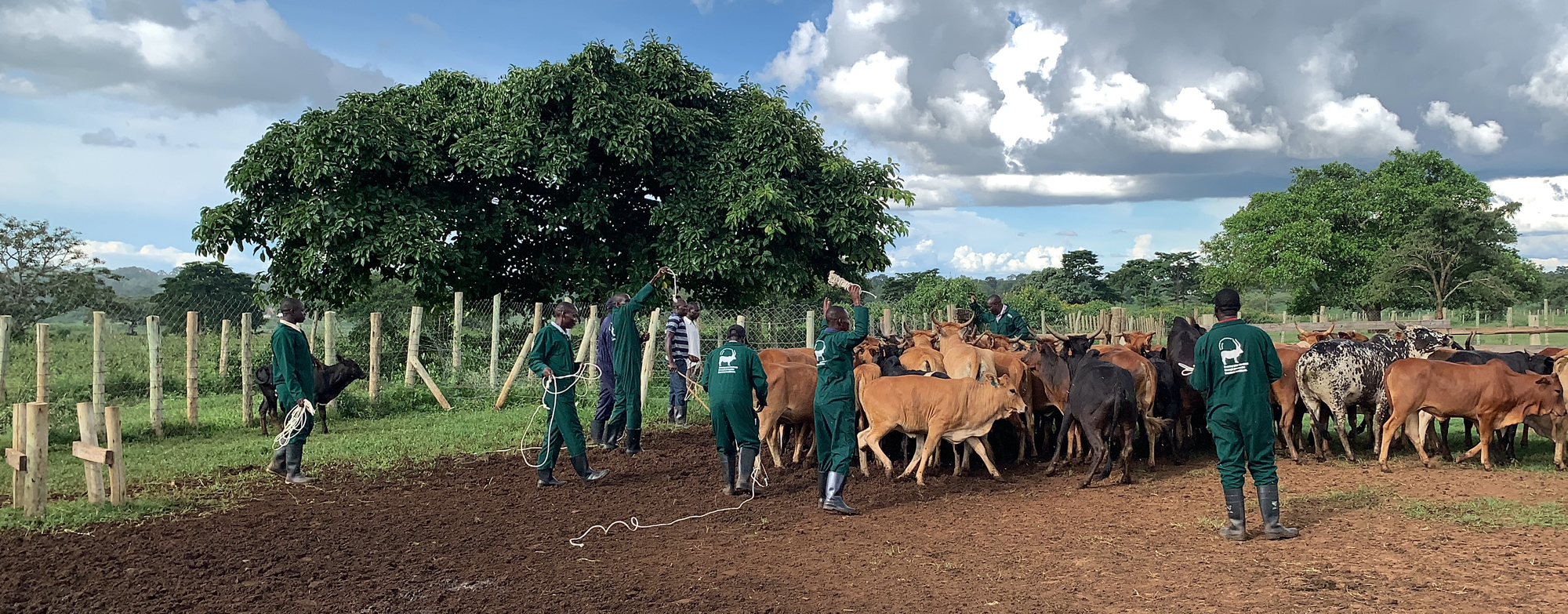
Veterinary paraprofessionals shared transformative experiences from the training. Many highlighted the confidence gained in animal handling and business management, skills previously lacking in their formal education. For instance, women VPPs reported overcoming biases by demonstrating competence in restraining large animals, while others expanded their client bases through improved communication and preventive care practices. Mentorship schemes further strengthened professional networks, with some VPPs forming business partnerships with their mentors. Trainees also valued the cross-country connections, which fostered knowledge exchange and a sense of community.
The impact of this approach was evident in the increased incomes and enhanced service delivery reported by VPPs. Income of the trained VPPs rose by 53 percent in both Nigeria and Uganda, while the number of clients rose by even more. For women participants in particular, 100 percent of women trainees said their income had risen since the training. Farmers benefited from more accessible and prevention-focused care, leading to healthier livestock and higher productivity. The training also improved relationships between VPPs and veterinarians, reducing professional rivalries and enhancing collaboration. These outcomes underscore the potential of blended learning to transform animal health services in underserved regions.
The success of this pilot demonstrates the potential of blended learning initiatives to enhance the capacities of VPPs across sub-Saharan Africa. Blended learning approaches are also of value for other animal health professionals and have demonstrated value in delivering engaging training in a cost-effective and sustainable way. Scaling up requires addressing systemic barriers, such as internet access and gender disparities, while leveraging local partnerships for sustainability. Policymakers, training institutions, and donors should consider investing in such programs as part of efforts to develop a resilient animal health workforce. By empowering VPPs, we can bridge the service gap, improve livelihoods for smallscale farmers. The time to act is now, let’s grow this model for a healthier future.
Find out more
Lessons learnt so far
- Delivery of blended learning models for veterinary paraprofessionals
- Mentorship model for veterinary paraprofessionals
- Veterinary paraprofessional training and business environment needs assessment
- Empowering women veterinary paraprofessionals through gender-responsive training
- Strengthening private sector Veterinary Paraprofessionals – Lessons from FAO’s Development Programme
Hear from the veterinary paraprofessionals
Nigeria | South Africa

