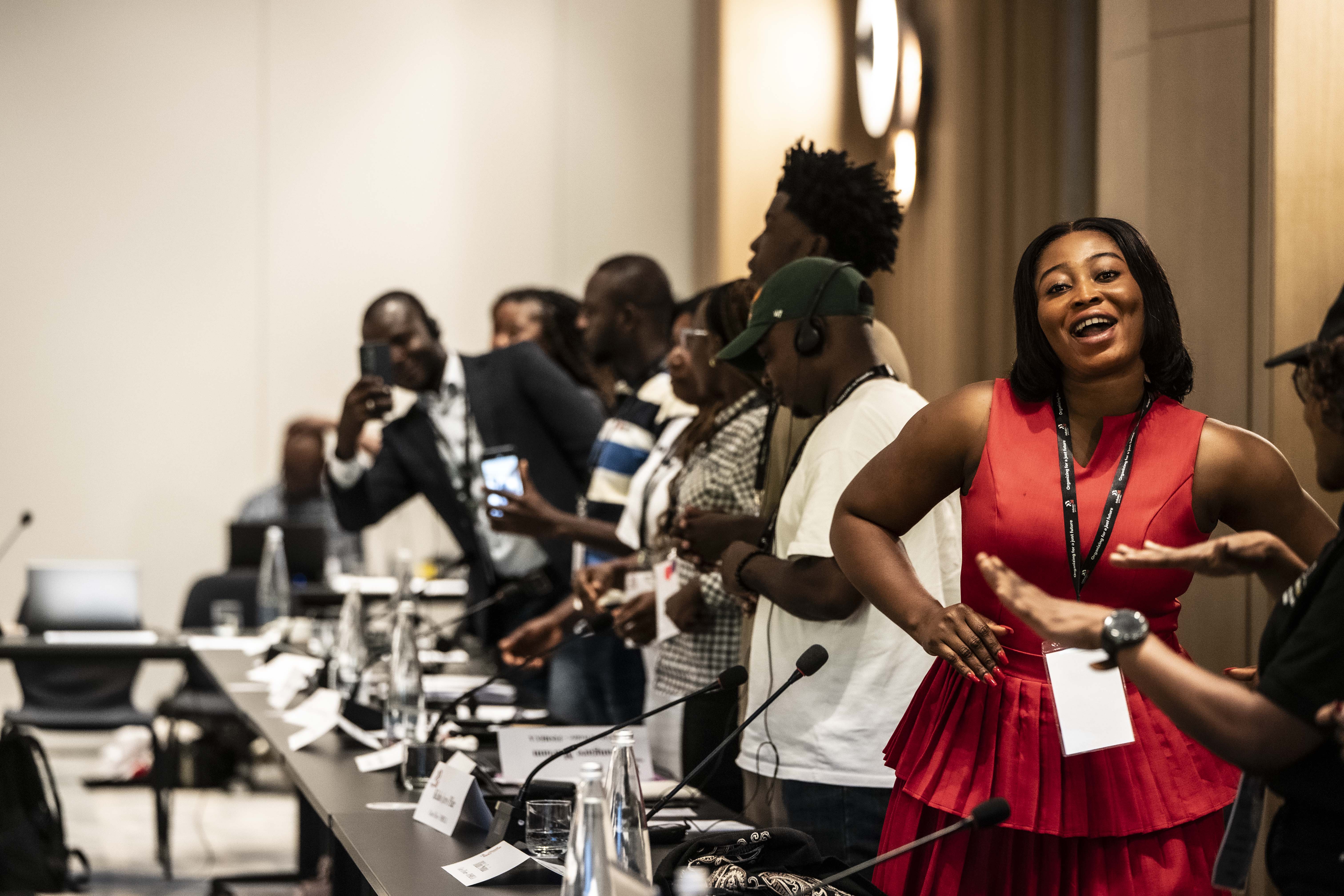
6 October, 2026Can a 22-year-old contract worker stop a dangerous job when production is behind, without fearing for their next contract? Young mining and energy workers meeting in Abidjan, Ivory Coast, on 29 September said too often the answer is no, and set out what needs to change.
The global youth in mining and energy conference, organized by IndustriALL Global Union, brought young trade unionists together to agree priorities on decent work, health and safety, skills and ending gender-based violence and harassment.
Across every session, one theme kept returning: young workers are the least able to speak up, and the most likely to pay the price.
The reality test
Dr Vincent Kouamé, a medical doctor, put the question to participants directly. His scenario: a young contract worker on their third day, working beside a crusher in intense heat, with no check on their skills or protective equipment. They feel dizzy, but production is behind. Their family depends on them.
Young workers aged 15 to 24 are 40 per cent more likely to suffer non-fatal accidents than workers over 25. But Kouamé said the problem is not youth. It is a system that puts newcomers in danger and leaves them afraid to refuse.
“A right that a worker is afraid to use is not an effective right,” he said.
He called for non-retaliation clauses, safe reporting channels and a 90-day passport for new workers, so no young worker carries out critical tasks unsupervised until they have shown they can do so safely.
“No young worker should gain experience at the cost of an injury.”
Insecure contracts, silent workers
Other speakers showed how insecure work takes away young workers’ voice.
IndustriALL mining and energy director Emmanuel Adjei Danso said fixed-term contracts and subcontracting have become “the new normal”, making it increasingly difficult to organize and bargain collectively along supply chains.
IndustriALL assistant general secretary Christina Olivier warned that apprenticeships too often become araining and with nothing waiting for them at the end
“Success should be measured by how many secure, decent jobs are provided. The proof is in the pudding,” she said.
No safety net, no choice
For many young people, Dr Mbuso Moyo of the University of the Witwatersrand said, refusing dangerous workis simply not an option.
Africa has around 304 million working young people, but 90 per cent are in informal, unregulated jobs. Without social safety nets, unemployment is a luxury they cannot afford, so they accept dangerous, low-paid work just to survive.
Moyo described how multinational companies use labour brokers as a buffer, capturing the profits while young workers at the bottom carry the risk. In artisanal mining, young people are trapped in debt to middlemen. On digital platforms, workers can be cut off by an algorithm with no right of appeal.
Even in formal mining, he said, management-controlled “yellow unions” can shut independent young voices out.
With Africa supplying much of the world’s critical minerals for the energy transition, he asked why so many of its young workers remain in poverty: “Why do we allow this to happen?”
When power cancels consent
In the afternoon, Amanda Odoi of Lund University Centre for Sustainability Studies explained ILO Convention 190 (C190) on violence and harassment in the world of work.

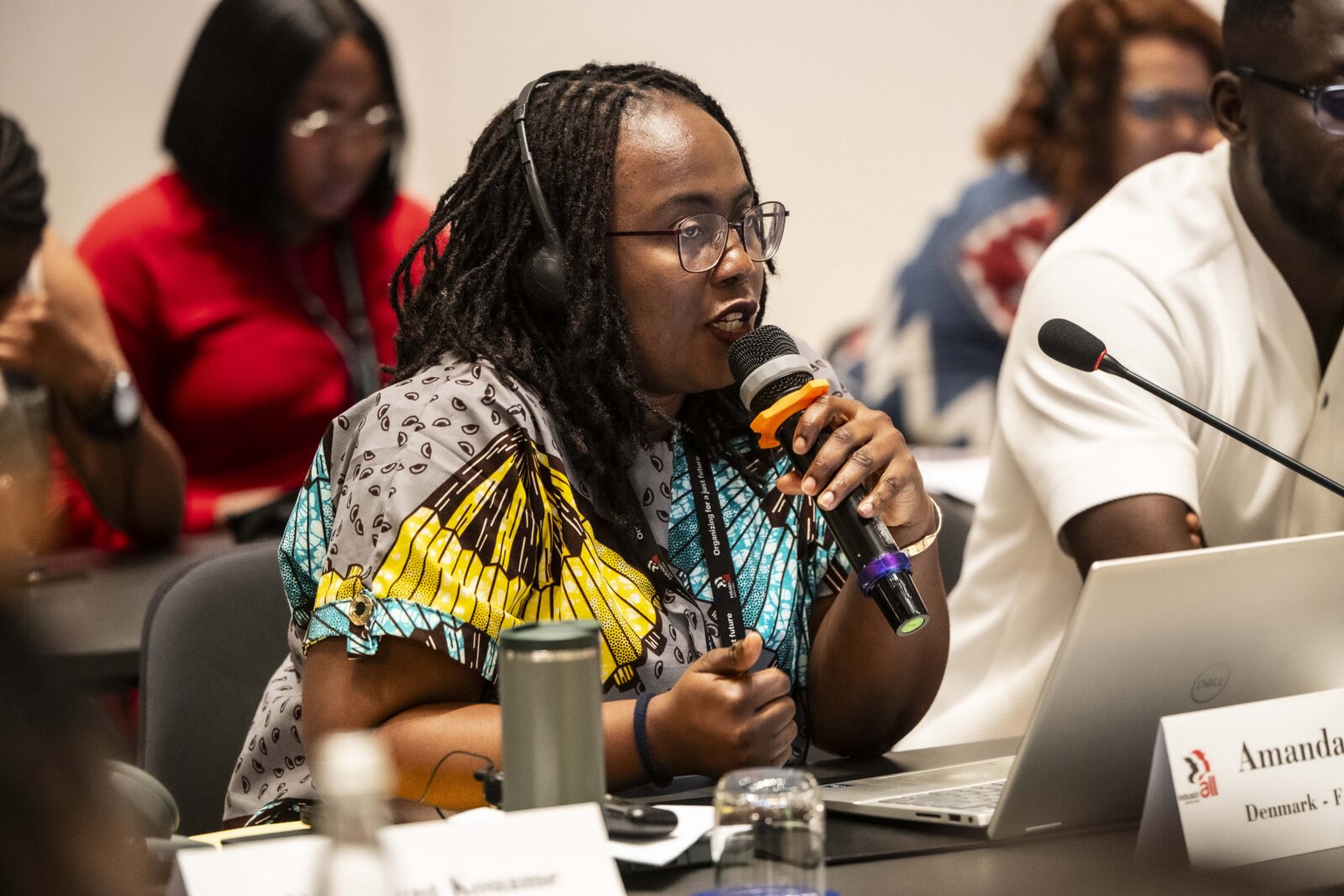
She showed how power based on age, status and position can cancel out consent, leaving young workers and apprentices particularly exposed to sexual harassment. Fear of retaliation, stigma and self-doubt stop many from reporting.
Odoi called on unions to use C190 to negotiate protections in collective agreements, train representatives to support survivors and defend anyone who faces backlash for speaking out.
In group work, participants shared examples of sexual harassment in their workplaces and called for policies on gender-based violence and harassment in every workplace.
Breaking the silence
Young delegates did not hold back in the discussions.
They spoke openly about mental health and the stigma attached to it, noting that workers who use support services are often looked down upon. They called for mental health to be treated as a health and safety issue like any other.
Delegates said risk assessments exist on paper, but unions must make sure companies carry them out properly and that workers are involved. One delegate pointed out that black work uniforms worsen heat stress, a simple problem with a simple fix, if workers are heard.
Participants also turned the spotlight on their own organizations. Unions are employers too, they said, and must lead by example. Odoi made the same point, urging unions to tackle masculinity culture within their own ranks to gain the moral authority to demand change from employers.

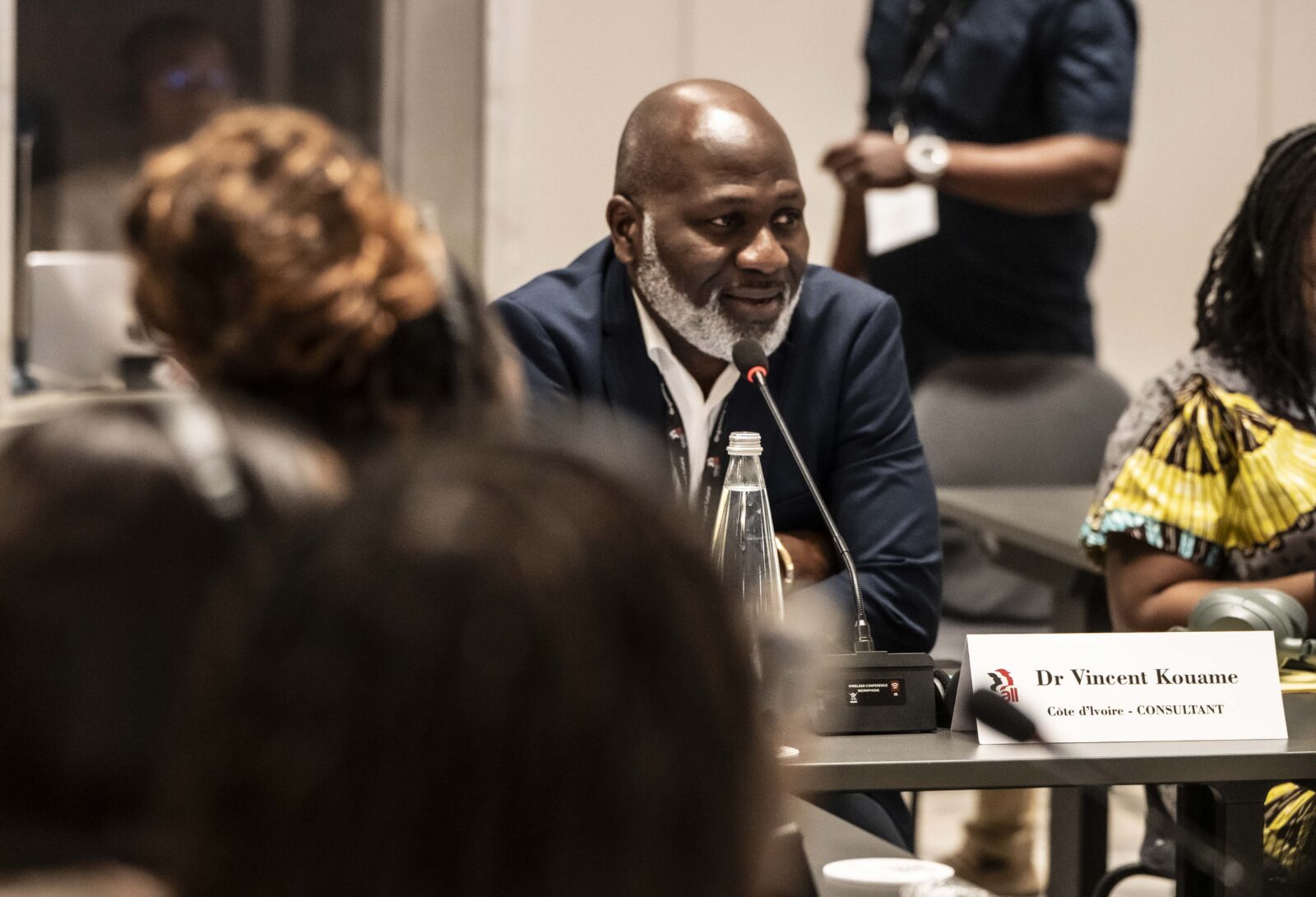
Kouamé summed up what success would look like:
“The day the youngest worker in a team can stop work because of an obvious danger and management congratulates them instead of threatening them, we will have changed our safety culture.”