

Judiciary
Could courts run out of options if federal officials defy court orders?

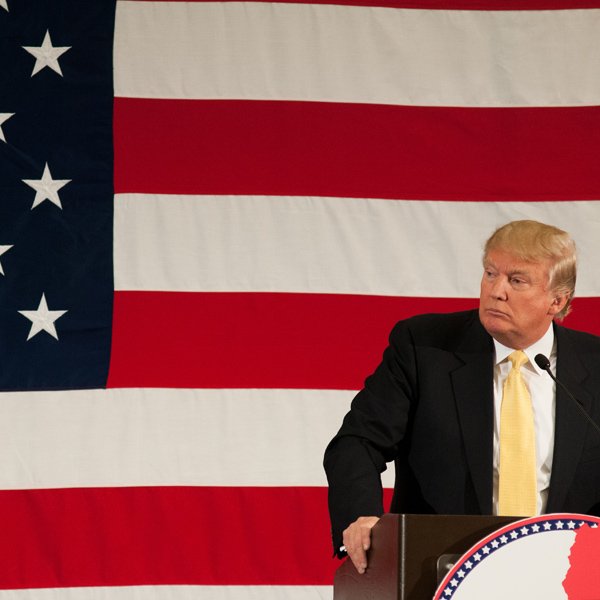
The question was considered during President Donald Trump’s first term in office: What would happen if his administration ignored a court order? (Photo from Shutterstock)
The question was considered during President Donald Trump’s first term in office: What would happen if his administration ignored a court order? Now, news articles are considering the issue once again, and commentators are using the term “constitutional crisis” to describe worst-case scenarios.
One federal judge in Rhode Island already ruled Feb. 10 that the Trump administration partly failed to comply with a temporary restraining order to lift a freeze on some federal funds.
Then on Feb. 19, plaintiffs in another case sought to hold several administration officials in contempt for alleged “brazen defiance” of a Washington, D.C., federal judge’s TRO requiring continued funding of many foreign-aid programs.
How can courts respond? Among those considering the enforcement issue are Trevor W. Morrison and Richard H. Pildes, professors at the New York University School of Law, in a guest essay for the New York Times, Bloomberg Law, NPR and the Brennan Center for Justice at the NYU School of Law.
Court orders are usually directed at subordinate officials, rather than a president. If the officials don’t comply, “the courts would be likely to issue further orders, with increasingly strict and specific requirements, such as a due date,” according to the guest essay.
Then there are these additional options, according to the articles:
• Sanction the lawyers. Courts can sanction lawyers who help clients deliberately defy a court order, who file court documents for an improper purpose or who make misrepresentations to a court.
• Order government officials to answer questions in depositions.
• Hold administration officials in civil contempt of court. The officials and their agencies could be fined daily until they comply with a court order. Judges could also impose sanctions affecting the underlying litigation. And courts could require imprisonment until an order is followed. The problem is that the U.S. Marshals Service would likely be responsible for imprisoning the official—and the service is overseen by the Department of Justice, which could order noncompliance.
• Hold officials in criminal contempt and refer the issue to a U.S. attorney for prosecution. Trump could direct the federal prosecutor to drop the case, however. If a judge was to instead appoint private counsel to prosecute, Trump could issue a pardon after a conviction.
“Executive branch defiance of the courts is not a simple, one-time-only decision,” Morrison and Pildes wrote in the New York Times guest essay.
Continued defiance could mean expanding the circle of federal officials who violate the law, including U.S. marshals. The confrontation could eventually reach the U.S. Supreme Court.
“For an official to stand in continued, open defiance of a court order, he might have to defy the entire judicial system,” Morrison and Pildes wrote. “At that point, there is no question we would be in a constitutional crisis, and the courts could well run out of options.”
Write a letter to the editor, share a story tip or update, or report an error.

