

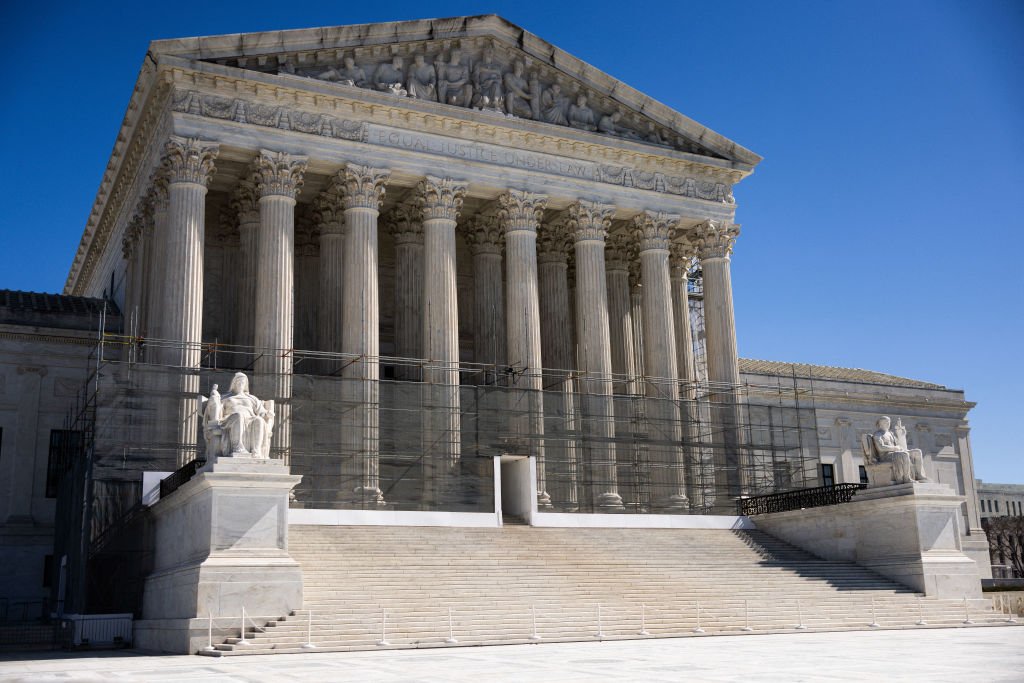
Trump v. Slaughter is among the most important tests to date of the Supreme Court’s view of the “unitary executive theory” – the idea that control over the entire executive branch is vested in the president. Specifically, the case asks whether the president can fire leaders of the Federal Trade Commission for any reason. More broadly, though, it speaks to the separation of powers: Can Congress create independent agencies whose heads are largely insulated from presidential control, or does the president’s inherent authority include the power to dismiss all executive-branch agency heads at will?
After the oral argument, it appeared that there are six votes for the presidency, though it’s unclear how far-reaching the decision will be. A narrow opinion could simply permit the president to fire the five commissioners of the FTC; a sweeping opinion could overturn a nearly century-old precedent that allows Congress to insulate some officials from presidential dismissal or even call into question the constitutionality of all independent agencies.
Because the six conservative justices will likely control the case’s outcome, court-watchers understandably focused on this bloc’s understanding of executive power. But the most interesting – and potentially the most consequential – line of questioning came from Justice Elena Kagan, generally a defender of independent agencies. Unexpectedly, she implied a fascinating unitary legislative theory that could dramatically restrict the administrative state.
***
During the oral argument in Slaughter, the court’s three progressives seemed committed to upholding Congress’ right to create independent agencies with multi-member boards (as is the case with the FTC). Justice Sonia Sotomayor primarily focused on the United States’ history of such entities and the imprudence of overturning the 90-year-old Humphrey’s Executor v. United States, which permits Congress to enact laws limiting the president’s power to fire the heads of some agencies. But the conservative bloc was unmoved by her claims that siding with the presidency would “destroy the structure of government.”
For her part, Justice Ketanji Brown Jackson argued that Article I of the Constitution gives Congress the authority to create and shape federal agencies, including to decide who gets to dismiss agency leaders. The conservative bloc seemed to agree with the solicitor general’s reply: Yes, Congress has significant power, but it stops at the president’s power to control the executive branch.
Kagan took a different tack. Because the ascendant unitary executive theory holds that the president must supervise executive functions, she suggested that Congress should be able to supervise legislative functions. What followed was a two-step argument.
First, Kagan asserted that rulemaking is legislative in nature (as discussed in greater detail below). She argued that executive branch agencies “do a lot of legislating.” While noting that agencies are often given legislative and adjudicatory functions, she pointed directly to rulemaking. Though the government claims those powers are executive, according to Kagan, “they’re legislative functions. That’s what rulemaking is.” Putting all agencies under the complete control of the president would thus hand the White House “an incredible amount of legislative/rulemaking power.”
Second, since Congress gave gobs of rulemaking power to independent agencies, Congress – to supervise that legislative power – ensured those agencies’ leaders were not simply beholden to the president. This “bargain” as she called it – delegating legislative authority in exchange for congressional oversight of these agencies – has been in operation for generations.
Kagan’s primary point was that Congress created powerful independent agencies only because of the bargain. If the court now requires all agency heads to be at-will employees of the president, the deal is broken. Kagan explained, “If you take away a half of this bargain, you end up with just massive uncontrolled, unchecked power in the hands of the President.” Congress, she implied, wouldn’t have given away such legislative power if that power was to be entirely controlled by the White House.
The court’s conservative majority seemed ready to declare the second part of Kagan’s argument unconstitutional. Namely, branches can’t bargain away their core powers and obligations; that’s a violation of the separation of powers.
But what if a majority of the court were to agree with Kagan’s first point, that rulemaking is actually a legislative function? That might mean that it must belong to Congress – not to the executive and its agencies. In other words, Kagan may have inadvertently called into question much of the power of the administrative state.
***
First, what is rulemaking? In simplest terms, it’s the way an executive agency (such as the FTC) fleshes out statutory language so it can implement a law. Rules must be consistent with the law; they only spell out how the agency will do what the law directs. Congress gives executive-branch bodies rulemaking authority explicitly in statutes (providing, for example, that an agency’s “secretary may/shall issue rules”). There is even a federal law (the Administrative Procedure Act) that establishes the processes for rulemaking.
Because regulations and the administrative state are criticized so frequently, you might think rulemaking is mischievous at best, illegitimate at worst. The process can be caricatured as backroom bureaucratic scheming to subvert the will of Congress and empower Beltway technocrats. But agencies have issued regulations for eons, and they are widely considered necessary, even by congressional leaders. Laws typically use general, sometimes vague, language. Members of Congress can’t know everything about everything, and conditions on the ground can change (and conditions can change in different ways in different places). So Congress avoids providing too many details, leaving the particulars to the agencies.
For instance, if Congress wants to hold public schools accountable for student learning, a law might say, “The State shall ensure public schools assess students in basic subjects during elementary, middle, and high school.” But for that to be implemented, many questions must be answered: Which state agency is in charge? What counts as an assessment? Who creates and administers the assessments? What are basic subjects? Do you assess once in the elementary grades or in every elementary grade? Rulemaking provides those details. And agencies are entrusted with that authority because they focus on such matters full time and develop experience and expertise. In this case, they understand psychometrics, appreciate the difference between state education boards and state superintendents, understand state-level school-accountability systems, and so forth.
But more broadly, rules tell everyone inside the agency how to implement the law consistently. Rules also tell those who will be affected by the statute what to expect from administrators. Rules enable courts to determine whether bureaucrats are violating the law or implementing its provisions arbitrarily or capriciously. And as other statutes change and as conditions evolve, rulemaking enables executive-branch agencies to harmonize laws and address real-world developments.
For all of these reasons, rulemaking has generally been understood as incidental to implementation; agencies need rulemaking authority to do their jobs. Indeed, during his opening statement in Slaughter, the solicitor general listed rulemaking as among the “quintessential executive powers.” Throughout the oral argument, he denied that rulemaking is legislative and repeated that the court has confirmed that interpretation.
Nevertheless, Kagan’s point is well taken. In practice, rulemaking feels like lawmaking. Rules, once properly promulgated, have the force of law. When those implementing a policy (or those contesting a policy’s implementation) cite official language, they are often pointing to rules, not the statute itself. And rules drive huge areas of policy – something that should be controlled by the people’s representatives in legislatures.
If we’re going to guard the unique powers of each branch, perhaps we need to define rulemaking as legislative and therefore reserve it for Congress. After all, the very first words of Article I of the Constitution are, “All legislative Powers herein granted shall be vested in a Congress of the United States.” All legislative powers.
So how do we get out of Kagan’s bind? How do we continue to permit agency rulemaking if it is actually legislative in nature?
***
One answer is the one Kagan, Sotomayor, and Jackson would probably prefer: We concede that rulemaking is for all intents and purposes legislative, but we all stop being so precious about the strict separation of legislative, executive, and judicial functions into the legislative, executive, and judicial branches. Real-life governing requires some flexibility and gray areas. So, in the name of prudence, we allow some independent agencies, and we tolerate the delegation of rulemaking to the executive branch. This, of course, would displease those who believe in a strict separation of powers and that the courts must guard the high walls between the branches.
A second answer is to reject Kagan’s position altogether. We simply say that regulating is wholly executive, not legislative, and therefore poses no conceptual or practical problem for the separation of powers. This, however, ignores the lawmaking-ness of rulemaking, described above. And that would continue to allow congressional authority to leak into the executive branch and further erode America’s first branch.
A third option is to concede that rulemaking can veer into legislating while holding that certain rulemaking is inherently executive. The task then is to draw a clearer line. But how?
We should start by recognizing that, for generations, Congress and the courts have stopped rulemaking from becoming too legislative. For example, when Congress doesn’t want an agency to make policy in a certain area, it simply prohibits particular rulemaking via statutory language. Additionally, courts can strike down rules that have inconsistent statutory language. There are also several doctrines the court has developed to prevent the executive branch from assuming too much of Congress’ power. The nondelegation doctrine, for example, prohibits Congress from handing the power to legislate to agencies. Courts also now use what is known as the “major questions doctrine” to strike down rules by agencies on major issues without express permission from Congress to implement such rules.
But Kagan still called rulemaking “legislative” despite these limits. And many others would like to see agency policymaking constrained. So where does this leave us?
During oral argument, Justice Neil Gorsuch suggested reviving the “intelligible principle doctrine,” an approach dormant since the New Deal. This required Congress – in statutes permitting rulemaking – to set boundaries on executive discretion by requiring the legislature to clearly articulate the policy that the agency would then carry out through its administrative procedures.
A different, and admittedly more radical, approach would be to expand the major questions doctrine to include minor policy questions. That is, Congress must decide all major and minor policy matters; only “incidental” or “de minimus” policy choices could be made by an agency. This would require Congress to address more policy matters with more specificity. In other words, Congress couldn’t leave so many details up to agencies. Under such an approach, the court would say that regulations are automatically legislative (and therefore unconstitutional) once they stray from a few narrow categories. (Permissible rules might only include such things as defining terms, clarifying statutory text, establishing processes, setting out grant-competition criteria, and similarly ministerial activities.)
I suspect Kagan would bristle at the idea that her line of questioning might lead to the diminution of agency power. Yet as she herself noted in the Slaughter oral argument, general principles have implications that courts cannot ignore. If rulemaking is legislative, that has consequences.
And many, on both the left and right, might ultimately cheer such consequences. The court’s seeming embrace of a unitary executive theory demands presidential supervision of the entire executive branch, but a healthy separation of powers requires limits on the amount of power the president supervises. Perhaps the clearest way to do that is through a unitary legislative theory that keeps all legislative power, including all policymaking regulation, out of the president’s hands.
Posted in Court Analysis, Featured
Cases: Trump v. Slaughter (Independent Agencies)
Recommended Citation:
Andy Smarick,
Did Justice Kagan debilitate the administrative state?,
SCOTUSblog (Jan. 6, 2026, 9:30 AM),
https://www.scotusblog.com/2026/01/did-justice-kagan-debilitate-the-administrative-state/
