


When I first heard about game farms on the Garden Route, five of them near Mossel Bay and just a hop and skip from the George airport, I admit I was sceptical.
The Garden Route is famous for its beaches, forests, lagoons and golf courses, but surely a game reserve this close to suburbia would be a pale imitation of the real thing, I thought.
Well, nothing prepared me for the surprise that is the Garden Route Safari Camp.
Situated on the Brandwacht Reserve, only 30 minutes from Mossel Bay, it feels like another world here right in the bush.
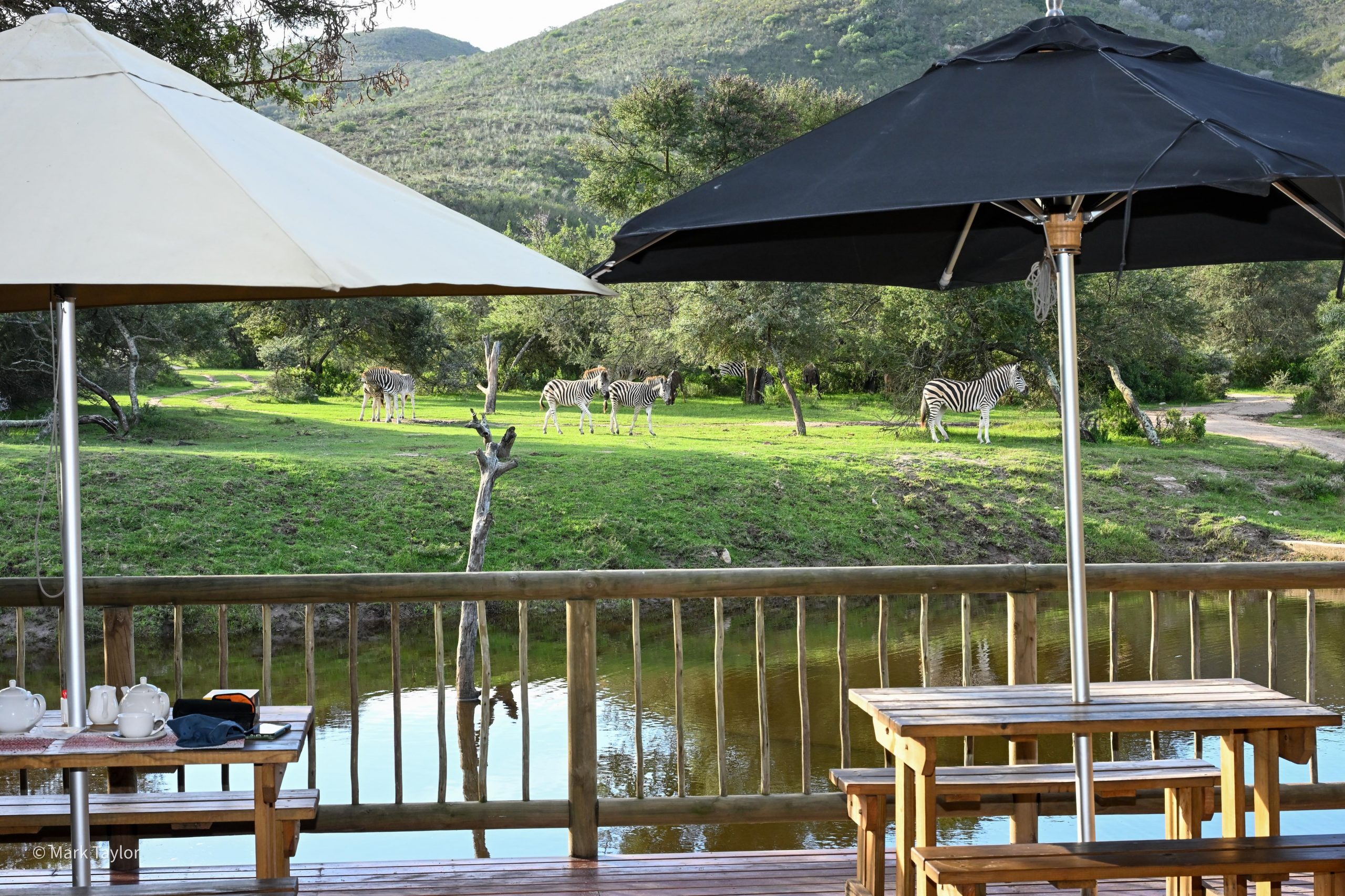
You can be sipping morning coffee while watching animals gather at a watering hole, spend the morning on safari and still have sand between your toes at the beach that afternoon.
We met a group of Germans who had cottoned on to this winning formula.

They were staying for an entire week combining daily game drives and all the luxuries of a bush safari with sightseeing around Mossel Bay, experiencing the best of both worlds.
Soon after you leave Mossel Bay town on the R328 towards Ruiterbos, the scenery changes.
Town gives way to farmland which then melts into rolling hills, indigenous vegetation and mountain views.
Then, almost without warning, you’re suddenly there and surrounded by open bushveld.
Set within the Brandwacht Game Reserve, the safari camp is about luxurious accommodation and a five-star experience for guests, but also more than this.
At its heart lies an ambitious conservation project restoring endangered renosterveld, indigenous fynbos and Cape Valley Thicket, while gradually bringing back species that once roamed this landscape.
Owner Abram Knoetze says the dream here was to restore a lost wilderness.
Over the past three centuries, much of the Southern Cape’s original habitat disappeared beneath agriculture and development.
Wildlife vanished, ecological systems broke down and the landscape became fragmented.
Since buying Brandwacht in 2018, Knoetze has been steadily reversing that process.
Neighbouring farms have been consolidated into almost 1,000 hectares of protected land.
Alien vegetation has been cleared, wetlands restored and around 5,000 indigenous trees planted.
Former croplands are gradually returning to functioning renosterveld and fynbos.
In future, more fences will fall between Brandwacht and neighbouring farms extending the area for the animals to roam.
As the land has healed, the greatest reward has been watching wildlife return, Knoetze says.
Species such as grysbok and aardwolf have naturally recolonised the reserve, while carefully managed reintroductions have helped restore ecological balance.
Among Brandwacht’s proudest achievements are establishing Africa’s southernmost breeding herd of giraffe and celebrating the birth of the reserve’s first hippopotamus calf.
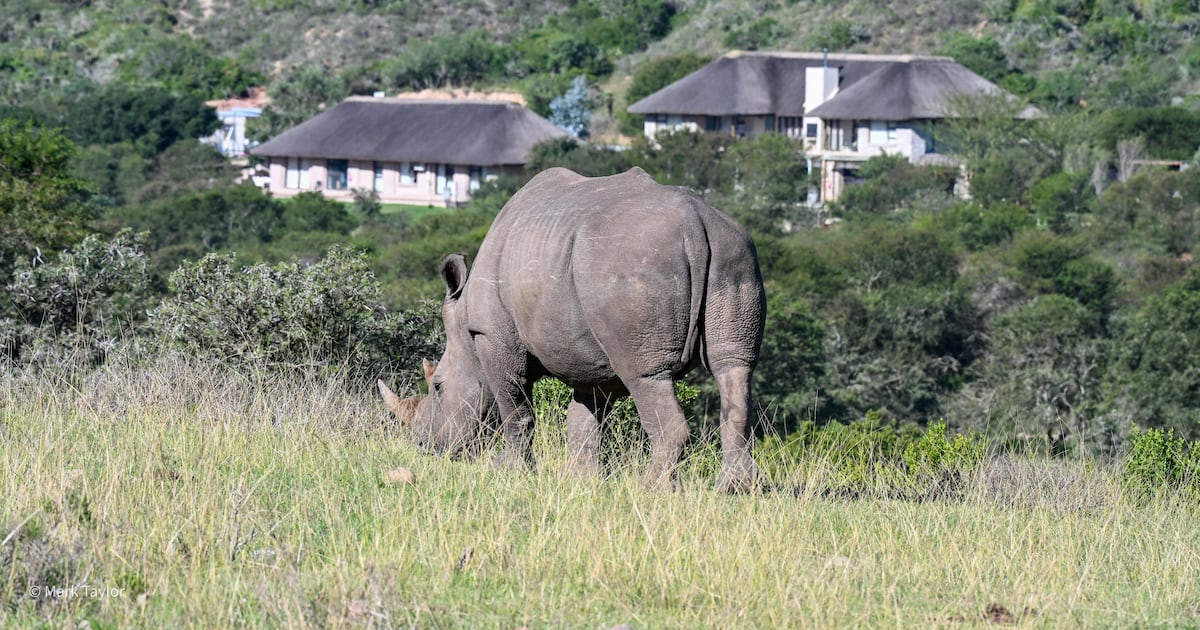
Giraffe, zebra, white rhino, wildebeest, kudu, nyala, eland, bontebok, gemsbok, springbok and ostrich all roam here, together with an astonishing variety of birds.
Guests who stay overnight often say the unforgettable sound of lions roaring after dark becomes their lasting memory.
For us it was hearing the wheeze-honks, snorts and grunts of happy hippos that carry at night.
The long-term vision is ambitious, with hopes of eventually creating suitable habitat for cheetah, buffalo and black rhino.
Our guide, Mark Heystek, brings every corner of the reserve to life.
Three hours on safari vanish in what feels like minutes.
His knowledge of the fauna and flora is impressive, but it’s his enthusiasm that makes the experience memorable.
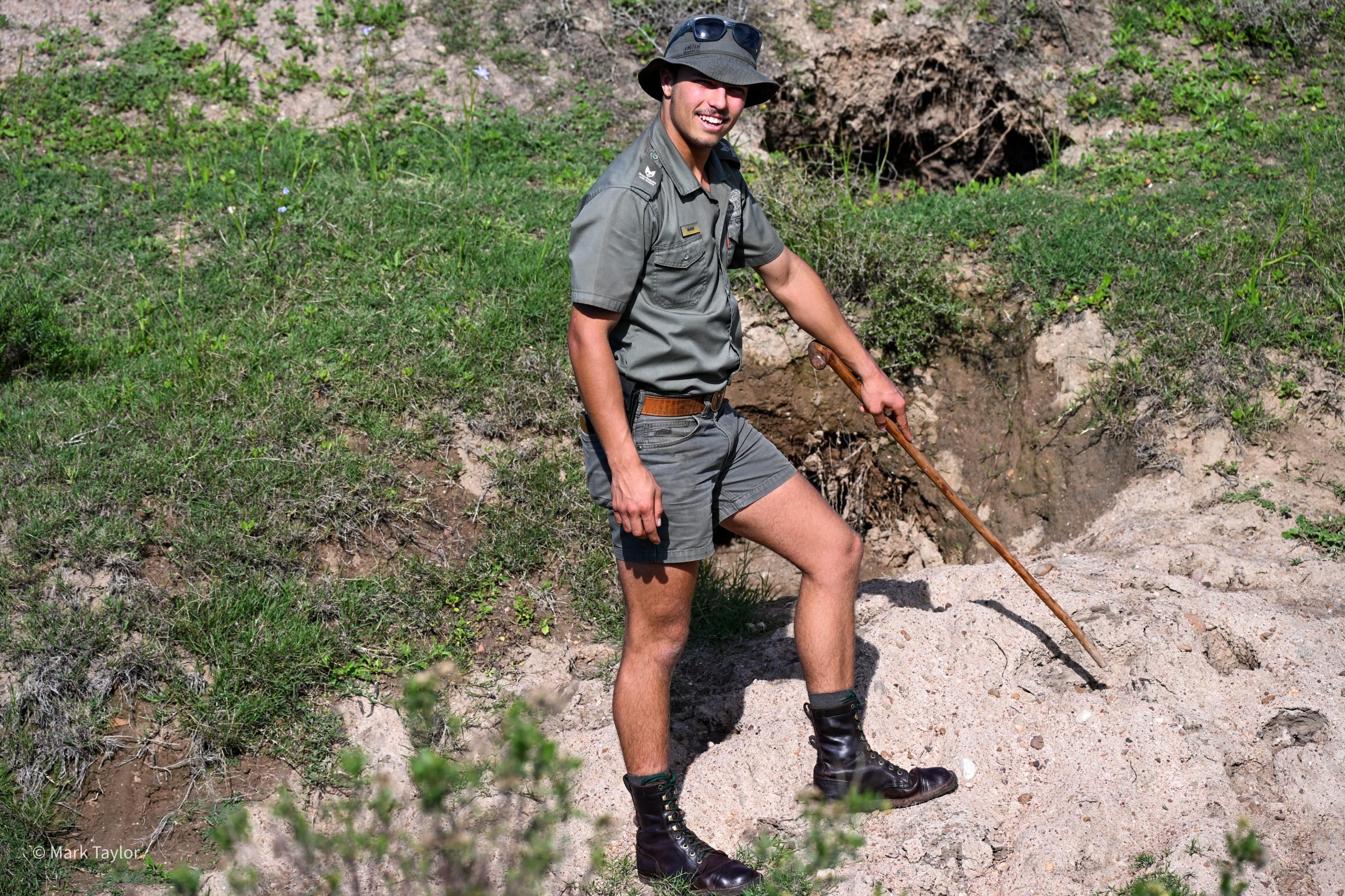
Heystek has even learnt greetings and animal names in several languages, including German, Arabic and Russian, so he can communicate with overseas visitors.
He finds a large old bone and explains that giraffes chew on them to get the calcium lacking in their plant diet.
One creature on my personal to-see wish-list is a porcupine.
Heystek takes us to its burrow and though it’s not home, he shows us the fresh spoor and finds a discarded quill for me as a souvenir.
Then comes a moment as incredible as it gets on any game safari.
Our vehicle stops close to white rhino and instead of moving away, I get to see one up close, its thick skin resembling weathered armour and that tiny eye.
It’s near enough to hear it munching.
Watching a tower of giraffes browsing nearby, Heystek dispels another myth.
For years, scientists believed giraffes were virtually silent, but research has shown they communicate using low-frequency hums and rumbles, many below the range of normal human hearing.
Every one of the reserve’s seven guides has completed training through the Field Guides Association of Southern Africa and done their apprenticeships here at Brandwacht itself, so they know every corner of the reserve intimately.
Knoetze’s son, Stephan, is a guide here, but is also a qualified trainer, ensuring knowledge is continually passed on to the next generation of guides.
Cape valley thicket, endangered renosterveld and fynbos coexist here with hundreds of indigenous plant species.
Heystek searches for one of the area’s tiny Haworthia succulents, a little plant that would be easy to walk straight past without an expert beside you.
For bird lovers, Brandwacht is paradise.
Hundreds of species have been recorded here thanks to its diverse habitats.
Depending on the season, you might spot African fish eagles, secretary birds, blue cranes, kingfishers, hoopoes, sunbirds, weavers and numerous birds of prey.
The experience doesn’t end when the game drive does.
Guests can also explore parts of the reserve on horseback or walk to a specially designated viewing area near the dam where the resident hippos can be observed safely.
Garden Route Safari Camp is very much a family affair, and that’s exactly how Abram and his wife, Nanette, want it to remain.
The atmosphere is warm rather than formal, with visitors made to feel like house guests instead of hotel patrons.
Stephan’s wife, Unelle, is often around chatting to guests, while Adel Ivy has clearly found her calling in hospitality.
Every morning, she welcomes everyone with genuine enthusiasm, explains the day’s menu and helps guests plan their activities.
The main lodge overlooks the watering hole, offering what must be some of the best seats in the house.
Whether you’re enjoying breakfast, reading a book on the deck or simply sitting quietly with a cup of coffee, there’s always something happening as animals wander down to drink while birds provide the soundtrack.
Weather permitting, meals are served outside on the deck.
In winter, the roaring fireplace inside creates an equally inviting setting.
As with any memorable safari, food plays a starring role, and the Garden Route Safari Camp certainly doesn’t disappoint.
Breakfast is a lavish affair, lunch is available if you can manage it, and dinner is something to look forward to after an afternoon game drive.
We enjoyed one of the best steaks I’ve had in a long time and an oxtail that was quite simply outstanding.
Afternoon tea and freshly baked cakes appear each day.
It’s clear to see that overseas visitors swoon over our South African cuisine.
Inside, the lodge feels more like a beautifully decorated country home than a hotel.
Carefully chosen fabrics, comfortable furniture and tasteful artwork create a warm, elegant atmosphere without detracting from the magnificent scenery outside.
There are cozy corners everywhere inviting guests to sit back and simply enjoy the surroundings.
Accommodation consists of just 14 luxury suites, reinforcing the camp’s emphasis on exclusivity rather than numbers.

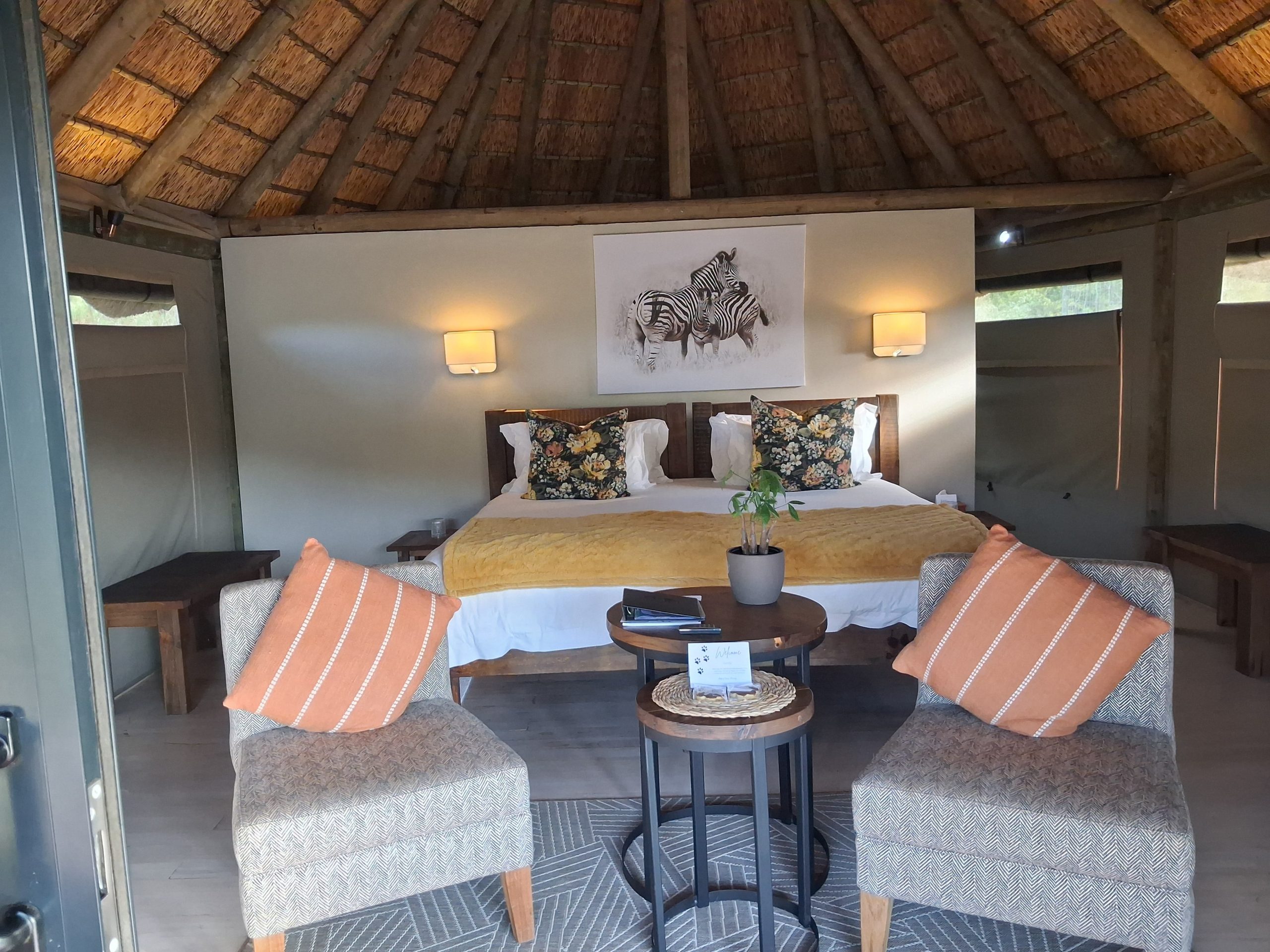
We stayed in one of the spectacular glamping tents, complete with every luxury imaginable, including an outdoor shower.
Raised on wooden decks and tucked discreetly among the trees, each suite enjoys complete privacy while remaining immersed in nature.
Every room has a private verandah overlooking the reserve.
For larger families or groups there is The Hideout, an exclusive private bush lodge comprising three family units with its own chef and butler.
Knoetze says there are no plans to add more accommodation.
“We want people to experience nature, not crowds,” he said.
The overwhelming majority of guests come from overseas.
Visitors from the Middle East arrive during July and August, Russians follow in September, while Europeans and British travellers return during the warmer months.
The visitors’ book is filled with glowing messages from around the world, many describing their stay as the highlight of their South African holiday.
The reserve’s motto, “Rewilding landscapes. Transforming lives”, isn’t simply a marketing slogan.
Brandwacht has become one of the area’s largest rural employers, creating meaningful jobs while investing in education.
The Christian Academy on the reserve provides schooling for children from surrounding communities, while a community soup kitchen serves nutritious weekday meals to between 30 and 50 children.
HoneyGuide Academy, based on the reserve, run by Stephan, has already trained more than 20 professional field guides who now work throughout SA’s conservation and ecotourism industry.
The family’s passion for guiding extends even further through AbramInAfrica, a specialist safari company run by father and son offering tailor-made guided journeys throughout southern Africa.
Like the safari camp itself, the emphasis is firmly on personalised experiences rather than mass tourism.
I arrived wondering whether a game reserve this close to town could possibly deliver an authentic bush experience.
I left wondering why more South Africans don’t know it’s here.
For overseas visitors, combining the Garden Route’s beaches, forests and vineyards with a luxury safari makes perfect sense.
For locals, it’s a reminder that you don’t have to drive to the Kruger or cross into Botswana to enjoy an unforgettable safari.
One of the Garden Route’s best-kept secrets has been quietly hiding in plain sight all along.
- Follow The Herald WhatsApp channel today and stay connected to the stories shaping our world.


