


The Government of Canada’s Social Sciences and Humanities Research Council (SSHRC) recently announced new grant recipients, with 12 Faculty of Environment researchers awarded funding. Congratulations to Amelia Clarke, Cameron McCordic, Janice Barry, Andrea Collins, Michelle Rutty, Steffanie Scott, Jason Thistlethwaite, Julie Bernard, Leia Minaker, Joe (Zhu) Qian, Stephen Quilley and Nancy Worth.
Partnership Grant
Amelia Clarke
School of Environment, Enterprise and Development
$2.5 million
Municipal Net-Zero Action Research Partnership (N-ZAP)
Urban areas are the largest emissions globally, making up 70 to 80 per cent of global GHG emissions. In Canada, local governments control or influence about half of our GHG emissions
Building on the previous successes of the Municipal Net-Zero Action Research Partnership (N-ZAP) which began in 2022, this newly funded second phase of the work will conduct and mobilize research to enable next level measuring, monitoring and achieving of local GHG emission reductions. The goal is to co-create research between 38 leading-edge partner and collaborator organizations furthering municipal climate mitigation across 250 Canadian municipalities, thus helping Canada achieve its 2050 net-zero target.
Partnership Development Grants
Cameron McCordic
School of Environment, Enterprise and Development
$198,944
Sustainable Horizons Under a Changing Climate
Over the last decade, the growing intensity of cyclones in Southern Africa has threatened local sustainable development. This project proposes to test the use of Artificial Intelligence as a tool for integrating Futures Thinking in cyclone adaptation. Researchers from Waterloo and colleagues from institutions across Southern African countries impacted by rapidly intensifying cyclones, including The University of Cape Town, The University of Western Cape, University of Zimbabwe, Eduardo Mondlane University, Licungo University and University of Antananarivo, will play a key role in the co-creation of new strategies. The project will forge new climate adaptation stakeholder networks in Southern Africa and a Futures Thinking policy toolkit to support sustainable urban development under the strain of rapidly intensifying cyclones.
Insight Grants
Janice Barry
School of Planning
$331,267
Ethics as Code, Ethics as Craft: Exploring Dynamic Practices and Governance in Planning Ethics
Canadian planners face rapidly evolving ethical dilemmas such as climate justice, reconciliation and the adoption of AI. Like other regulated professionals, their response to these dilemmas is guided by a Code of Ethics. But codes can become static, functioning more like a systems-maintaining rulebooks than morally grounded visions for innovative practice. The goal of this project is to build planners’ and planning institutes’ capacity for adaptive, anticipatory and just responses to emerging challenges by analyzing the current code and identifying opportunities for improvement.
Dr. Barry will work Dr. Robinson and Dr. Ayambire (PhD ’23) alongside collaborators in the UK, Australia, New Zealand and the United States for comparative rigour and influence. This work will clarify how situated judgement and anticipatory governance can be embedded in a regulated profession, yielding actionable models for code design, decision-making, and training.
Andrea Collins
School of Environment, Re
Backlash: Anti-Feminist Opposition in Global Food Governance
Since the 1990s, unlikely coalitions of anti-gender and anti-feminist institutions, religious organizations and governments, have combined to push back against gender-focused and women’s rights-based language in UN institutions. This project seeks to understand the influence of anti-gender movements and advocates specifically within the UN food agencies: the Food and Agriculture Organization, the World Food Programme, the International Fund for Agricultural Development and the Committee for World Food Security. The project will create a profile of illiberal and anti-feminist activism in these agencies and understand how gender is conceptualized in food policy documents and the extent to which these align with either feminist or anti-feminist recommendations.


Michelle Rutty
Department of Geography
$412,284
DRR360: Virtual Reality for Disaster Risk Reduction in Tourism Dependent World Heritage Sites
World Heritage Sites generate over $600 billion in tourism each year, with the sector considered a linchpin to achieve biodiversity conservation and sustainable development. A significant and increasing threat to both the sites and tourism are climate-related hazards (e.g., hurricanes, floods), yet disaster risk reduction policy is often met with resistance. Leveraging virtual reality (VR) as a policy learning tool, communities can experience abstract risk reduction interventions, which can influence perceptions, attitudes, and behavioural responses towards climatic hazards. The study will focus on two post-disaster World Heritage Sites: Morne Trois Pitons in Dominica and Gunung Leuser in Indonesia. The researchers will develop immersive VR environments to visualize disaster risk reduction policy scenarios for each site, documenting stakeholder narratives to evaluate the efficacy of VR as an experiential learning tool to support policy implementation.
Steffanie Scott
Department of Geography and Environmental Management
$111,437
Nourishing the Neighbourhood: Mapping a relational (re)turn to future local food systems in Waterloo Region
Today’s dominant food systems are shaped by corporate interests and economic growth, often prioritizing profit over sustainability, equity and community. In Waterloo Region, however, residents are fostering alternatives through community gardens, grassroots initiatives and local food networks. This project builds on these efforts by inviting community members and organizations to co-create visions of more inclusive, resilient and place-based food systems.
Using focus groups with participatory mapping and key informant interviews, the research will examine how food is currently grown, shared, and experienced across the region. Insights from this work will inform the creation of artifacts from the future; tangible objects and narratives that make possible futures feel real and accessible. These artifacts will be featured in a public exhibit designed to spark dialogue among residents, policymakers, and researchers, encouraging collective reflection and action toward more just and sustainable food systems.
Jason Thistlethwaite
School of Environment, Enterprise and Development
$471,302
The Canadian Location Intelligence Platform (CLIP): Precision Risk Assessment for a Changing Climate
Rising disaster risk is driving an insurance affordability crisis across Canada, leaving households, businesses, and governments struggling to make informed decisions about where and how to build. This project explores how AI and location intelligence can transform climate risk assessment by producing property-level flood insights that are more accurate, transparent and actionable than existing models. Using high-resolution spatial analysis and advanced data integration, the research will identify lower-risk “climate haven” areas for future development, support fairer insurance pricing and help individuals evaluate risk before purchasing or investing in property. The project aims to create a next-generation climate intelligence platform that empowers evidence-based decision-making while supporting resilient, affordable, and economically competitive communities.
Insight Development Grants
Julie Bernard
School of Environment, Enterprise and Development
$75,653
Climate accountability in the Age of Anti-ESG through a Proxy Voting Lens in Canada and the U.S.
The research will examine the rising anti-environmental, social and governance (ESG) movement and its impact on organizational decision-making within capital markets. Through a mixed methods approach, the study will investigate how this political backlash against ESG considerations is reshaping dynamics between key market actors in both the United States and Canada.
This research addresses a critical gap in our understanding: the anti-ESG movement represents such a recent development that scholarly literature has had minimal opportunity to examine it. The findings will contribute valuable insights for both practitioners navigating this polarized environment and scholars seeking to understand how external pressures shape corporate governance in contemporary capital markets.
Leia Minaker
School of Planning
$95,000
Enabling evidence-based policymaking and interdisciplinary social change research for homelessness: Developing and evaluating CivicInquire, Canada’s first intersectional AI-powered social science platform
The research uses machine learning, artificial intelligence and qualitative key informant interviews to develop and evaluate a novel online, interactive platform for homelessness policy across Canada (CivicInquire). CivicInquire will leverage web-crawling and web-scraping capabilities to create a national homelessness policy database, a national policy dashboard and multiple interactive visualization tools to present policy information for academics, advocates, planners and health practitioners, municipal decision-makers and the public.
The platform will serve as a foundation for accelerating Canadian leadership in homelessness and housing policy research and action. We anticipate that Canadian municipalities will use our platform to inform the development of their own policies, while researchers can use our platform and its open-access database to conduct future cutting-edge research exploring homelessness and/or housing policy impacts on multiple important outcomes. Project partners will help to facilitate our plan in diverse municipal contexts including Toronto, the Region of Waterloo and Nunavut.
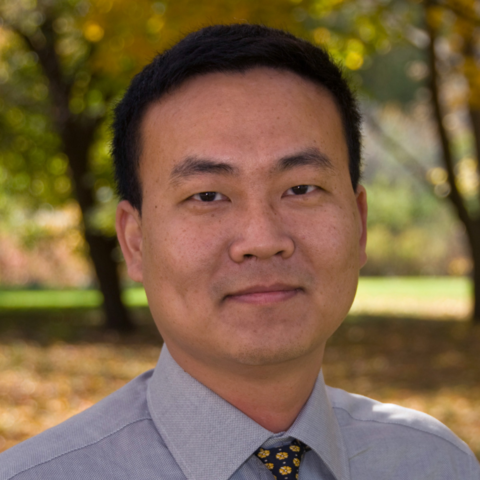
Joe (Zhu) Qian
School of Planning
$94,818
Resettling a large ensemble of indigenous heritage buildings in China: impacts, challenges and potential
Heritage relocation is increasingly used in China to preserve cultural assets while supporting urban development and heritage tourism. This research examines the large-scale, cross-regional relocation of approximately 450 Indigenous historic residences through the lens of Authorized Heritage Discourse and authenticity. Focusing on Bengbu City, home to China’s largest open-air museum of traditional vernacular architecture, the study investigates how state-led heritage relocation serves economic and planning objectives while shaping local communities. It explores impacts on economic conditions, community wellbeing, cultural identity and social relations. The project offers the first comprehensive analysis of large-scale heritage relocation in China and its socio-spatial consequences.
Stephen Quilley
School of Environment, Re
Embodied Technics in an Age of Automation: Craft Practice, Skill, and the Transformation of Work
This practice-based study explores artisanal making through lutherie, a craft that combines traditional hand skills with modern technologies and globalized production systems. Using participant documentation, phenomenology, and socio-technical mapping, it examines how artisans navigate tensions between tradition, digital innovation, and globalized production. The Principal Investigator will build a guitar from scratch, integrating hand carving, steaming, and bending techniques with CNC routing, 3D printing, laser etching, and online collaboration. By analyzing craft practice at the intersection of automation and AI, the research investigates creativity, identity, skill transmission, ethical workmanship, and craft’s role in sustaining community and ecological awareness amid technological change.


Nancy Worth
Department of Geography and Environmental Management
$78,665
Stigma and strategy: Learning from disabled students’ GenAI self-accommodation practices
While 24 per cent of Canadian university students self-declare as having a disability, only six to nine per cent seek formal accommodations. The remaining students navigate higher education on their own, developing their own ways of accommodating learning needs, including using GenAI (generative artificial intelligence) tools. The goal of this research is to examine why and how university and college students in Waterloo use GenAI to self-accommodate.
The research team will interview 40 students and 18 institutional experts across three campuses (Conestoga, Laurier and Waterloo), examining personal accounts and official policies. Graduate students with interests in disability and technology will develop skills in interviewing, qualitative analysis, and disability-centered research.
This research creates space for rethinking how universities support diverse learners, moving beyond typical accommodation models toward inclusive education spaces that centre ethical student practices.
In total, University of Waterloo researchers have secured more than $8 million in new funding through Social Sciences and Humanities Research Council of Canada (SSHRC) competitions.
Check out more of our latest news →


Stephanie Saal, a PhD candidate in the Department of Geography and Environmental Management, is researching how snowpack impacts key ecological relationships, and how best to collect this information at a watershed level. In recognition of her academic achievements and innovative research, Saal has been awarded the 2026 Weston Family Award in Northern Research. Valued at $120,000 over three years, the award is presented to outstanding doctoral students across Canada. Saal was one of eight recipients, placing her among the country’s emerging leaders in Northern research.

We are pleased to announce that Dr. Jeff Casello will step in as the Interim Director of the School of Planning. Join us in welcoming him and thanking the former Director, Dr. Mark Seasons, for his service.

