



Finance


The suspension of the Bank of Central African States’ (BEAC) special refinancing window is more than a technical decision. It reflects a deeper disagreement between the Central African Economic and Monetary Community’s (CEMAC) central bank and the International Monetary Fund (IMF) over the role monetary policy should play in financing the real economy
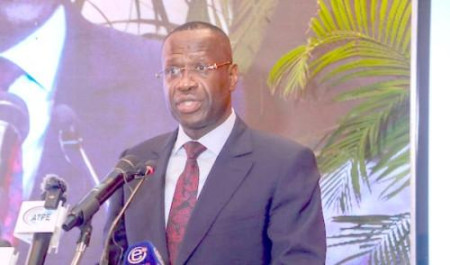
Speaking in Yaoundé on June 29, 2026, after a meeting of the Monetary Policy Committee (MPC), BEAC Governor Yvon Sana Bangui said the April 2 decision to freeze the facility followed an IMF recommendation calling for its gradual elimination. The mechanism is designed to refinance medium-term bank loans for productive investment projects
The recommendation appears in an IMF technical note on the implementation of CEMAC’s regional strategy, prepared ahead of trilateral consultations held on February 26, 2026, between the Bretton Woods institution and regional authorities. The document, reviewed by Business in Cameoon, lists the “gradual elimination of the special refinancing window” among the additional policy priorities that could strengthen the region’s macroeconomic position
For the IMF, the concern is primarily macroeconomic. In a monetary union with a fixed exchange rate, protecting foreign exchange reserves is critical to financial stability. After reserves declined in 2025, the institution concluded that certain financing tools could increase demand for foreign currency, particularly when they support projects that require imported industrial equipment
Yvon Sana Bangui summarized the IMF’s position this way: “When foreign exchange reserves are under pressure, financing investment projects leads to imports. Every project financed through this mechanism has required imported industrial equipment, with an immediate impact on our foreign exchange reserves.”
In other words, while refinancing productive loans supports investment, it can also put pressure on reserves when projects depend on imported machinery, equipment, or foreign services
BEAC Rejects Calls for Elimination
BEAC, however, opposes eliminating the facility simply because foreign exchange reserves are under temporary pressure. The central bank argues that the refinancing window remains an important tool for supporting productive investment in a region where businesses often struggle to secure long-term financing
“We told the IMF that a temporary situation does not justify eliminating the special refinancing window. Are we the only central bank in the world that has such an instrument?” Sana Bangui said
The governor noted that the facility has existed for years but remained dormant before being reactivated. According to BEAC, restoring it served a clear purpose: supporting productive investment and accelerating industrialization across CEMAC’s six member states
“We have had this instrument for a very long time. We reactivated a dormant facility to support economic growth across the CEMAC region. We cannot move toward eliminating it,” he said
Instead, BEAC has adopted a middle ground. The facility remains suspended, but it has not been abandoned. The Monetary Policy Committee’s April 2 meeting froze operations while establishing a working group to assess the mechanism, including through an international benchmark of comparable central bank tools
“If no central bank anywhere in the world has this type of instrument, we will eliminate it. But if even one central bank has a tool that supports the real economy, we will not eliminate ours. That is our position,” the governor said
BEAC officials consider the refinancing window a strategic instrument in a region where long-term financing remains scarce. It allows commercial banks to obtain funding from the central bank to refinance loans extended to investment projects in sectors such as industry, agriculture, mining, and infrastructure
The central bank sees it as both a way to diversify financing borrowing. Sana Bangui argued that CEMAC must also consider tightening conditions in global capital markets, where borrowers from the region often face high financing costs because of risk assessments that fail to reflect local economic realities
“Today, we must take into account that international borrowing conditions are becoming increasingly difficult, with interest rates that are sometimes excessive because of ratings assigned by outside firms that do not fully understand our region’s economic context,” he said
The disagreement reflects a broader policy divide. For the IMF, protecting foreign exchange reserves and limiting financing tools that increase demand for foreign currency should take priority. BEAC, by contrast, argues that preserving external stability should not come at the expense of financing productive investment, especially as CEMAC countries seek to diversify their economies and reduce their dependence on raw material exports
Cameroon Is the Facility’s Largest User
Cameroon, home to nearly half of CEMAC’s banking network, has been one of the most active users of the refinancing window. In 2025, BEAC approved several refinancing operations involving local banks
Among them were CFA41.2 billion in loans for the Bipindi-Grand Zambi iron ore project and CFA31.3 billion in financing for state-owned telecom operator Camtel’s investment program
Other projects have also benefited from the mechanism. CCA Bank received approval to raise CFA30 billion from BEAC to help finance a mining project in Congo. Afriland First Bank requested refinancing for a CFA20 billion palm oil mill project developed by the Cameroon Development Corporation (Sodecoton)
The growing use of the facility underscores its appeal to banks and industrial companies seeking more affordable financing for productive investment. It also explains the IMF’s concerns: the more the facility is used, the greater the likelihood that financed projects will require imported equipment, increasing demand for foreign currency
The Debate Extends to BDEAC
BEAC has also defended its broader efforts to support economic development across Central Africa. Sana Bangui pointed to renewed cooperation with the Development Bank of Central African States (BDEAC). In 2025, the central bank signed a current account agreement with BDEAC that allocated CFA120 billion to finance development projects across CEMAC. It also increased its equity stake in the regional development bank by CFA86 billion
“Will we also be criticized for reviving our support for the Development Bank of Central African States?” the governor asked. “This reflects our determination to support our economies. We fully embrace our mission and our commitment to supporting our community.”
His remarks highlight a broader question: how far should a central bank go in supporting economic development without compromising its mandate to preserve monetary and external stability? In CEMAC, the issue is particularly sensitive because the common currency is pegged to the euro, making foreign exchange reserves a key pillar of the system’s credibility
Balancing External Stability and Industrialization
The suspension of the refinancing window represents a temporary compromise. BEAC has agreed to halt new operations while it evaluates the facility and its impact, but it is not prepared to eliminate it. The IMF, meanwhile, continues to advocate a gradual reduction of mechanisms that could weaken the region’s foreign exchange reserves
For commercial banks and industrial project developers, the outcome of the debate carries significant implications. Eliminating the facility would reduce access to an attractive it in place without tighter safeguards, however, could fuel concerns about CEMAC’s external financial position
The final decision will ultimately require balancing two competing priorities: protecting foreign exchange reserves, a cornerstone of monetary stability, and preserving a financing tool that supports industrialization in a region where access to long-term credit remains limited. By freezing the facility rather than abolishing it, BEAC has bought time. But its disagreement with the IMF shows that financing the real economy has become a central issue in the region’s macroeconomic oversight
Brice R. Mbodiam
Follow @investcameroun
back to top
IMF and BEAC Clash Over Central Bank Financing for Productive Investment
The suspension of the Bank of Central African States’ (BEAC) special refinancing window is more than a technical decision. It reflects a deeper…
Wave Targets CEMAC’s Largest Mobile Money Market Through CBC Partnership
Nearly a year after the Central African Banking Commission (COBAC) authorized Commercial Bank Cameroun (CBC) to roll out Wave’s payment service in…
Certified Banana Exports Reach 73% of Cameroon Total Under Five-Year Program
Certified banana production accounted for 73 percent of Cameroon’s banana export volumes in 2025, or about 160,000 metric tonnes annually, according to…
Cameroon Airport Operator ADC Sees 2025 Profit Fall 72% Despite Stable Revenue
Aéroports du Cameroun (ADC), Cameroon’s state-owned airport operator, remained profitable in 2025, but its earnings fell sharply after an exceptional 2024…
Cameroon Seizes 65,000 Liters of Smuggled Fuel, but Illegal Trade Persists
Cameroon Releases Only 19% of 2026 Vaccination Funding, Raising Supply Concerns
Cameroon Urges Greater Vigilance as School Holidays Raise Risks for Children
World Bank-Backed Water Program Prioritizes Northern Cameroon to Tackle Chronic Water Shortages
Bini à Warak Project Pays Nearly CFA1 Billion in Compensation Ahead of Construction
Most read
Cameroon Signs CFA20.5 Billion in New Investment Agreements
Cameroon Cocoa Prices Climb Above CFA2,000 as Season Nears End
Camtel Posts Higher Profit in 2025, but Service Quality Remains a Major Challenge
Cameroon, British Firm Sign MoU to Advance Construction of Bekoko-Limbe-Idenau Road in South West Region
Cameroon Revives Push for Limbe Deep Seaport
Cameroon Speeds Up Kribi Bitumen Plant with Tax Breaks and Refining License
BEAC Halts Key Refinancing Facility for Productive Investments Across Cemac
Sustainability Communications : The Skill Gap in Cameroon’s PR Industry No One Is Talking About
Cameroonian Entrepreneur Pitches Rural Job-Creation System, Takes Third Place at UNECA Summit
“The Problem Is Not a Lack of Ideas or Money It’s Connecting Them” Claver Gatete, Executive Secretary of UNECA
Subscription to our newsletter
Every week the economy and investment news from Cameroon
African Economies
African Economies
Turkish Company Karpowership Begins Construction of Four Floating Power Plants
Africa Should See Sustainable Aviation as an Economic Opportunity| Interview with IATA Chief Economist Marie Owens Thomsen
Nigeria Steps Up Road Infrastructure Drive With $2.84 Billion Investment
U.N. Economic Commission for Africa Targets Digital Skills Training for 1,000 Women Entrepreneurs
Kenya Seeks to Bring Remote Workers Under Labor Law Framework





