



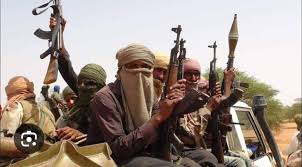
Mali – Islamist fighters linked to al-Qaida killed dozens of civilians in coordinated attacks on villages in central Mali this week, intensifying fears over worsening insecurity and deepening humanitarian suffering across the Sahel region.
The attacks targeted the villages of Kori Kori and Gomossogou in Mali’s volatile Mopti region, where local officials, aid workers, and security sources said between 30 and 50 people were killed. Several homes and supply vehicles carrying food were also set ablaze during the assaults.
The armed group Jama’at Nusrat al-Islam wal-Muslimin, or JNIM, an al-Qaida-affiliated coalition active across the Sahel, claimed responsibility for the attacks. The group said it had targeted local militias aligned with the Malian government, though witnesses said many civilians were among the dead.
Residents described scenes of chaos as gunmen stormed the villages on motorcycles and pickup trucks before opening fire and torching vehicles transporting food supplies. Aid workers warned the destruction of food trucks could worsen shortages in communities already struggling under insecurity and blockades imposed by armed groups.
The violence marks another major escalation in Mali’s deteriorating security crisis, where jihadist groups linked to al-Qaida and the Islamic State have expanded operations despite years of military campaigns by both local authorities and foreign allies.
Mali’s military government, led by Gen. Assimi Goïta following successive coups, has increasingly turned to Russian-backed forces for support after severing many defense ties with France and Western partners. Yet attacks by jihadist groups have intensified across large parts of the country, particularly in central and northern regions.


The latest attacks come amid broader instability across Mali following a wave of coordinated offensives launched in April by JNIM and allied armed factions. Militants struck military bases, airports, and strategic towns, including Gao, Mopti, and areas near the capital Bamako in what analysts described as one of the largest insurgent operations in Mali in years.
Security analysts say JNIM has increasingly adopted economic warfare tactics aimed at weakening the junta and cutting off supply routes. In recent months, the group has reportedly burned fuel and food trucks while enforcing road blockades around parts of the country.
Humanitarian organizations warn that continued violence and supply disruptions are worsening hunger and displacement across the Sahel, where millions already depend on emergency aid. The United Nations estimates that several million people in Mali require humanitarian assistance as insecurity spreads into new areas.
Despite repeated military operations, Mali’s authorities have struggled to restore control over vast rural territories where armed groups continue to operate with relative freedom. Analysts warn the latest killings underscore the growing fragility of the region and the inability of current security strategies to stem the expanding insurgency.





