



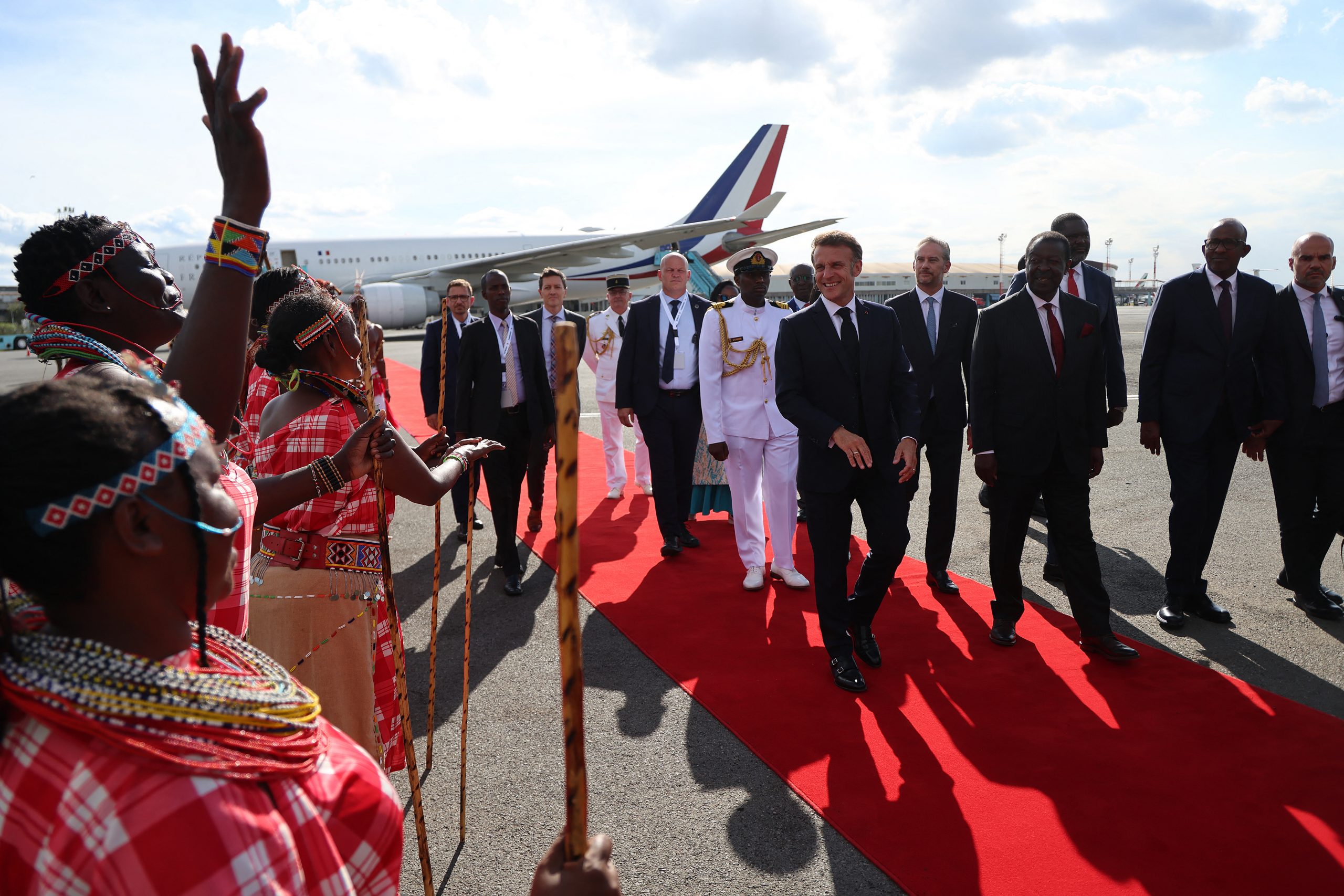
French President Emmanuel Macron unveiled a $27 billion investment initiative for Africa during the Africa Forward Summit in Nairobi this week, seeking to reset France’s strained relationship with the continent amid mounting criticism over Paris’ historical influence in Africa.
The summit, co-hosted by William Ruto and Macron, brought together more than 30 African heads of state, business leaders, and youth entrepreneurs to discuss investment, technology, energy and economic cooperation between Africa and France.
Speaking at the summit, Macron announced that the French public and private sectors would mobilize approximately €23 billion, or about $27 billion, in investments targeting energy, artificial intelligence, agriculture, and infrastructure projects across Africa. French officials said the initiative was designed to move away from what critics long described as France’s paternalistic post-colonial approach toward a model based on “partnerships of equals.”
“This partnership must not be built on dependency,” Ruto told delegates during the summit, calling instead for “sovereign equality” and “mutually beneficial investment.”


The Nairobi gathering marked the first time France hosted its flagship Africa summit in an English-speaking African country, a move analysts say reflects Paris’ effort to rebuild influence beyond its traditional Francophone sphere after a series of diplomatic and military setbacks in West Africa. France has recently withdrawn troops from several former colonies, including Mali, Niger, and Senegal, amid growing anti-French sentiment and the rise of Russian influence in the Sahel.
However, Macron’s investment push was overshadowed by controversy after the French leader interrupted a summit panel featuring artists and young entrepreneurs to rebuke audience members for making noise during presentations. In widely circulated videos, Macron walked onto the stage, seized the microphone, and criticized attendees for what he called a “total lack of respect.”
The incident quickly triggered backlash on social media and from political commentators in Africa and France, with critics accusing Macron of displaying a colonial-era attitude inconsistent with his calls for equal partnership.
“It’s stronger than him: as soon as he sets foot on the African continent, he can’t help but behave like a colonizer,” French lawmaker Danièle Obono wrote on social media.
Macron also faced criticism for describing himself as a “true Pan-Africanist” during the summit, a remark that many African activists and intellectuals viewed as politically tone-deaf given France’s colonial history across large parts of Africa. Togolese activist Farida Nabourema responded in an open letter that Pan-Africanism “is not a brand” but a political movement born in resistance to colonial domination.
Despite the backlash, some analysts said the summit still underscored France’s attempt to reposition itself as an economic rather than military partner on the continent. Macron emphasized that future French engagement would prioritize investment, innovation and youth entrepreneurship over traditional security-centered policies.
Still, skepticism remains high among many Africans who question whether Paris is genuinely abandoning the legacy of “Françafrique,” the term used to describe France’s long-standing political, military and economic dominance in its former African colonies.
The summit concluded with leaders pledging deeper cooperation in energy transition, digital innovation, agriculture, and financing reforms, though observers say France’s challenge will be convincing Africans that its new approach represents genuine change rather than rebranded influence.





