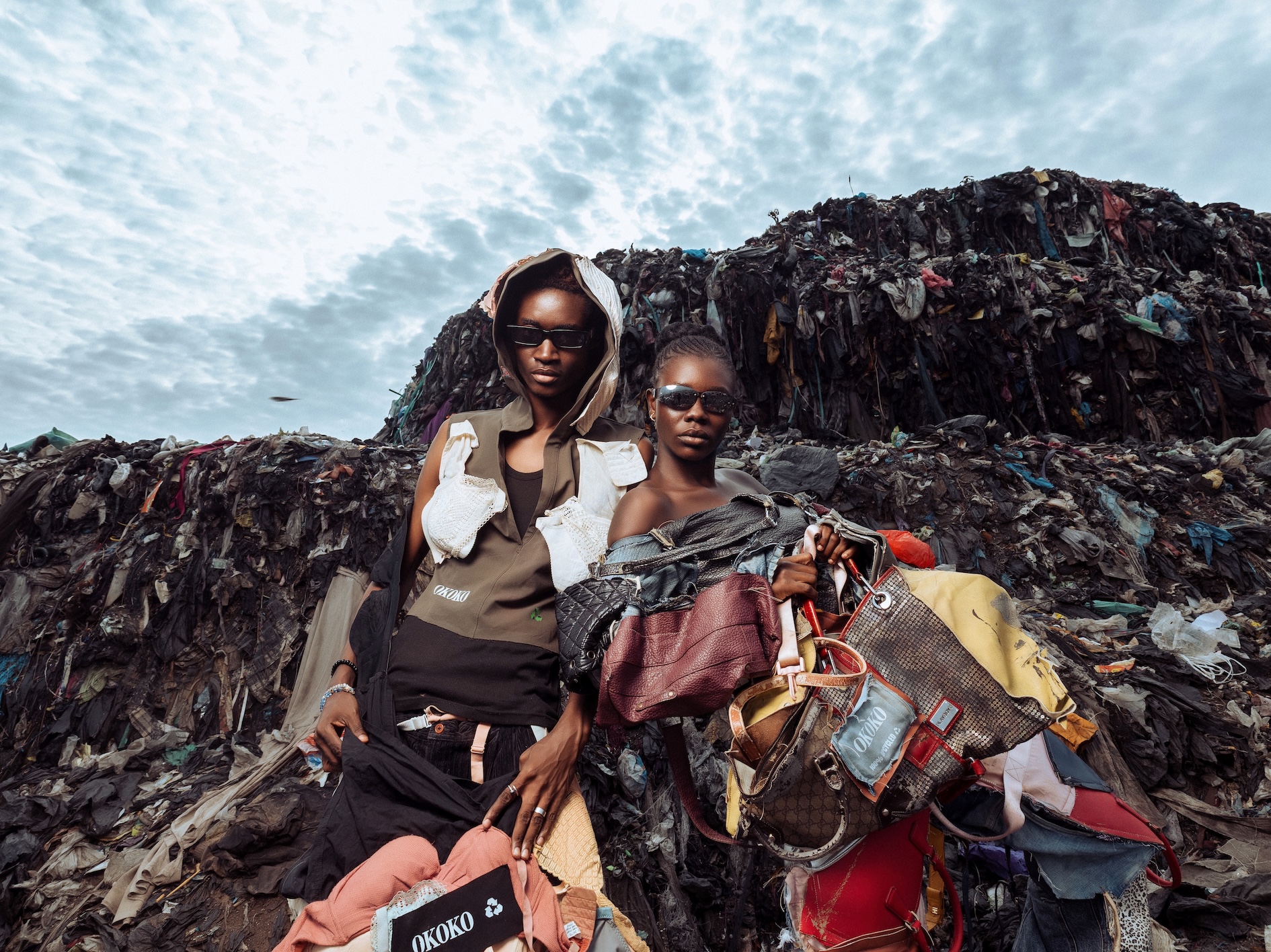
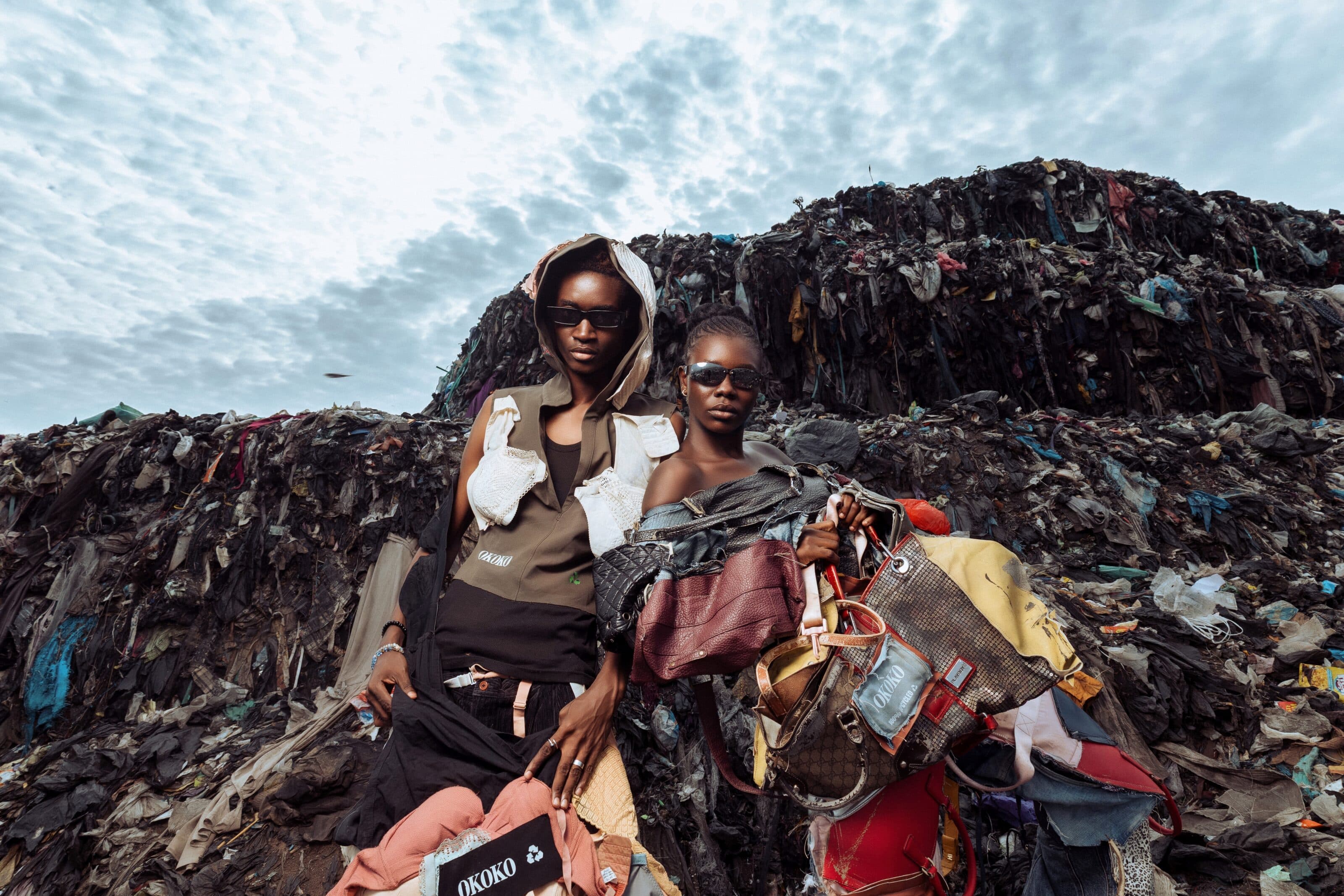
O’koko landed on my Instagram ‘For You’ page posing amongst the heaps and mounds that were the Ghanaian landfill in clothing that I assumed he had created himself: tote bags constructed of many discarded bags, jackets covered in a patchwork of pieces of discarded shoes, and sneakers combined to form shoulder bags, for example. Moving from Central Africa to Ghana for his digital marketing studies, he only recently became aware of the landfill—and of the atrocities that it reveals about Western consumption and fast fashion. It was in that landfill, amongst rubble of discarded garments that didn’t all necessarily constitute “trash” and were deserving of a second life, that O’koko realized he could (and should) spread awareness through design.
As a first-generation American with Ghanaian parents, I felt an immediate connection to the cause—and felt a pride in O’koko’s work that can only be attributed to seeing your people create and thrive. Naturally, I needed to learn more about him. Ahead, we chat with O’koko about <a href="https://absafricatv.com/african-heads-of-state-break-ground-for-16b-oil-refinery-project/” title=”African heads of state break ground for $16B oil refinery project”>African creativity, waste colonialism, and how the fashion industry needs to change.
When did you become interested in fashion?
“In 2023, a year after arriving in Ghana, I was working in construction for several months, earning a very miserable salary that was barely enough to take care of myself. With the encouragement and help of a friend, I decided to start selling secondhand clothes. We went to Kantamanto Market to source clothes, and that first visit completely changed the way I saw fashion. What I witnessed, the people I met, and the stories behind the clothes stayed with me. Looking back, I realize that experience was the beginning of the person and designer I am becoming today.”
What is the fashion scene like in Ghana?
“The fashion scene in Ghana is much more developed and accessible, which makes it an ideal place for people coming from the Central African Republic. Ghana was also known for having affordable local prints and fabrics. I remember that growing up, my mother and aunties would often travel to Benin, Togo, and Ghana to buy clothes and fabrics, which they would then bring back to the Central African Republic to sell.”
Who were your first fashion inspirations?
“When I started this journey, I remember how much @futurist’s videos influenced the way I saw fashion. His editing, outfit styling, and overall visual language really shaped my perspective. At the same time, Afrobeat artists like Rema, Asake, and others also influenced my creative direction and the way I express myself through fashion.”
When did you discover the landfill in Ghana?
“I discovered the landfill during The Revival Earth shoot I did. It was my first time going there, and I was completely unprepared for what I saw. The place was chaotic and overwhelming, filled with the smell of burnt textiles and plastic. On that first day, I could barely breathe. I had never imagined that a place like this could exist, or that so much discarded clothing could end up in one place.”
Can you describe “waste colonialism”?
“Waste colonialism is the unequal global system where wealthier countries and industries generate large amounts of waste, especially clothing and plastic, and much of that waste is exported to or ends up in lower-income countries that have less power and fewer resources to manage it.”
Why did you start making videos in the landfill?
“I first started making videos in Kantamanto Market before eventually moving to the landfill. Through my videos, I wanted people to truly see what overconsumption creates and understand the consequences our ignorance toward fashion waste could have on our future.”

How would you describe your design aesthetic?
“For my design aesthetic, I lean into my existing language: raw, rebellious, youth, heritage, craft, avant-garde, provocative, Afrocentric, upcycled, and luxury streetwear.”
Do you exclusively work with recycled materials?
“My brand primarily works with reclaimed/secondhand materials, 3specially discarded clothingredesigned or transformed into new garments or accessories.”
What African designers inspire you today?
“Today I draw inspiration from designers like Kaluputic from Ethiopia, who turns waste into treasure.”
What is your design process like?
“For a short time, I have been trying to draw my ideas on paper before creating, but usually when I have an idea, I create the copy first and then improve it as soon as possible in order to get the final piece.”
What message do you want your designs to send?
“I want people to better understand the story behind O’koko—transforming discarded textiles from Kantamanto Market into contemporary fashion that celebrates African creativity. The project should leave people with a deeper understanding of textile waste and the value of circular fashion, inspire conscious consumption, and prove that waste can become luxury.”
How do you think the fashion industry needs to change?
“The industry doesn’t need millions of new garments every season; brands should focus on durable and repairable pieces, and be transparent and responsible for the entire life cycle of their product. Designers need to think about circular fashion, how clothing could be easily repaired, reused, or recycled, and value creativity over consumption.”
What are your goals for the future?
“My goal is to increase my brand visibility, build meaningful industry relationships, and position O’koko Fashion as a globally recognized sustainable fashion brand. I think I’ll keep the secret, but I think the future holds a lot of surprises and positive vibrations for me.”