

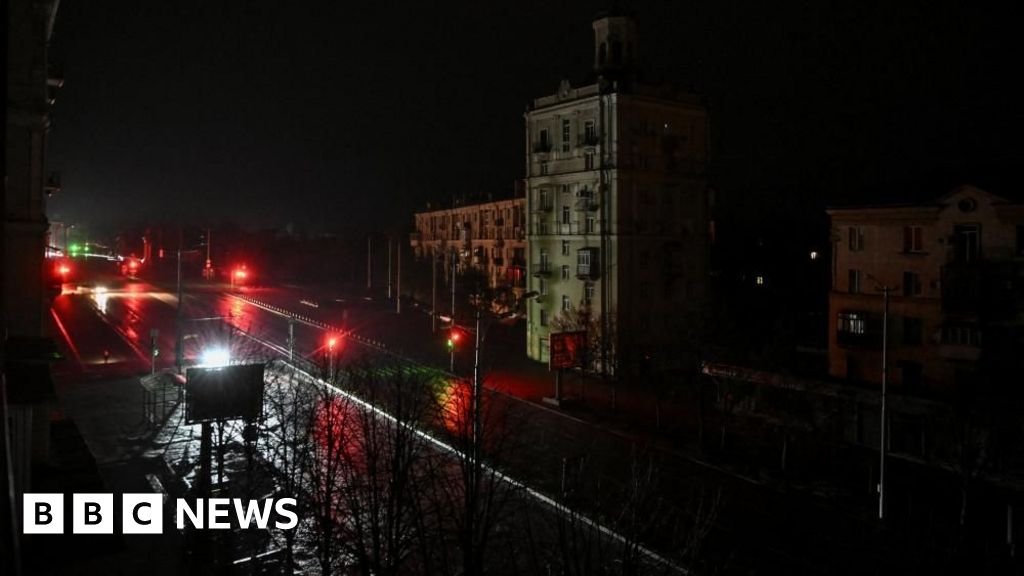
Russian drone strikes on Ukraine have left more than one million people in the region of Dnipropetrovsk without heating and water supplies, Ukraine’s deputy prime minister says.
Oleksiy Kuleba added that work was continuing to restore services following the large-scale attack, which damaged infrastructure across the south-east.
Electricity supplies were also disrupted for thousands more people in neighbouring Zaporizhzhia, but power has since been restored.
Russia has recently intensified attacks on Ukraine’s energy infrastructure, aimed at paralysing power supplies during a harsh winter. President Volodymyr Zelensky accused it of “mockery” and pleaded for Western support.
Hospitals, water facilities and other critical services in Dnipropetrovsk were operating on backup systems, the energy ministry said, while residents were urged to limit electricity use to avoid further strain on the grid.
DTEK, Ukraine’s biggest private energy provider, is living in permanent crisis mode because of Russian attacks on the grid, its chief executive told the BBC last month, with most of Ukraine suffering from lengthy power cuts during winter.
Maxim Timchenko, CEO of DTEK, which provides power for 5.6 million Ukrainians, said the intensity of strikes had been so frequent “we just don’t have time to recover”.
As the fourth anniversary of Russia’s full-scale invasion approaches, Timchenko said Russia had repeatedly targeted DTEK’s energy grid with “waves of drones, cruise and ballistic missiles” and his company had found it difficult to cope.
“There is no military sense in such strikes on the energy sector, on infrastructure, which leave people without electricity and heating in winter conditions,” Zelensky said.
He urged Ukrainians to remain “resilient” against Russia’s attempts “to break Ukraine” and added that peace talks aimed at ending the war should not be a reason to slow down Western supplies for Ukraine’s air defences.
Zelensky has been on a diplomatic tour this week – meeting allies in the “Coalition of the Willing” and US President Donald Trump’s peace envoys Steve Witkoff and Jared Kushner.
Following those talks in Paris on Tuesday, the UK and France signed a declaration of intent on deploying troops in Ukraine if a peace deal is reached – a move Moscow warned would make foreign forces a “legitimate target”.
But a day later, Zelensky said European allies had not given him sound guarantees that they would protect his country in the event of new Russian aggression.
However, he also said he believed Russia’s full-scale war against Ukraine could be brought to an end in the first half of 2026.
Speaking at the opening of Cyprus’s presidency of the EU for the next six months, he said negotiations with European partners and the US had entered a new stage and stressed that the EU should play a central role in any settlement.
President Donald Trump has been leading efforts to bring the war to an end. His proposals – amended by Ukraine and its European allies – envisage Ukrainian territorial concessions to Russia in areas it does not already control in the country’s east.
Negotiations centre on those points – the last 10% of the deal, according to Zelensky. So far, Ukraine has refused to agree to cede territory to Russia.
Once agreed, those proposals would need Russia’s approval.
Russian President Vladimir Putin has shown no sign of backing down for his demands to annex the entire territory of the industrial eastern region of Donbas.
His troops have been making slow progress in the past few months.
