In politics, there is no strategy without communication. Before any major move, a research-based decision is made. And in every decision brief, strategists include what matters most: the trade-off, or what a politician would rather lose in pursuit of a greater agenda.
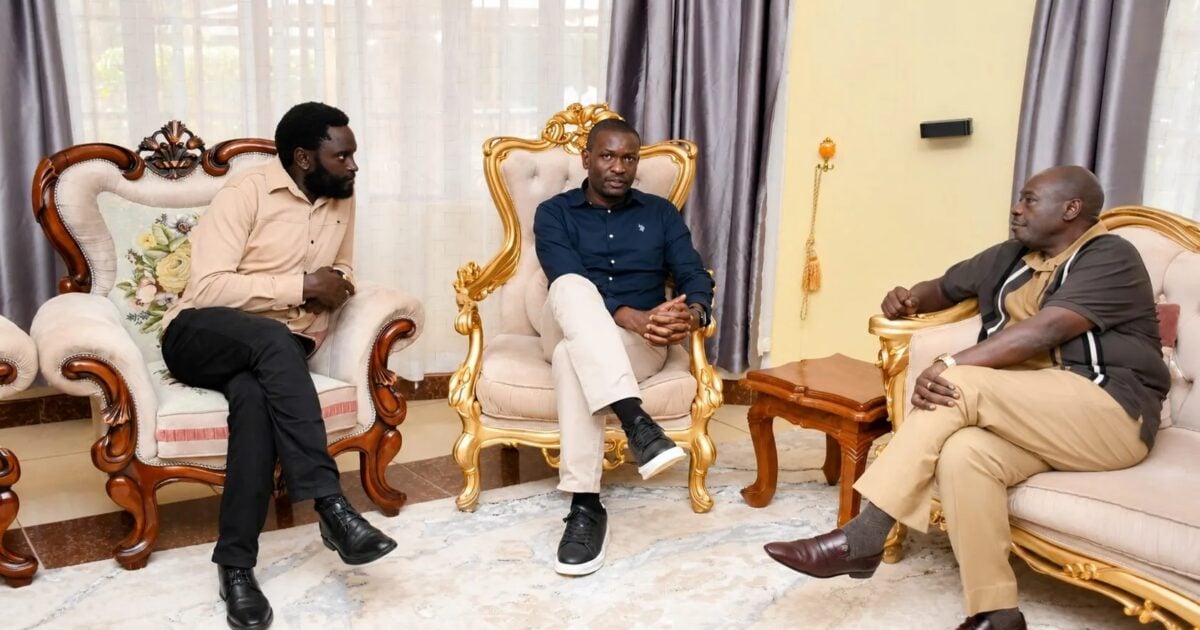
When Edwin Sifuna chose to honour Riggy G on Mashujaa Day, he knew exactly how it would be read, as endorsing Riggy G as a shujaa. He must have known he would lose Kenyans who saw him as a breath of fresh air. But he also calculated that no opposition candidate can win without Riggy G. The question is whether that trade-off was worth it.
In practical terms, Sifuna has probably traded away the non-tribal, young, tech-savvy demographic that made him distinctive for the promise of Mt Kenya numbers. But does that leave him with a winning hand? What is baffling is the assumption that Riggy G has the Mt Kenya vote under lock and key. He does not. The fact that MPs from his own backyard watched his impeachment should challenge the belief that Mt Kenya is homogenously behind him.
ODM is already perceived to be split into two camps. There are the broad-based diehards who are sold on the current arrangement. They can point to what changed after the Gen Z protests and Riggy G’s impeachment: a dismantling of the politics of shares and privilege, and a new journey towards usawa ni sawa.
Then there are the “Sisi Ndio Sifuna” diehards. They were opposed to the establishment and held President Ruto accountable as its figurehead, but many see Riggy G as a worse enemy. To them, he represents a longer route out of the quagmire and a figure who would hold any regime that wins with him to the politics of shareholding. He is the epitome of the leadership that told communities that did not vote for Kenya Kwanza to go without development.
Second, politics is about positioning. As politicians take sides, it is clear that the broad-based heavyweights are sticking with the arrangement. Despite predictions that many would follow Sifuna, more are cementing their place in the broad-based camp. Only a handful of politicians have openly endorsed him, and it is unlikely we will see big names from traditional Baba strongholds throw their weight behind Sifuna.
Not now that usawa ni sawa seems to embody what previous handshakes and power-sharing deals did not have: fidelity, not just to political agreements but also to tangible and more equitable economic development and the distribution of major infrastructure projects to regions hitherto marginalised.
Even young politicians like Caleb Hamisi have made it clear that Sifuna is on his own now that he has taken the Wamunyoro route. Many young politicians around Sifuna remain tied to their regional kingpins. The question is: is the politics being assembled around Sifuna genuinely different, or is it simply another mobilisation along familiar ethnic lines? If the goal is to escape old politics, mobilising along the same lines is as tired as the politics Kenyans want to run away from.
What many legacy politicians may not realise is that the 2027 election is being won now. What is happening today is already shaping the votes candidates will receive on election day.
While the opposition is assembling in Wamunyoro, the broad-based government is working. The markets being built in Trans Nzoia, even as Governor Natembeya expresses anger at the government, are part of the development story that gives substance to usawa ni sawa. Beyond political attacks, Kenyans are watching government policy. CS Mbadi’s actions at the Treasury are having ripple effects at macro and microeconomic levels, while broad-based leaders are descending into villages to address mwananchi concerns.
In my native Migori, there are people singing “Sisi ni Sifuna”. But every new day evokes questions about why Sifuna is taking us back to the very man who argued that Luos needed to be mainstreamed to get development. Many are happy with the rise to prominence of CS Mbadi, as roads they never thought would be built are under construction, with Chinese firms across the county. It is evoking glimmers of a possible 2032 bid by one of their own.
Information now travels fast, loyalties are scrutinised in real time, and voters do not need to wait for rallies or a united opposition candidate to decide. By the time the opposition comes campaigning, government actions may already have shaped choices. A last-minute united candidate cannot erase the experiences voters have accumulated over years.
This is where Sifuna’s trade-off becomes potentially fatal. While he moves to Wamunyoro, evoking the image of a politician seeking a return to a political order dominated by a few entitled leaders, one that marginalised vast sections of the country and preached the politics of shareholding, the broad-based government is consolidating its development narrative.
Sifuna may have calculated that Riggy G brings numbers. The danger is that, in acquiring those numbers, he loses the voters who made him distinctive. In 2027, Kenyans will not vote simply for who can move crowds. They will vote for what they have seen, what they have felt, and who has finally made them feel Kenyan enough to deserve development.