Civil rights groups in South Africa are protesting the expansion of data centers by American companies, marking one of the first coordinated attempts on the continent to slow AI infrastructure development.
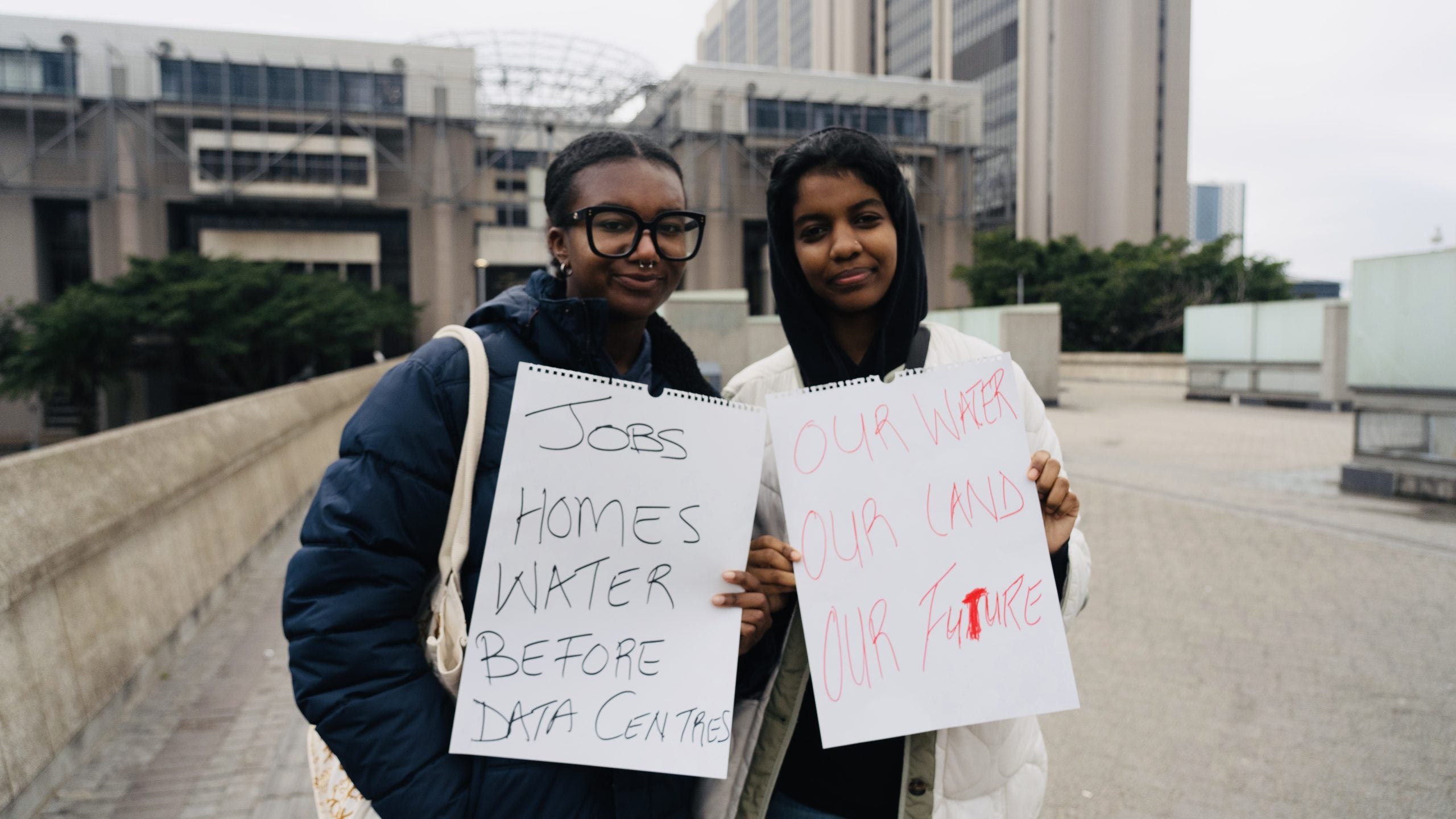
“What we are saying is there should be a moratorium on data centers. … It must be across South Africa,” Kashiefa Achmat, chairperson of Housing Assembly, a Cape Town-based advocacy group, told Rest of World.
South Africa has the most data centers on the continent, owned predominantly by American hyperscalers like Microsoft, Amazon, and Google, and data center operators such as Equinix and Digital Realty.
They are racing to fill the continent’s rising demand for compute, which could hit 2.2 gigawatts by 2030, about five times the current levels, according to a McKinsey report.

Hafeez Floris/Foxglove
Microsoft has committed 5.4 billion rand ($300 million) by 2027 to expand its digital and AI infrastructure in South Africa. Amazon Web Services will invest $1.5 billion until 2029 to expand AI capabilities across Africa. In South Africa, Equinix plans to invest $438 million.
“This is a strategic moment for African countries precisely because companies want access to new markets and locations,” Rachel Adams, founder of the Global Center on AI Governance, an African think tank on AI, told Rest of World.
The expansion comes as data center projects globally face scrutiny over their environmental impact. In the U.S., residents have rallied against these facilities in Virginia, California, and Philadelphia. In June, New York imposed a statewide moratorium for up to a year on hyperscale data centers. Protests have also been seen elsewhere in the world, including by farmers in India and Indigenous groups in Brazil.

Equinix
Communities push back
Housing Assembly and U.K.-based nonprofit Foxglove filed a legal challenge in August against two data centers proposed by Equinix in Cape Town. Along with other rights groups, they called on the South African Human Rights Commission to investigate the projects’ impacts and impose a pause on hyperscale data center expansion.
They have also called for new regulations requiring operators to disclose their water and electricity usage, and provide benefits to local communities.
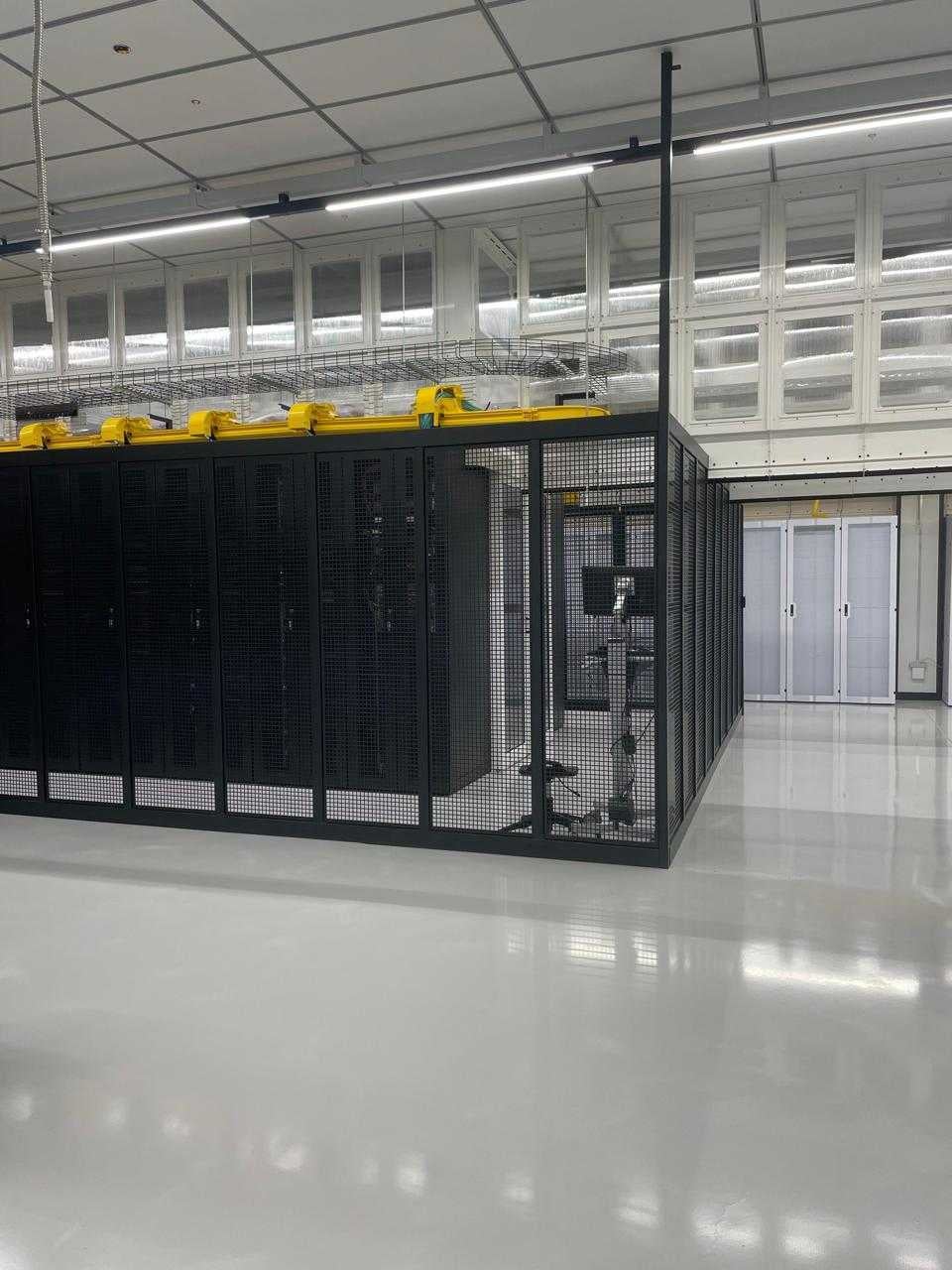
At the center of the protest is California-based Equinix, one of the world’s largest data center operators, which provides facilities to hyperscalers and other clients. It has benefited from the AI boom, with its market capitalization rising over 30% since last December to $99.36 billion as of September 16.
The groups say Equinix’s data centers would compete with residents for already-scarce water and electricity. “Our members know what it is to queue for water, to go without electricity, and to wait decades for decent housing. Now a massive data center is trying to jump the queue and take our land, water and energy,” Achmat said.
Equinix’s proposed 174-megawatt Cape Town facilities would use over 4.4 billion liters of water annually, according to the groups — as much as 18,000 homes would use in a year. They worry because South Africa is already water-stressed; in 2018, Cape Town came close to running out of water.
Equinix focuses on sustainable builds, a spokesperson told Rest of World. “Sustainable design is not an afterthought for us; it is a starting point,” they said.
Similar concerns have been voiced by community groups in Kenya living near a proposed 1-gigawatt data center by United Arab Emirates-backed G42 and Microsoft. The project stalled in May partly due to concerns about the project’s power needs.
Residents haven’t been informed about the impacts of the G42-Microsoft project, Silas Wanjala, a member of the neighbourhood watchdog group Lake Naivasha Riparian Association, told Rest of World.
“If you bring in a data center and you don’t learn well the issues of water allocation, you risk … the floriculture and horticulture sector,” Wanjala said.
G42 and Microsoft did not respond to a request for comment by deadline.
Need for transparency
The pushback by civil society is happening because the costs and consequences of data centers have become more apparent, Adams said. If communities only discover the impact once decisions have been made, it can “create mistrust and play on the uneven power relationships between large tech providers and local communities,” she said.
Lack of transparency around data centers is common among big tech companies, Daniel Kammen, a professor of energy and climate justice at Johns Hopkins University, told Rest of World. “These companies try to cut sweetheart deals with the government,” he said.
Africa still needs data centers
The protests should not halt Africa’s data center expansion, Obinna Isiadinso, global lead for data centers and cloud at the International Finance Corporation, told Rest of World.
The continent holds about 409 megawatts of operational data center capacity, which is less than 1% of global data center capacity, despite having a fifth of the world’s population.
To increase capacity to 1 gigawatt could cost up to $8 billion, Isiadinso said. “And at 1 gigawatt, we will still be behind India, we will be behind Malaysia. Malaysia has 2 gigawatts of capacity,” he said.
African nations need data centers to scale digital services, Chinasa Okolo, the Washington-based founder of policy incubator Technecultura, told Rest of World. “While I am not in opposition to data center expansion, I am against uncontrolled expansion that puts the livelihoods and health of vulnerable communities at risk,” he said.
This article was updated to identify Chinasa Okolo as founder of Technecultura.