


South Africa urges science to deliver real-world solutions

- Country:
- South Africa
South Africa has called on the global scientific community to place greater focus on turning research into practical solutions that improve people’s lives, particularly in developing countries grappling with poverty, unemployment and inequality.
The appeal comes as South Africa marks both National Science Month and Mandela Month, linking the country’s commitment to scientific progress with former President Nelson Mandela’s belief that knowledge and innovation should be used to create a fairer and more inclusive society.
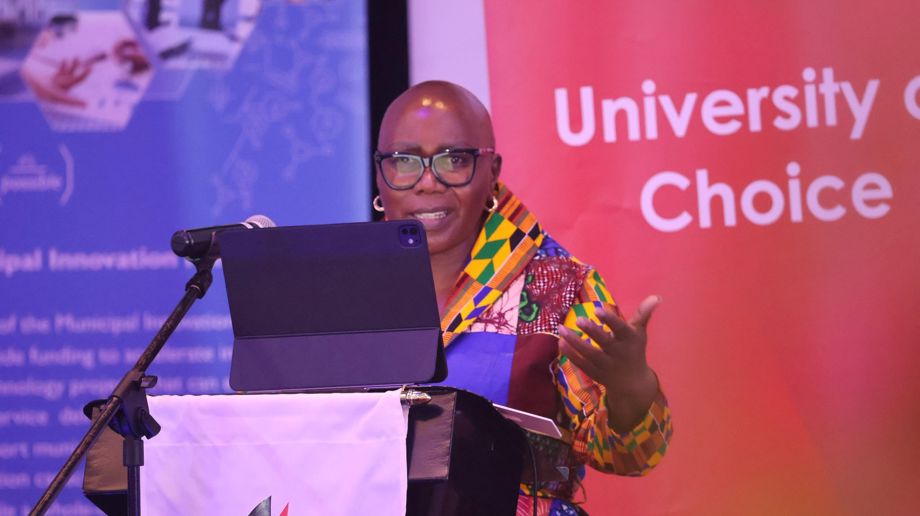
Speaking at UNESCO’s 2026 Global Conference of the International Decade of Sciences for Sustainable Development in Paris, Deputy Minister of Science, Technology and Innovation Dr Nomalungelo Gina said scientific research should not end with producing evidence but should directly influence policies, strengthen public services and improve everyday life.
Science should support development goals
Addressing delegates at the three-day conference, Gina said the International Decade of Sciences for Sustainable Development offers an opportunity to strengthen research capacity and help developing countries translate scientific knowledge into meaningful action.
She highlighted the need for greater investment in research infrastructure, skills development, technology transfer, innovation financing, data systems and stronger institutional coordination. These elements, she said, are essential for ensuring that scientific discoveries lead to measurable improvements in people’s lives.
South Africa also used the international gathering to argue that scientific evidence should play a central role in government planning, budgeting and service delivery, particularly in tackling challenges such as unemployment, food insecurity, climate change and persistent inequality.
Stronger investment and coordination needed
Gina noted that South Africa continues to face significant social and economic pressures, with unemployment remaining above 30% while many households continue to struggle with food insecurity and inequality. She said these realities make it even more important for research to guide public policy and deliver practical outcomes.
The Deputy Minister acknowledged that South Africa’s gross expenditure on research and development currently stands at 0.62% of Gross Domestic Product, highlighting the need for increased investment and closer cooperation between researchers, policymakers and public institutions.
She pointed to South Africa’s internationally recognised genomic surveillance during the COVID-19 pandemic as proof that sustained investment in science can produce effective public policy when supported by capable institutions, strong partnerships and public trust.
Global science must benefit everyone
The conference is reviewing progress under UNESCO’s International Decade of Sciences for Sustainable Development (2024–2033), an initiative designed to strengthen the contribution of science towards achieving the United Nations Sustainable Development Goals.
According to UNESCO, 397 scientific initiatives have been endorsed across 79 countries, attracting more than US$50 million in confirmed funding while supporting all 17 Sustainable Development Goals. The organisation also found that Africa accounts for fewer than 10% of these initiatives despite representing 17.5% of the world’s population. Many participating projects identified weak coordination, rather than limited funding, as the biggest barrier to delivering meaningful impact.
UNESCO Director-General Dr Khaled El-Enany said the world already possesses a wealth of scientific knowledge, adding that the priority now is creating stronger systems that translate research into benefits for people and the planet. As South Africans prepare to mark International Mandela Day on 18 July, the government’s message reinforces the idea that science, like public service, should ultimately improve lives and create opportunities for future generations.


