South Africa’s ANC records worst-ever results in local elections


EPA
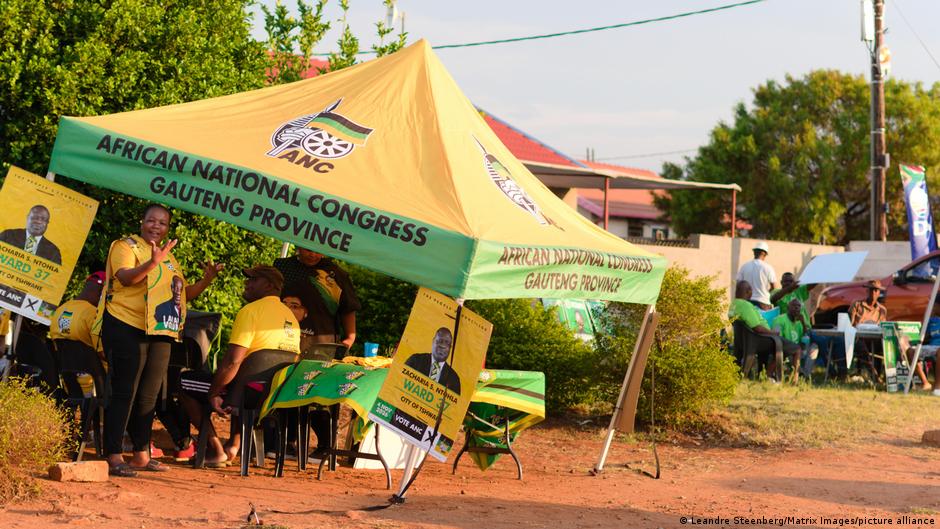
South Africa’s ANC has recorded its worst-ever showing in local elections since Nelson Mandela led the country out of apartheid and into democracy more than 30 years ago, a result the party has called “catastrophic”.
While it won the most votes of all parties in the country, the African National Congress won 30.76% of the overall vote, one third down from the 46% it gained in 2021, and a far cry from the 64.82% 20 years ago.
The story of its decline is also clear in the provinces and cities. The party won a majority in just one of the country’s nine provinces, Limpopo. In 2021 it won six. It also won the most votes in just two of the eight cities, compared with six at the last local elections.
The Democratic Alliance (DA) came second in the overall vote with 24.64%, retaining majority control of the city of Cape Town. Former president Jacob Zuma’s MK party came third overall with 9.76%, unseating the ANC as winner in the city of Durban, while the Economic Freedom Fighters (EFF), led by Julius Malema, once seen as a serious challenge to the ANC, came fourth with 6.22%.
“This has been a very catastrophic outcome for the ANC,” said secretary-general Fikile Mbalula on Saturday. “We knew this disaster is coming, we’re staring at it. As we got into elections, the cost of living of our people was too high. The middle class have turned on the ANC in big numbers.”
Entering the count centre tonight, South Africa’s president and leader of the ANC Cyril Ramaphosa said: “We accept the will of the people however concerning it might be, we accept that this is how the people of South Africa in our towns, in our cities, in our metros have spoken – and this is their verdict, we accept it with humility. It is a decline that is concerning, that is how I characterise it.”

REUTERS/Oupa Nkosi TPX
It’s a continuing decline for the ANC, which lost majority rule in the national elections in 2024 for the first time in its history. It then had to form a coalition government with a raft of other parties in what is now known as the GNU, or government of national unity.
While the Democratic Alliance made significant gains in the cities in these local elections, its overall vote share rose marginally from 21.83% in 2021, and was below the 26.9% it gained in 2016.
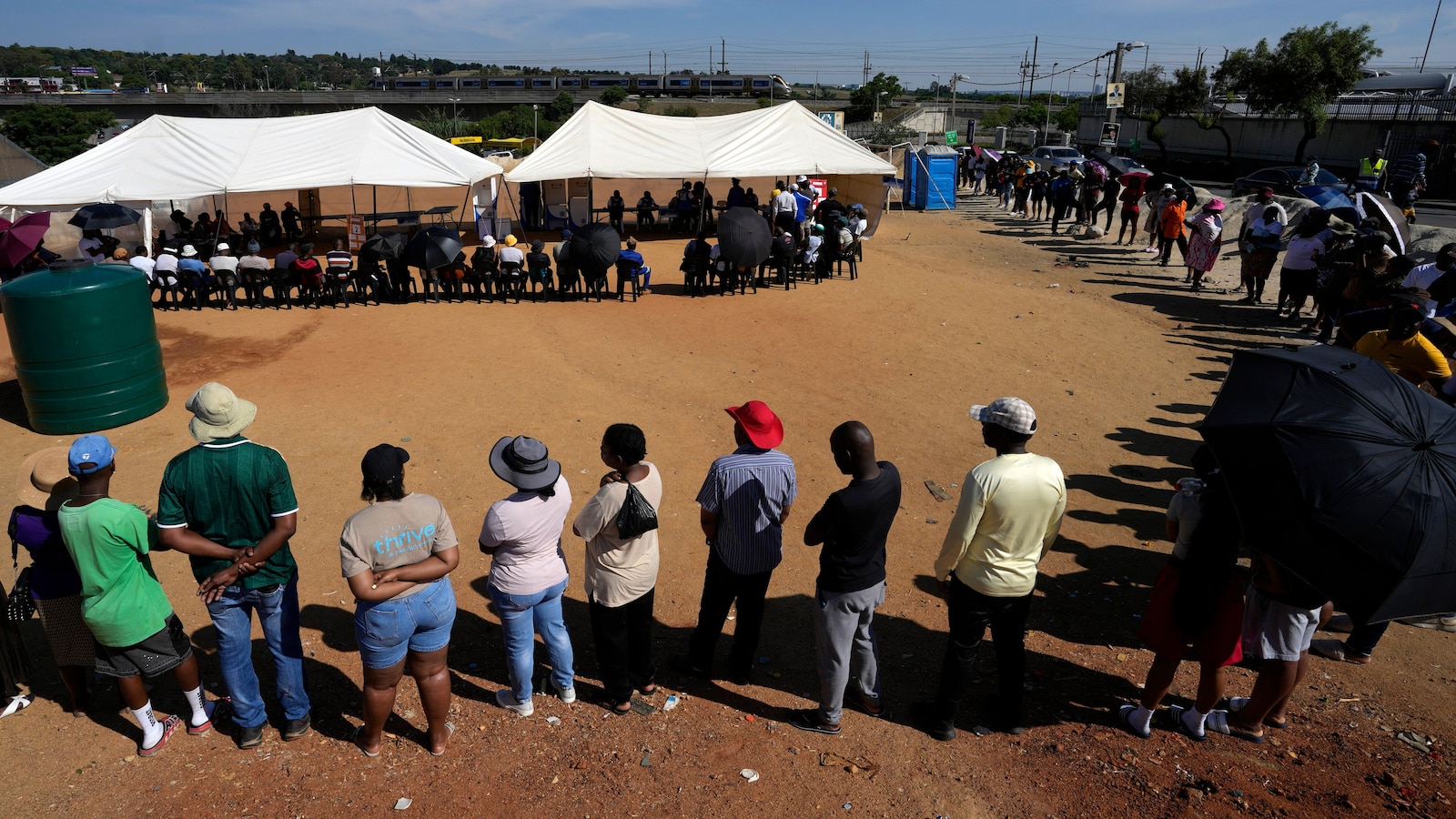
Voter turnout was 52.29%, an increase from 45.9% in 2021, when elections were held during the Covid pandemic.
“This election is delivering a devastating message to the ANC”, said political analyst Susan Booysen. “It’s an ANC in decline at local municipal level, at the metropolitan level, and when the results are reflected provincially and nationally, we see severe declines in ANC levels of support all around.”
The reason for that decline in support is largely due to poor service delivery and infrastructure across the country, from water and power to sanitation. “These are huge problems,” says Booysen, “and have really been affecting the lives of ordinary people, in the suburbs, in the townships, and in very dramatic ways.”
The big picture looks even more bleak for the ANC. The party will elect a new leader next year as Cyril Ramaphosa comes to end of his term. He is due to stay on as president of the country until the next national elections in 2029, but there are few candidates lined up to succeed him in either role.
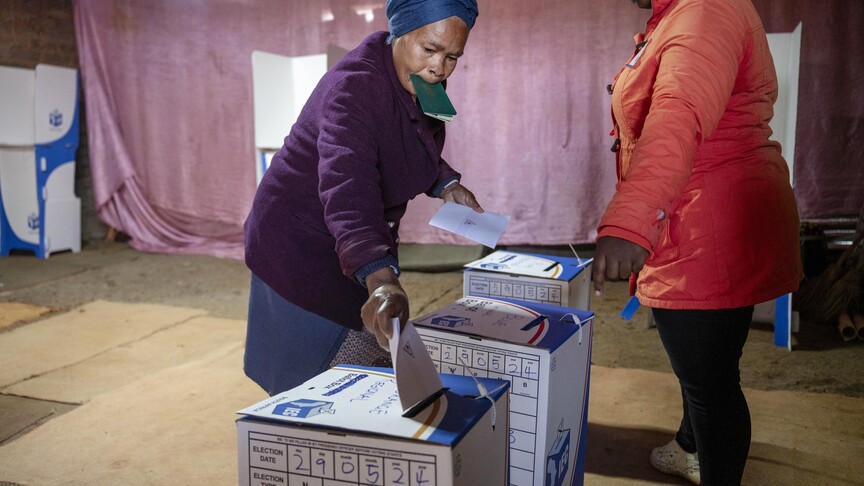
South Africans vote for local govment elections
“It is sort of the end of the liberation movement era in South Africa,” said political analyst William Gumede, “and the dominance of the liberation movement since the end of apartheid. So the ANC is going to be a party that by 2029 could be the second biggest rather than the biggest party. It may actually spiral into a long period of just total infighting. This is a new era for South Africa’s politics and also the ANC.”
The elections also saw a significant shift in voting patterns, with the DA, traditionally known as the “white party” for attracting a largely white vote, gaining more black votes. “We’re moving towards a post-racial voting pattern in South Africa,” added Gumede.
South Africa now faces days of local coalition building, with the three metropolitan municipalities in the province of Gauteng, the country’s powerhouse, under particular scrutiny. The ANC may even find itself shut out in the cities of Johannesburg and Pretoria.
“We are now in a coalition country,” said Gumede. “Essentially, what the voters are saying is, “Well, the ANC has dominated the last three decades, they didn’t use their power to change the society for the good, so we don’t want the dominant parties anymore, whether at national level, provincial level, or rather now at a local level. We actually want coalitions. We want people to work together.”
Parties now have 14 days from the moment results were announced to negotiate coalitions.