

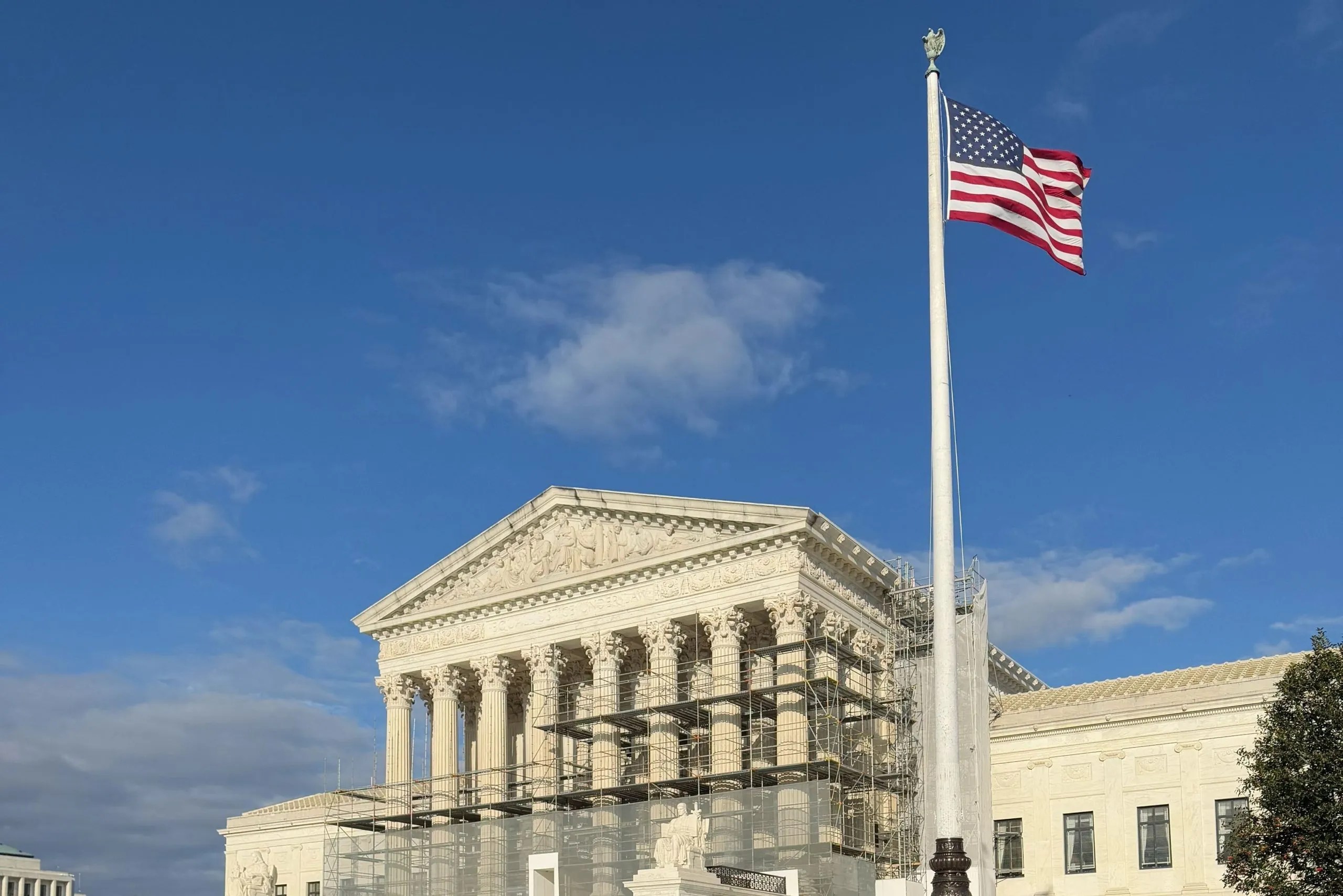
The Supreme Court on Monday allowed the Trump administration, at least for now, to move forward with deporting immigrants to countries not specifically identified in their removal orders. In a brief unsigned order, the justices paused a ruling by a federal judge in Massachusetts that temporarily prohibited the government from sending immigrants to “third-party countries” without first taking a series of steps to ensure that the immigrants would not face torture there.
Justice Sonia Sotomayor dissented, in a lengthy opinion joined by Justices Elena Kagan and Ketanji Brown Jackson. “Apparently,” Sotomayor wrote, “the Court finds the idea that thousands will suffer violence in far-flung locales more palatable than the remote possibility that a District Court exceeded its remedial powers when it ordered the Government to provide notice and process to which the plaintiffs are constitutionally and statutorily entitled.”
The dispute stems from guidance issued by the Department of Homeland Security earlier this year, in response to an executive order signed by President Donald Trump that instructed DHS to take “all appropriate actions” to remove noncitizens who are still in the United States even though an immigration judge issued an order for their deportation.
In the first set of guidance, issued in February, DHS instructed U.S. Immigration and Customs Enforcement to determine whether immigrants who had been the subject of such orders but had not yet been deported because of the prospect that they would be tortured if they were returned to their home countries could instead be sent to a different country – a process known as a third-country removal.
Then, in March, DHS issued additional guidance that outlined a set of procedures for use in cases involving efforts to deport immigrants to countries that are not specifically identified in their deportation orders when those countries have not assured the federal government that the immigrants will not face torture. First, DHS said, the immigrants must receive notice of the planned removal; they must then have an opportunity to “affirmatively express” fear that they will face torture; and – if needed – DHS must conduct a screening to determine the likelihood that they will be tortured.
The plaintiffs in this case – four undocumented immigrants with deportation orders – went to federal court in Massachusetts, seeking to block their removal to a country not identified in those orders.
U.S. District Judge Brian Murphy temporarily barred the government from deporting the plaintiffs and others in similar situations to third countries without first providing written notice to the immigrants and their lawyers, giving them at least 10 days and a “meaningful opportunity” to express their fear of removal, considering whether the immigrants have a “reasonable fear” of being tortured, and giving them at least 15 days to seek to reopen their immigration proceedings if the government determines that they do not meet all of these criteria.
After the U.S. Court of Appeals for the 1st Circuit declined to put Murphy’s order on hold, the Trump administration came to the Supreme Court on May 27, asking the justices to intervene. U.S. Solicitor General D. John Sauer told the court that Murphy’s “judicially created procedures are currently wreaking havoc on the third-country removal process,” and disrupting “sensitive diplomatic, foreign-policy, and national-security efforts.”
Among the highest-profile third-country removal efforts is the federal government’s ongoing attempt to remove a group of immigrants to South Sudan, which is the subject of a State Department travel advisory that warns U.S. citizens against travel because of “ongoing” armed conflict that “includes fighting between various political and ethnic groups.” In a hearing on May 22, Murphy found that the federal government had violated his order when it put the group on a plane to South Sudan without following the proper procedures. The plane was rerouted to Djibouti, where the immigrants and ICE officers currently remain.
In their response to the Trump administration’s request, the immigrants urged the justices to leave Murphy’s order in place. They emphasized that his order doesn’t bar the government from carrying out third-country removals. Instead, they wrote, “it simply requires” the Trump administration “to comply with the law when carrying” out such removals.
The Supreme Court on Monday granted the Trump administration’s request and put Murphy’s order on hold while the government’s appeal moves forward. As is often the case with orders on the court’s emergency appeals docket, the court did not provide any reasoning for its ruling, nor did the justices who signed on to the ruling publicly identify themselves; we know only that at least five justices voted to pause Murphy’s order.
In a 19-page opinion that Sotomayor ended by indicating that she dissented “[r]espectfully” – an adverb traditionally used in dissents – but also “regretfully,” Sotomayor complained that her colleagues in the majority had stepped in “to grant the Government emergency relief from an order it has repeatedly defied” when it should have allowed the lower-court judges “to manage this high-stakes litigation with the care and attention it plainly requires.”
Sotomayor also suggested that the Trump administration is not entitled to the relief that it received on Monday because it failed to comply with the lower court’s orders – first by sending four noncitizens to Guantanamo Bay and then on to El Salvador, and then by sending the immigrants to South Sudan. “The Government,” Sotomayor wrote, “thus openly flouted two court orders, including the one from which it now seeks relief.”
Even if the orders were wrong, she stressed, the government was still required to follow them while they were in effect. “That principle is a bedrock of the rule of law,” she added, and the “Government’s misconduct threatens it to its core.” Moreover, she continued, “each time this Court rewards noncompliance with discretionary relief, it further erodes respect for courts and for the rule of law.”
Posted in Emergency appeals and applications, Featured
Cases: Department of Homeland Security v. D.V.D.
Recommended Citation:
Amy Howe,
Supreme Court pauses district court order preventing immigrants from being deported to third-party countries,
SCOTUSblog (Jun. 23, 2025, 6:18 PM),
https://www.scotusblog.com/2025/06/supreme-court-pauses-district-court-order-preventing-immigrants-from-being-deported-to-third-party-countries/

