

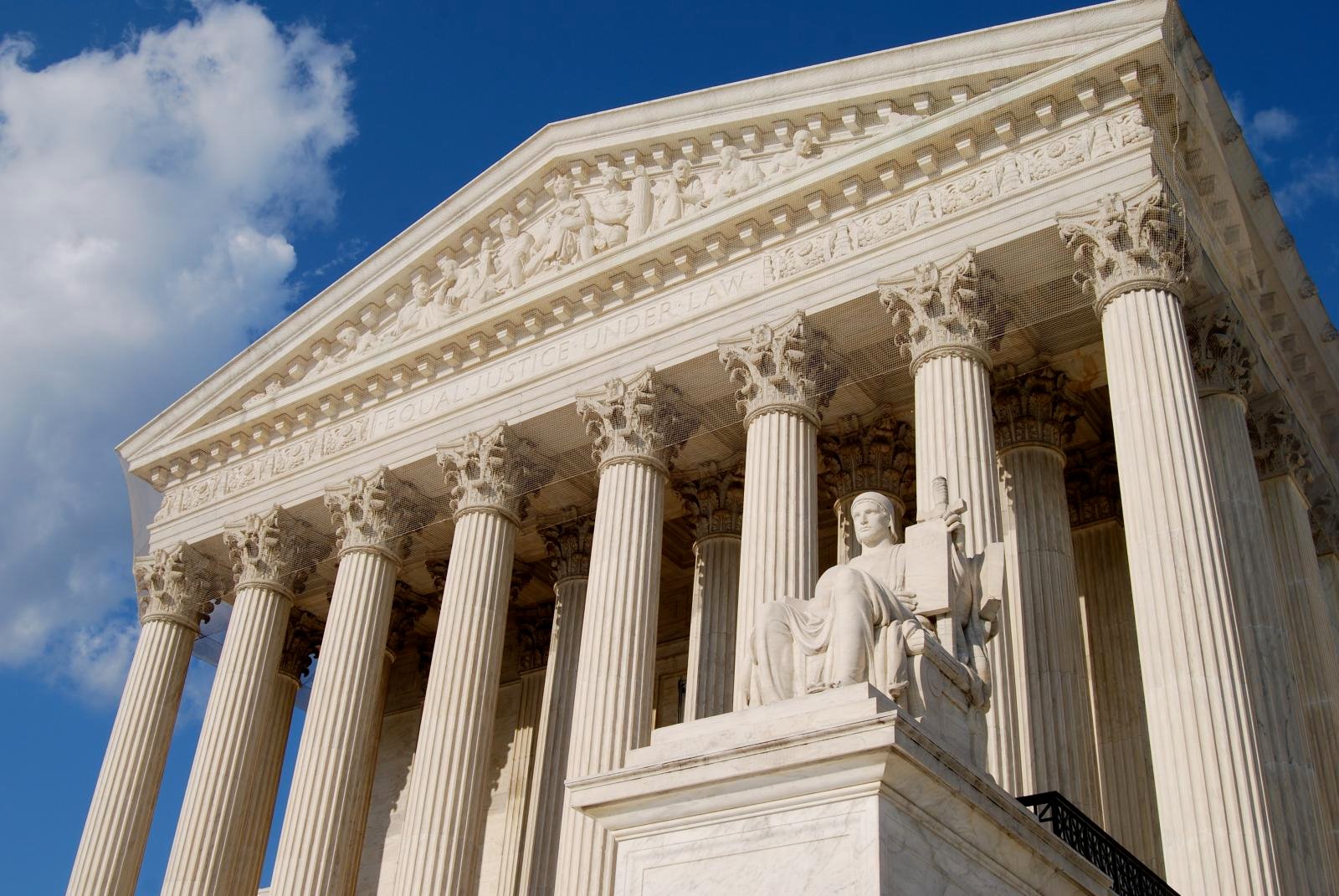
The Supreme Court on Thursday ruled that Wisconsin violated the Constitution when it refused to give a Catholic social ministry group the same exemption from the state’s unemployment tax that it gives to churches, religious schools, and some other religious groups. In a unanimous opinion by Justice Sonia Sotomayor, the justices agreed with the Catholic social ministry group that the denial of the exemption constituted religious discrimination. “It is fundamental to our constitutional order that the government maintain ‘neutrality between religion and religion,’” Sotomayor emphasized. “There may be hard calls to make in policing that rule,” she wrote, “but this is not one” of them.
The dispute began nearly a decade ago when the Catholic Charities Bureau for the diocese of Superior, in the northwestern part of Wisconsin, sought an exemption from having to pay the state’s unemployment tax for its employees. Because the group conducts its charity work to put Catholic principles into operation, it contended, it fell within a provision of the tax law that carves out from the definition of “employment” anyone who works for an organization “operated primarily for religious purposes.”
A state labor commission rejected the group’s bid for the exemption, concluding that even if its motivations were religious, the charity work itself was secular.
Catholic Charities went to the Wisconsin Supreme Court, which upheld the commission’s decision. It concluded that the group was not “operated primarily for religious purposes,” and therefore not entitled to the exemption, because it does not “attempt to imbue” the participants in its programs with the Catholic faith in any way. Moreover, it added, the group provides services to, and employs, people of all faiths.
Catholic Charities then appealed to the U.S. Supreme Court, which on Thursday reversed. “A law that differentiates between religions along theological lines,” Sotomayor explained, “is textbook denominational discrimination.” This case, Sotomayor continued, involves precisely that kind of discrimination: Catholic Charities is controlled by a church, but the Wisconsin Supreme Court ruled that the exemption did not apply – even though the group’s “charitable works are religiously motivated” – because they do not proselytize and because they provide their services to people of all faiths. Because the group’s Catholic faith in fact prohibits it from proselytizing or limiting its services to Catholics, Sotomayor observed, denying the exemption “thus grants a denominational preference by explicitly differentiating between religions based on theological practices.”
The exemption is therefore subject to the most stringent constitutional test, Sotomayor wrote, known as strict scrutiny. Under that test, it can only survive if it is both justified by a compelling government interest and narrowly tailored to advance that interest. Although Wisconsin contends that the unemployment tax serves the government’s interest in providing coverage for its citizens who are unemployed, the Wisconsin scheme is underinclusive (and therefore not narrowly tailored) because it carves out exceptions from the tax for 40 different kinds of “employment,” including for groups that are similar to Catholic Charities but are part of the church rather than a separate nonprofit.
And to the extent that the state contends that it has an important interest in not getting drawn into employment decisions related to religious faith and religious doctrine, Sotomayor continued, the scheme is overinclusive, because it applies to organizations – such as churches – rather than employees, which means that it covers employees, such as a custodian, who have nothing to do with religious doctrine.
Justice Clarence Thomas filed a concurring opinion in which he contended that the Wisconsin Supreme Court was also wrong for the separate reason that it treated Catholic Charities “as an entity entirely distinct and separate” from the diocese of Superior. Under the law of the Catholic church, he argued, the group and its subentities are in fact “an arm” of the diocese. And when the state supreme court failed to recognize this structure, he concluded, it violated a legal principle known as the church autonomy doctrine, which allows religious institutions to define their internal governance structures without interference from the state.
Justice Ketanji Brown Jackson also filed a separate concurring opinion in which she argued that a similar exemption in the federal unemployment tax was intended to hinge on what an organization does, rather than on its motivations or how it carries out those activities. In particular, she wrote, “Congress designed the exemption to capture a much narrower category of employers: church-affiliated entities that exist to perform religious functions.”
Posted in Featured, Merits Cases

