


For the first 30 years of television’s existence in South Africa, linear broadcasting dominated the way content was served to the public. Broadcasters including the SABC, MultiChoice and eMedia enjoyed the privilege of captive audiences who were “programmed” through rigid schedules that determined the type of content that would be served and the times that content could be accessed.
In a similar way to how Video Killed the Radio Star, the internet came along and democratised not only how content is created but also how it is consumed. The proliferation of social media sites such as the now-defunct MySpace and others like Facebook in the 2000s ushered in the era of user-generated content. YouTube’s launch in 2005 cemented the concept as the future of content creation. Viewers were no longer prisoner to the programming decisions of broadcasting corporations.
This is the fifth and final piece in a series of articles TechCentral is publishing this week to mark the anniversary of the launch of television broadcasting in South Africa on 5 January 1976. Visit our homepage for the full series.
Another major development came with the relaunch of DVD rentals site Netflix as a streaming platform in 2007. Unlike YouTube’s emphasis on user-generated content, Netflix behaved like traditional broadcasters in that the content on its platform was studio generated. But it emphasised the video-on-demand aspect of content consumption by allowing users to view that content whenever they chose to. The concept of primetime television was on its way out.
Traditional broadcasters were awake to this phenomenon and many launched their own streaming platforms to compete. In South Africa, MultiChoice launched DStv Now (later rebranded as DStv Stream) to mirror its satellite offering. It also launched Showmax, a more direct competitor to streamers like Netflix. The SABC launched SABC Plus in 2022, while eMedia has eVOD to capture internet-first audiences.
But South Africa remains a country defined by dichotomies, and so high internet penetration rates among more affluent sectors of society mean those audiences are taking full advantage of uncapped internet access by consuming content at their leisure. Those with limited access to the internet – like those who rely on mobile connections – remain captive to scheduled programming. South African broadcasters cater to both segments, but how television is distributed affects the economics of broadcasting, especially for the struggling public broadcaster, the SABC.
Antiquated
Free-to-air broadcasters the SABC and e.tv rely on antiquated analogue technology to distribute their terrestrial signals across the country. Analogue technology is costlier to maintain compared to more modern digital alternatives. It also has less capacity, with digital signals able to carry more channels at higher definition in the same amount of spectrum. Government has struggled to migrate the public onto digital terrestrial television for nearly 20 years – so much so that digital terrestrial technology itself is becoming outdated.
Linear broadcasters in more advanced economies are looking at IPTV and 5G broadcasts as options for new standards for signal distribution. Since these technologies are both internet-based, they are also seen as antidotes to competition from streamers as they allow linear broadcasters to introduce interactive elements to their broadcasts to keep audiences engaged. Examples of this include e-commerce integrations that will allow viewers to move from an advertisement to checkout through their TV sets.
Read: Television at 50 | The broadcast that changed everything
But even if South Africa’s terrestrial broadcasters migrate to the latest technologies, it is unclear just how long linear broadcasting will remain relevant as cultural norms shift.
Alongside the development of on-demand streaming platforms like Netflix, cellphones have increased dramatically in power over the last 20 years. The amount of processing power that used to be available exclusively in a desktop or laptop machine is now accessible in a device that fits in your pocket. That same device also has a powerful camera to aid in creating content.
These advancements have paved the way for a boom in short-form content made popular by Chinese social media platform TikTok. Other social media sites, including Facebook, YouTube and Instagram, also have their own version of “shorts”. Now both linear broadcasters and streamers are competing for eyeballs with social media platforms in the attention economy. The advertisers – and the revenues they generate for broadcasters – are following the users.
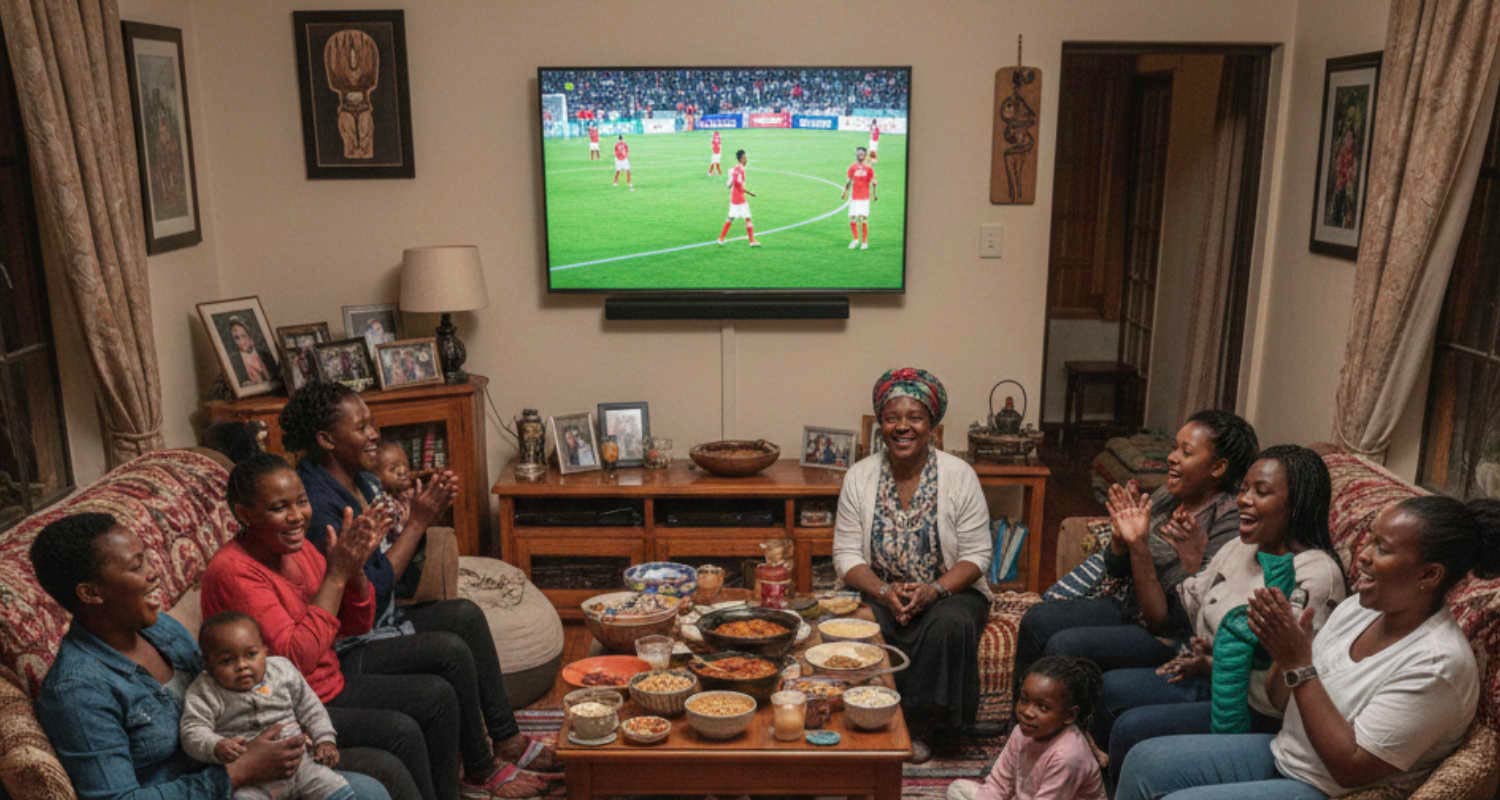
The cellphone has also contributed to the individualisation of viewer habits. Families are spending less time sitting together watching the same programme, with people under the same roof opting to be in their own rooms streaming the content of their choosing through their phones.
Read: Television at 50 | Power, propaganda and the battle for the airwaves
5G broadcasts and IPTV are the future of viewership on bigger screens, but as users change their habits – opting to consume content while on the move – short-form content is gaining traction as social media giants muscle in on viewing time. How South Africa’s major broadcasters, including the SABC, eMedia and MultiChoice, respond to the ongoing transformation of the industry will be fascinating to watch. – © 2026 NewsCentral Media
Get breaking news from TechCentral on WhatsApp. Sign up here.
