


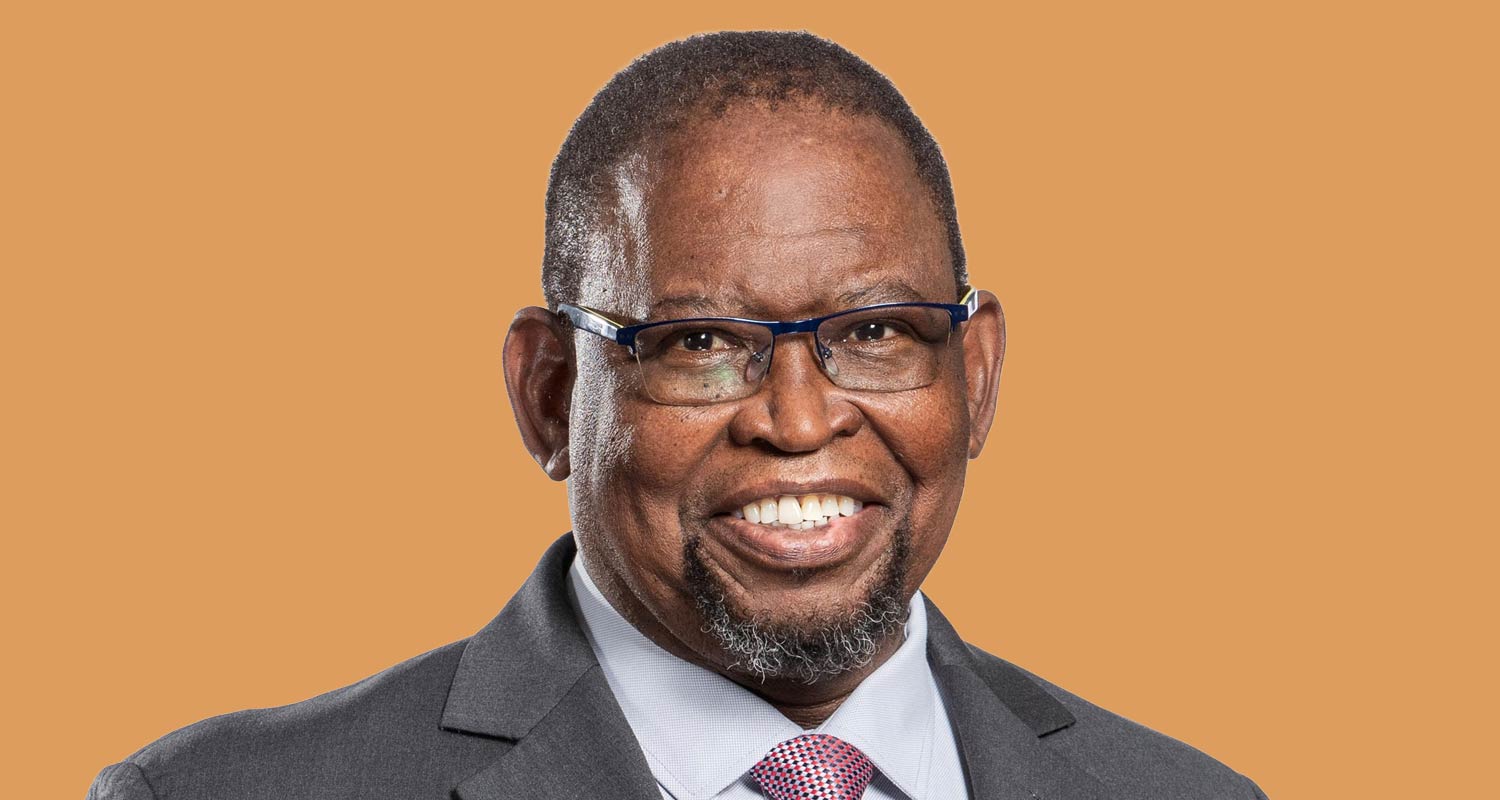
Finance minister Enoch Godongwana doesn’t appear to be a politician given to hyperbole. So, when he stood in parliament on Wednesday and called his 2026 national budget a “turning point” in the management of South Africa’s public finances, it was worth paying attention.
For the first time in more than a decade and a half, government debt is stabilising as a share of GDP. The budget deficit has narrowed. The R20-billion tax hike provisionally included in last year’s budget has been scrapped — the fiscal position improved enough to withdraw it without putting sustainability at risk (thanks in large part to surging metals prices).
Borrowing is falling and debt-service costs, while still a staggering R432-billion, have peaked as a percentage of revenue and are set to decline, provided government sticks to this more prudent fiscal path.
These are not the numbers of a country headed in the wrong direction. They are the numbers of a country beginning, slowly, to claw its way back.
Consider the sequence of events over the past 12 months. In October 2025, South Africa was removed from the Financial Action Task Force grey list — a stain that had hung over the country since February 2023 and that threatened investor confidence.
A month later, S&P Global upgraded the country’s sovereign credit rating for the first time in 16 years, citing an improving fiscal trajectory and reduced contingent liabilities after Eskom posted its first profit in eight years.
What changed?
The rand has strengthened, dipping below R16 to the dollar (sure, this is also in large part thanks to sustained dollar weakness). Inflation averaged just 3.2% in 2025, comfortably near the South African Reserve Bank’s new 3% target — itself a landmark policy shift, the first change in the inflation target in 25 years. Interest rates have come down, with scope for further cuts.
None of this was preordained. Five years ago, the outlook was bleak. State capture corruption had hollowed out critical institutions. South Africa had been downgraded to junk status. Load shedding was crippling the economy. The FATF grey-listing loomed. Growth had flatlined. We were headed for disaster and collapse.
Read: South Africa puts data centres on par with energy, ports in big policy shift
What changed? In part, the government of national unity. Whatever one thinks of the political compromises involved, the GNU has brought a measure of stability and fiscal discipline that markets have responded to.
But there’s a story beneath the headline fiscal numbers that deserves more attention, particularly from anyone thinking about what kind of economy South Africa is building for the next decade.
Quietly, and largely driven by private capital, the country has assembled the most advanced digital infrastructure on the African continent. This infrastructure could form the foundations for future economic growth.
Start with what’s under the ocean. South Africa’s submarine cable capacity has gone from scarcity to abundance in the space of a few years. Google’s Equiano system, with 144Tbit/s of design capacity, has gone live. The first portion of Meta Platforms’ 2Africa — 180Tbit/s across 45 000km — has also arrived, with further connections along the coastline to be built.
These sit alongside established systems like Seacom, Eassy, Wacs and other systems. Seacom has announced plans to build one of the world’s most advanced submarine broadband cables by the end of the decade.
The country has dual-ocean access, connecting to both Atlantic and Indian Ocean routes. This gives South Africa something no other country in sub-Saharan Africa can match: deep, redundant international connectivity with low-latency paths to every major global market.
On land, more than 250 000km of national fibre routes and dense metro rings carry traffic between cities and into data centres. The market has shifted from bandwidth constraint to bandwidth abundance — though the challenge now is pushing that connectivity into underserved areas, where only 1.85% of premises passed with fibre are in low-income communities. Licensing Starlink would assist — if only we could overcome the fractious and damaging politics around black economic empowerment.
Data centre investments
Then there are the data centres. President Cyril Ramaphosa told parliament in his state of the nation address that 55 data centres have been built in South Africa, with more than R50-billion in investment committed.
- Microsoft has spent more than R20-billion on its Azure facilities locally.
- Google launched its first African cloud region in Johannesburg.
- Vantage Data Centers is building a $1-billion campus at Waterfall, near Midrand.
- Teraco plans four new facilities in 2025-2026.
- According to the Digital Council Africa, the country has between 300MW and 350MW of live critical IT capacity, with another 120-200MW in the pipeline.
Godongwana’s decision to place data centre infrastructure on the same footing as electricity, ports and transport networks — designating it as critical infrastructure — is the clearest signal yet that government understands the strategic importance of this sector.
Read: Home affairs to move all visa processing online
Though details remain sketchy, it appears that South Africa is following the UK, which made the same designation in September 2024, and the US, which has fast-tracked federal permitting for data centre construction.
The investment flowing into digital infrastructure is not philanthropic. It’s a bet — by local investors as well as some of the world’s most sophisticated technology companies — that South Africa can serve as the digital gateway to a continent of 1.2 billion people.
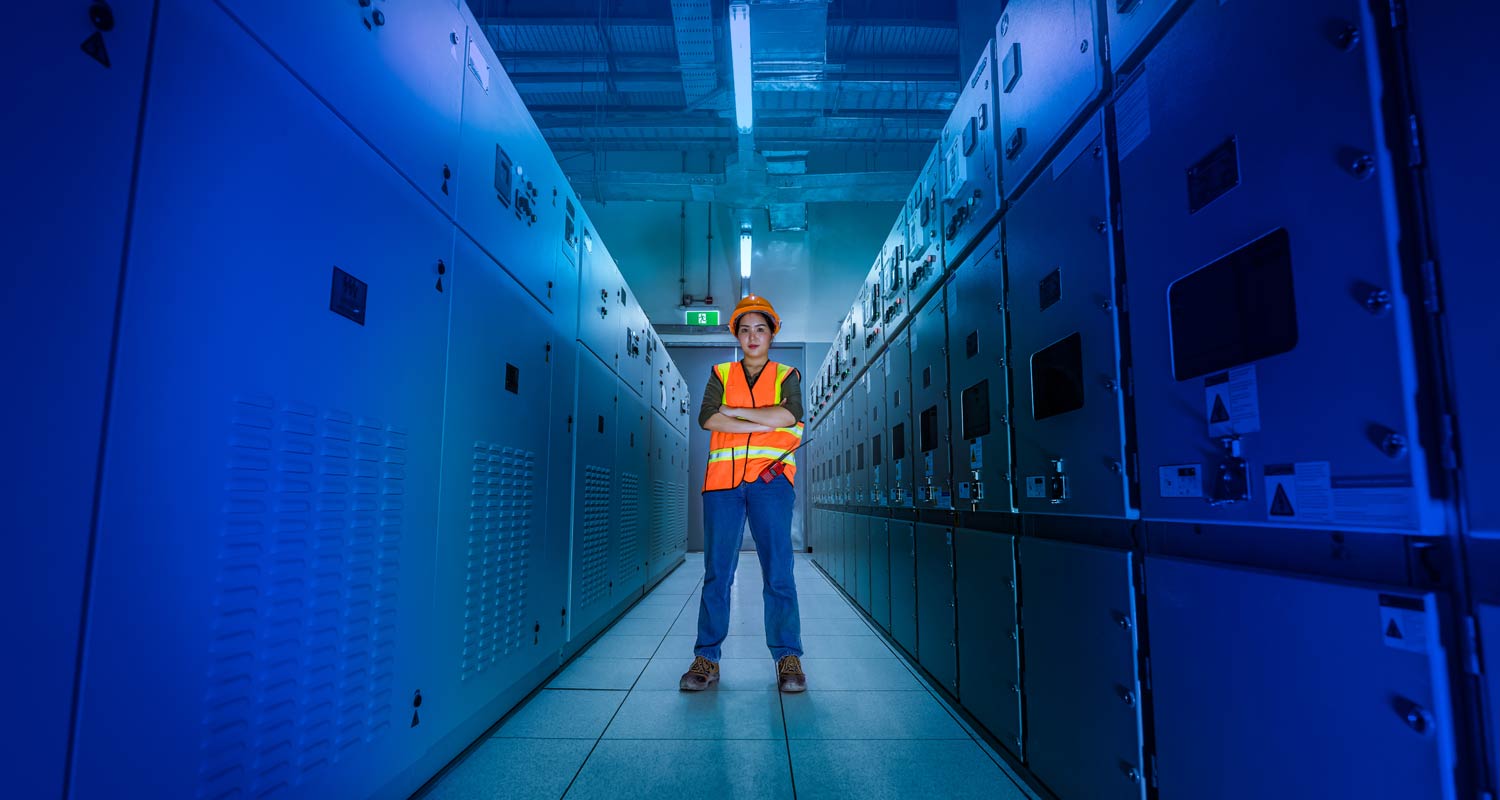
The logic is straightforward: if you need to host cloud workloads, AI training infrastructure or content delivery for sub-Saharan Africa, you need reliable power, dense fibre interconnection, submarine cable access, political stability and a functional legal system. Despite the country’s electricity challenges — which are now hopefully increasingly a relic of the past as the electricity sector is rapidly liberalised and transformed — South Africa ticks more of those boxes than any competitor in the region.
The South African Reserve Bank is also doing important work that could help transform payments, preparing the country for a digital future. The Bank, under the steady leadership of governor Lesetja Kganyago, has been doing two things simultaneously that matter enormously for the digital economy:
- First, by lowering the inflation target to 3% and anchoring inflation expectations, the Reserve Bank is creating the kind of macroeconomic stability that long-term infrastructure investors require. Lower inflation means lower interest rates, a stronger rand and reduced borrowing costs — all of which feed directly into the investment case for capital-intensive projects like data centres and fibre networks.
- Second, the Bank is overhauling the country’s payments infrastructure. Its payments modernisation programme is arguably one of the most ambitious financial infrastructure projects in the emerging world.
The Reserve Bank has taken a 50% stake in PayInc (formerly BankservAfrica), which is building a national payment utility and is opening the national payment system to fintechs for the first time — with the first licences expected in early 2026.
PayShap, the instant interbank payment platform launched in 2023, has already processed more than R100-billion in transactions, with over 4.5 million ShapIDs registered. It’s early days, but PayShap could yet transform payments in the same way UPI has in India or PIX has in Brazil.
This matters because a modern, inclusive digital payments rail — sitting on top of world-class data centre and fibre infrastructure — is the foundation for everything from e-commerce and fintech to e-government and financial inclusion. It’s the kind of structural reform that doesn’t make headlines — TechCentral being a notable exception, of course — but this is the stuff that reshapes economies.
If the fiscal numbers and digital infrastructure provide the foundation, the GNU has provided something arguably more valuable: a demonstration that competent governance is possible in South Africa after 15-plus years of ANC misrule that began under the disastrous rule of former President Jacob Zuma.
Home affairs leads the way
The standout example is home affairs under DA minister Leon Schreiber. In 18 months, his department has slashed smart ID and passport turnaround times, issued a record four million smart IDs in 2025 (nearly double the previous annual average), launched digital partnerships with banks, rolled out biometric border systems and dismissed officials for corruption. He’s digitising a department that was, for years, synonymous with government dysfunction.
The economic knock-on effects are real. A functioning home affairs means faster visa processing for skilled workers and tourists, more secure borders, reduced fraud and a digital identity system that can underpin financial inclusion. It’s a microcosm of what’s possible when capable people are given the mandate to reform broken institutions. The South African Revenue Service under commissioner Edward Kieswetter has also made notable advances in recent years.
Read: Tech push helps Sars deliver R78-billion revenue boost
Of course, it would be easy — and dangerous — to get carried away. South Africa’s GDP growth is projected at just 1.6% for 2026, rising to a modest 2% by 2028. That is not fast enough to reduce meaningfully an unemployment rate that remains among the highest in the world. Debt-service costs remain far too high — money that could be used to build schools, hospitals and other infrastructure.

Cable theft and vandalism cost the telecoms industry hundreds of millions of rand annually. Load shedding remains a latent albeit diminishing threat and high electricity costs continue to inflate operating expenses across the digital infrastructure value chain.
Crime is out of control in many parts of the country, corroding quality of life and deterring investment. Law enforcement and the prosecution authorities need massive reform.
And then there’s the politics. The GNU has held together longer than many predicted, but it remains a marriage of necessity, not conviction. The ANC and DA agree on very little beyond the need to keep the country from falling apart. Coalition politics at municipal level has been a disaster in many metros. The 2029 elections loom, and there is no guarantee that whatever emerges from them will sustain the current reform trajectory. South Africa’s history is littered with moments of promise that were squandered by political dysfunction, corruption and institutional decay. Political risk remains unacceptably high.
And yet…
The submarine cables are in the water. The fibre is in the ground. The data centres are being built. The Reserve Bank is modernising the payments system. Inflation is contained. The fiscus is stabilising. There’s much to be cautiously hopeful about.
For a country that has spent the better part of two decades lurching from one crisis to the next — load shedding, state capture, Covid, grey listing, junk status — the accumulation of positive developments over the past 12 months is striking. It doesn’t yet amount to a full-blown economic spring, or even a recovery in the conventional sense. Growth is still too slow, inequality too deep and crime far too pervasive.
Foundations
But the foundations for something better are being laid. The question is whether South Africa’s political class will have the discipline and vision to build on them — or whether patronage, factional infighting and institutional capture will reassert themselves and derail the good work now being done.
Read: Presidency backs Solly Malatsi in BEE reform fight
Godongwana called this a turning point. He may be right. The next three years will tell. The next 36 months will be critical in determining whether South Africa becomes a thriving emerging economy or resumes its downward decline. Right now, it’s nice to know there is reason for cautious optimism. Let’s hope we keep building on it. — (c) 2026 NewsCentral Media
