


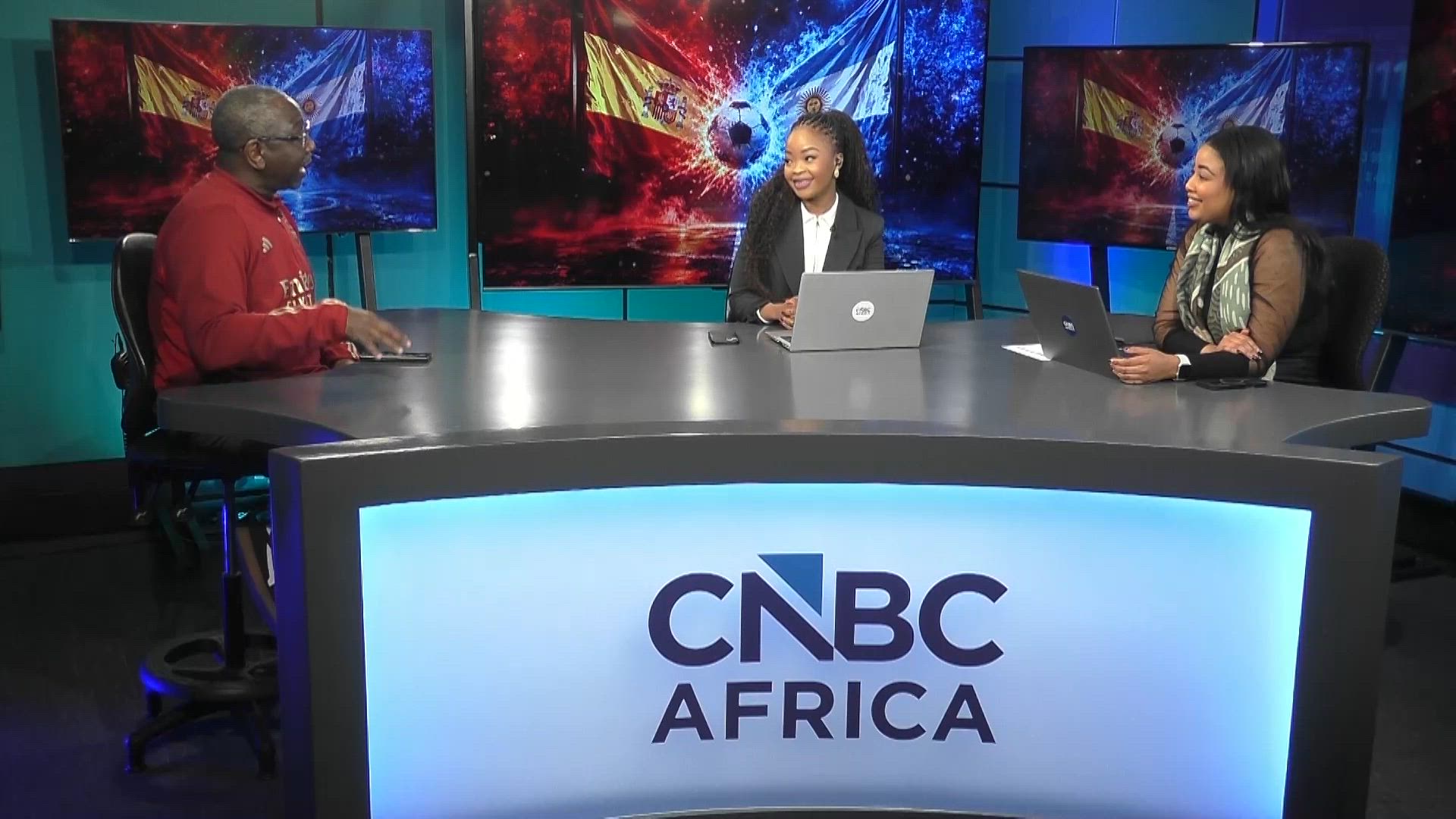
A recent discussion on CNBC Africa featured Lorenz Köhler, Senior Football Reporter at iDiski Times, who emphasized the importance of coaching and infrastructure in African football. According to Köhler, these areas can deliver the fastest short-term improvement for African national teams. A CNBC Africa audience poll on LinkedIn showed that 38% of respondents chose coaching and infrastructure as the top priority, ahead of youth development at 31%.
Köhler argued that stronger domestic leagues and academies are crucial, but African teams also need continuity in coaching, better technical structures, and more players competing in higher-level overseas leagues. He added that corruption and poor allocation of existing funding remain major barriers to progress across the continent. As the football world counts down to the FIFA World Cup final, debate over Africa’s future in the sport is centering on a familiar question: whether the continent’s biggest gains will come from better funding, stronger leagues, youth systems, or improved technical structures.
In a discussion tied to the tournament’s closing stages, viewers on LinkedIn ranked coaching and infrastructure as the biggest priority for African football going forward, with 38% of respondents selecting that option. Youth development followed at 31%, while better domestic leagues drew 16% and more investment trailed at 15%. Those results suggest audiences see the core challenge not simply as a shortage of money, but as a question of how to effectively utilize resources. Köhler said the continent’s most urgent need is stronger technical and operational foundations.
“It’s a little bit of everything of the above, but more in the short term, it’s coaching and infrastructure that needs to improve because that’s something that can make an immediate impact,” Köhler said. Köhler pointed to the structure around national teams as one of the clearest gaps between African sides and the sport’s top-performing nations. Using South Africa as a case study, he said Bafana Bafana have often worked with a far leaner technical setup than elite teams such as Argentina and Spain.
Köhler said top international sides typically have six or seven specialized coaches before accounting for support staff, analysts, and physiotherapists, while African teams often operate with a far smaller technical bench. In his view, that difference in expertise and preparation has direct consequences for player development, match readiness, and long-term continuity. Köhler also argued that the success of leading national teams is built on familiarity and consistency as much as star power. He said Argentina and Spain have benefited from squads in which many players have spent years together, building experience across age-group football before progressing to the senior setup.
According to Köhler, that continuity extends to the dugout. He noted that Spain coach Luis de la Fuente and Argentina coach Lionel Scaloni rose through youth development structures rather than through elite club management, helping create a consistent playing identity over time. “What do they have different than any other African nation? It’s familiarity,” Köhler said. “It’s a squad with players who have played together for over five years, with over 80 caps.” That continuity, he said, is often missing in African football systems, where coaching changes, short-term decision-making, and weak infrastructure can disrupt long-term planning.
He also said governance remains a serious concern. “There’s a lot of corruption that we can’t overlook where the funds that we do have are not going to the right places and not being distributed and invested properly,” Köhler said. The discussion also turned to domestic football and whether stronger local leagues can serve as the foundation for competitive national teams. Köhler said professional leagues, club academies, and coaching pathways are all critical, but he cautioned against treating any one element as a silver bullet.
A strong domestic league can support a strong national team, he said, but elite international success increasingly depends on whether players are developed well enough to compete in Europe’s top leagues. He pointed to Morocco and Ivory Coast as examples of countries that have combined local academy structures with pathways into overseas football. Morocco, he noted, has benefited from players developed through the Royal Moroccan Football Federation’s academy system as well as from the diaspora. Ivory Coast has similarly relied on talent that first emerged from local academies before moving abroad and maturing in more competitive environments.
The question of exporting talent is especially sensitive in African football, where promising players often leave for European clubs at a young age. But Köhler rejected the idea that keeping top talent at home would better serve the game. “I think it would be a ridiculous notion to say that we need to keep these players here,” he said, arguing that footballers, like professionals in any <a href="https://absafricatv.com/faith-calls-for-industry-status-brand-bharat-to-boost-india-tourism/” title=”FAITH Calls for Industry Status, ''Brand Bharat'' to Boost India Tourism”>industry, improve when they are pushed beyond familiar surroundings. He cited South African prospect Relebohile Mofokeng as an example of a player who would benefit from a move abroad, saying repeated exposure to the same opponents, coaching methods, and competitive conditions can eventually cap development.
In Köhler’s view, sending more players overseas can strengthen both ends of the football pyramid. Players who move abroad gain higher-level experience, while their departures create room in domestic competitions for younger prospects to emerge. He drew a parallel with South African rugby, where players leaving for clubs in Japan, England, and France helped broaden the talent base at home while also raising the standard of those representing the national side. “That improves the talent pool, improves the options, improves everything that we have in terms of the national team,” Köhler said.
The broader lesson from the World Cup finalists, he added, is that African football should focus on identity and continuity rather than one-off interventions. National associations need to define a style of play, identify a core group early, and give coaches time to work with players across age-group levels. Köhler said Spain and Argentina offer a model of how sustained planning can translate into tournament performance. Many of their players have progressed together through under-17, under-20, and under-23 setups, while core senior players have accumulated 30 to 40 caps or more before reaching their peak.
That level of continuity can be decisive in knockout football, where cohesion often matters as much as raw talent. For African football, the implication is that investment alone may not be enough unless it is matched by stronger technical systems, better governance, and clearer development pathways. Köhler said the ingredients for improvement are interconnected: youth development, domestic leagues, academy quality, coaching depth, and foreign exposure all matter. But if African federations are seeking the most immediate gains, he said, technical expertise and infrastructure remain the missing links.
With the next cycle of international competitions approaching, that debate is likely to intensify. The challenge for African football is no longer just identifying what is missing, but building systems that can turn potential into sustained World Cup-level performance.

