

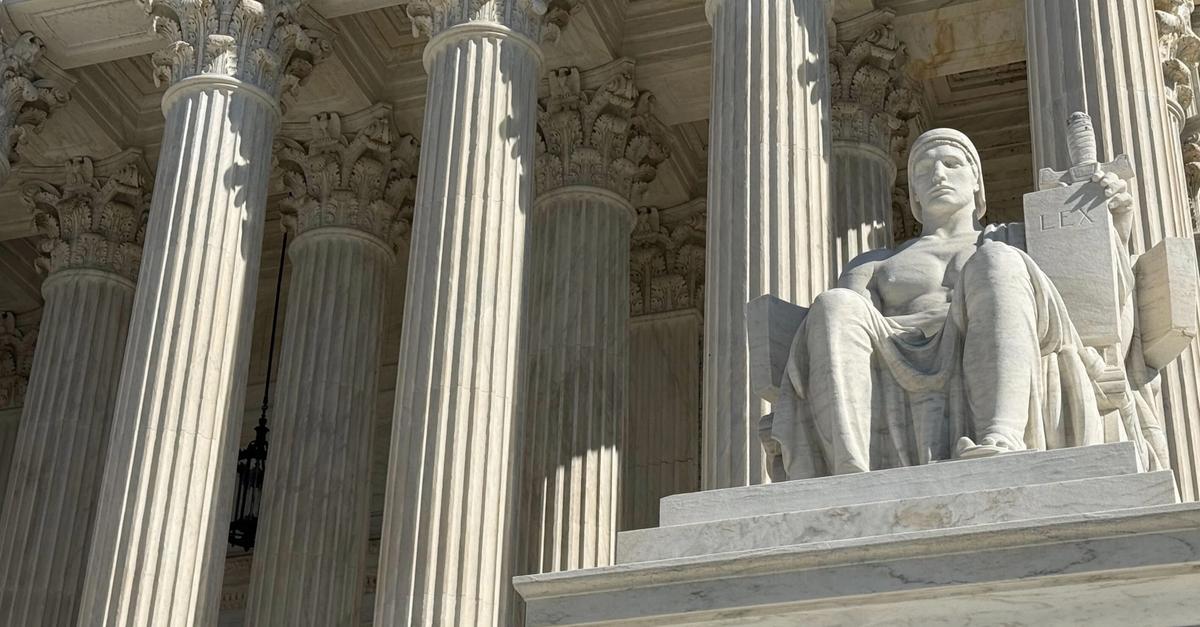

The Supreme Court is expected to rule soon in United States v. Hemani, a closely watched case addressing drug users’ gun rights. When it does, the ruling will likely reignite not just the debate over how the court approaches the Second Amendment, but also the debate over how justices rule in cases involving drugs, and whether they apply a different standard in such cases.
That question has come up multiple times. It emerged about 20 years ago, after the court in Gonzales v. Raich held that Congress, under the Constitution’s commerce clause, had the authority to criminalize personal, medical use of marijuana even in states where it was legal. As Anastasia Boden noted in an October 2025 SCOTUSblog column, the 6-3 ruling embraced an expansive view of federal power, and it was joined by justices who in other contexts had criticized the federal government’s effort to use the commerce clause to regulate local activity.
In particular, the Raich ruling led to a wave of commentary about whether at least some of the justices in the majority – most notably, Justices Antonin Scalia and Anthony Kennedy – were engaged in something of a war on drugs. In other words, court watchers questioned whether these justices were willing, in drug-related cases, to abandon their views on federalism or preferred methods of constitutional interpretation to ensure that drug users would lose.
After Scalia’s death in February 2016, Jacob Sullum revisited his record in such cases and analyzed whether Scalia actually deserved his reputation as an anti-drug crusader. Sullum argued that while Scalia did seem to be “driven by anti-drug fervor” in some cases, he was not a blind supporter of the federal government’s effort to end illegal drug use.
For example, in multiple Fourth Amendment cases concerning the circumstances in which law enforcement officers may conduct a warrantless search, Scalia defended the privacy rights of drug users or dealers, arguing that officers must obtain a warrant before they use “infrared technology” to search a home for heat patterns indicating indoor marijuana growth, attach a GPS device to an alleged dealer’s car, or use a drug-sniffing dog on a home’s doorstep. Scalia also wrote a fiery dissent in 1989’s National Treasury Employees Union v. Von Raab, in which the court upheld the United States Custom Service’s drug testing program, describing the service’s rules for drug testing as “a kind of immolation of privacy and human dignity in symbolic opposition to drug use.”
But in several other, similar drug-related cases, Scalia sided with law enforcement officers or other government officials. This included Employment Division v. Smith, a major (and much criticized) free exercise case, in which Scalia penned the court’s opinion allowing Oregon to deny unemployment benefits to two men who had been fired after ingesting peyote during a Native American Church ceremony.
Sullum suggests that in Raich, specifically, it’s difficult to square Scalia’s vote with his stance in past cases unless you assume “that he shared the pharmacological phobias at the heart of the war on drugs.”
The Raich ruling also prompted a discussion of Kennedy’s votes in drug-related cases, including by SCOTUSblog’s Lyle Denniston. In a column about the ruling, Denniston observed that Kennedy’s vote against the marijuana growers “may be baffling” to those aware of “his accustomed role in supporting state power against overreaching congressional legislation.” But it’s not that surprising, Denniston continued, if you consider Kennedy’s low “tolerance, judicial or otherwise, for those who are users of drugs, or who resist drug control measures,” which he had established – or at least hinted at – in previous drug-related cases.
Indeed, Kennedy’s (lack of) experience with drugs was a talking point during his confirmation process, because he was nominated after Douglas Ginsburg withdrew from consideration while facing intense scrutiny for admitting to using marijuana during the 1960s and 1970s. After he was announced as the replacement nominee, a reporter asked Kennedy if he had ever smoked marijuana. “The answer,” Kennedy said, “was no, firmly no.”
After Raich, Denniston highlighted comments Kennedy made during oral argument in Board of Education of Independent School District No. 92 of Pottawatomie County v. Earls, a 2002 case in which the court upheld a drug testing requirement for any public-school student seeking to take part in any extracurricular activity. Kennedy observed that “it’s hardly a revelation that the government is concerned about what drugs do to our culture. Not exactly rocket science.” Kennedy went on to join the majority opinion by Justice Clarence Thomas.
During a 2016 University of Chicago event titled “The Sweet Mystery of Anthony Kennedy,” Ilya Shapiro briefly reflected on Kennedy’s votes in drug-related cases, noting that he did not appear interested in defending the dignity of drug users (or people who did not use drugs but did not want to be subjected to drug testing) with the same urgency that he defended the dignity of others. “The only way to explain these votes is that Kennedy doesn’t see any nobility in drugs, so their users merit little constitutional protection even if they don’t hurt anybody and are confined to the privacy of the home,” Shapiro said.
Still, Kennedy, like Scalia, did not always support anti-drug measures as a jurisprudential matter. For example, in Safford Unified School District #1 v. Redding, a 2009 case in which the court held that school officials violated the Fourth Amendment when they strip-searched a 13-year-old student suspected of possessing drugs, both Kennedy and Scalia were in the majority.
The current court on drugs
The current justices have faced less scrutiny over their approach to drug-related cases, although that may have more to do with when they joined the court than what they have said and written. Many of the court’s highest-profile decisions in this area, including Raich, came between the late 1980s and early 2000s. Thomas joined the court in 1991, but no other current justice arrived before 2005.
As for Thomas, he dissented in Raich and wrote separately to criticize the majority’s view of federal power. The challengers in the case “use marijuana that has never been bought or sold, that has never crossed state lines, and that has had no demonstrable effect on the national market for marijuana. If Congress can regulate this under the Commerce Clause, then it can regulate virtually anything—and the Federal Government is no longer one of limited and enumerated powers,” Thomas wrote.
Thomas’ overall record in drug-related cases is complicated. He was with Scalia in the majority in the cases barring warrantless searches of suspected drug users’ homes with infrared technology and drug-detecting dogs, but dissented when the court later restricted the use of such dogs during traffic stops. And in Redding, Thomas concurred in part and dissented in part. He explained that he did not believe the challenged search violated the Fourth Amendment and emphasized that school officials should have broad authority “to maintain discipline in their schools and ensure the health and safety of the students in their charge.”
Although Chief Justice John Roberts and Justice Samuel Alito disagreed with Thomas in Redding, they have often voted in support of public officials and law enforcement officers in cases involving drugs. For example, both justices would have allowed warrantless searches with drug-detecting dogs on doorsteps, and they joined with Thomas, Scalia, and Kennedy in Morse v. Frederick, the famous “Bong Hits 4 Jesus” case, to hold that school officials did not violate the First Amendment when they confiscated a banner carrying that phrase and suspended a student who had refused to take it down. “[W]e hold that schools may take steps to safeguard those entrusted to their case from speech that can reasonably be regarded as encouraging illegal drug use,” Roberts wrote for the majority.
Among the court’s Republican-appointed justices, Justice Neil Gorsuch is perhaps the most likely candidate to rule against the government in cases involving drugs because of both his libertarian instincts and what The New York Times once described as his “relatively moderate” position on “the Fourth Amendment’s protections against unreasonable searches.” But, as noted above, the court’s most notable cases involving drugs were decided before the latest justices joined the court, which explains why Gorsuch’s – as well as Justices Brett Kavanaugh’s and Amy Coney Barrett’s – drug-related jurisprudence is still taking shape.
Depending on how the court rules, Hemani may trigger a reassessment of the court’s reputation in this area. The case centers on a federal law that prohibits gun possession by users of illegal drugs. Ali Danial Hemani, who was charged with violating it after he told FBI agents that he smoked marijuana about every other day, contends that the law violates his rights under the Second Amendment.
Going into the Hemani oral argument on March 2, it seemed likely that the discussion would include at least a few Kennedy-like observations about the dangers of illegal drug use. But as Amy Howe noted in her argument analysis, the court appeared to be more skeptical of the federal government’s position than Hemani’s, with several justices, including Thomas, raising concerns about the law’s broad scope.
At oral argument, the justices put forward a colorful array of hypothetical scenarios involving the use of THC gummies, anabolic steroids, sleeping pills, and psychedelics. For example, Gorsuch urged Principal U.S. Deputy Solicitor General Sarah Harris to explain why the government believes someone who takes a THC gummy every other night in a state where such gummies are legal is a habitual drug user who can be barred from possessing a gun. And Justice Elena Kagan asked Erin Murphy, who argued on behalf of Hemani, about whether someone using ayahuasca – which Kagan described as “a very, very, very intense hallucinogen” – could be prevented from having a gun even though it is not considered addictive and would not affect someone’s behavior once the “episode” is over. Barrett later sparked a burst of laughter in the courtroom when she referred back to Kagan’s question and asked whether ayahuasca is a real drug.
Although the justices stumbled at times over drug-related terms, they did not sound quite as judgmental as some of their predecessors.

