



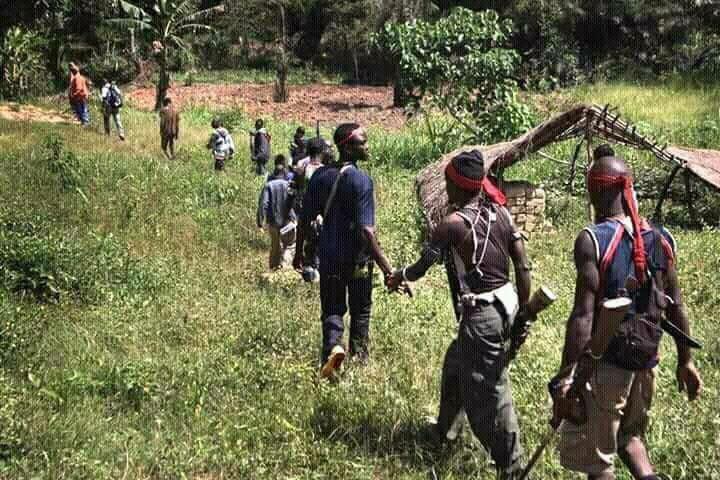
Cameroon – Violence has resumed across Cameroon’s English-speaking regions just weeks after Pope Leo XIV’s historic visit to the country briefly raised hopes for renewed peace efforts in the long-running Ambazonia conflict.
The pope’s April 2026 trip to Bamenda, the heart of Cameroon’s conflict-ridden Northwest Region, triggered an unusual pause in fighting after separatist factions announced a temporary ceasefire to allow civilians and pilgrims to move freely during the papal visit. The truce enabled thousands to travel for peace gatherings and public Masses without the fear of gunfire or roadblocks that have defined daily life in much of the region for nearly a decade.
Pope Leo XIV used the visit to deliver one of the strongest international appeals for peace since the conflict erupted in 2016. Speaking in Bamenda, the pontiff condemned what he described as “a handful of tyrants” fueling war and exploitation while urging leaders to reject corruption, greed, and violence. He also denounced those who manipulate religion and political power for economic gain.
The Ambazonia conflict, rooted in historical grievances over the political and economic marginalization of Cameroon’s English-speaking minority, has killed more than 12,000 people and displaced over 900,000, according to estimates from the International Crisis Group and humanitarian organizations. Armed separatist groups have been fighting government forces for the creation of an independent state known as Ambazonia.


During the pope’s visit, separatist alliances announced a three-day “safe travel passage” and temporarily halted hostilities in recognition of the spiritual significance of the occasion. Roads that are normally deserted due to insecurity were filled with worshippers and residents hoping the papal intervention could revive stalled peace talks between separatists and President Paul Biya’s regime.
But the fragile calm quickly unraveled after the pope departed Cameroon.
Fresh clashes were reported in several parts of the Northwest Region, including Ndop, Bambui, and Jakiri, where separatist fighters and government forces resumed confrontations. Local reports indicated that soldiers, separatist fighters, and civilians were among those killed in renewed violence that erupted days after the ceasefire expired.
In Jakiri subdivision, Cameroonian security forces reportedly launched raids targeting separatist strongholds in Ndzerem-Nyam, leaving one fighter dead and multiple civilian casualties, and widespread property destruction. Reports from local monitoring groups also described burned motorcycles and renewed military deployments in parts of Bui Division.
Meanwhile, in Bambui and nearby communities around Bamenda, residents reported sporadic gunfire, renewed lockdown fears, and growing anxiety over kidnappings and roadside attacks. Some civilians who had briefly resumed business activities during the papal ceasefire said hopes for a lasting reduction in violence were fading rapidly.
Church leaders and peace advocates who welcomed Pope Leo’s intervention have expressed concern that the momentum generated by the visit may dissipate without concrete political dialogue. Bishop George Nkuo of Kumbo said recently that the pope’s words “must not get wasted,” arguing that the temporary ceasefire showed that even combatants were exhausted by years of war.
Despite the renewed violence, analysts say the pope’s visit succeeded in drawing rare global attention to a conflict often described as one of the world’s most neglected crises. His trip marked the first papal visit to Cameroon’s Anglophone conflict zone and highlighted the humanitarian toll of a war that has disrupted education, destroyed villages, and crippled economic activity across large parts of the Northwest and Southwest regions.
Observers say the return of clashes underscores the deep mistrust between separatist groups and the Cameroonian government, as well as the absence of sustained international mediation efforts capable of producing meaningful negotiations. While Pope Leo’s message briefly united communities around calls for peace, the resumption of violence has once again exposed the fragility of hopes for a breakthrough in Cameroon’s Anglophone crisis.





