



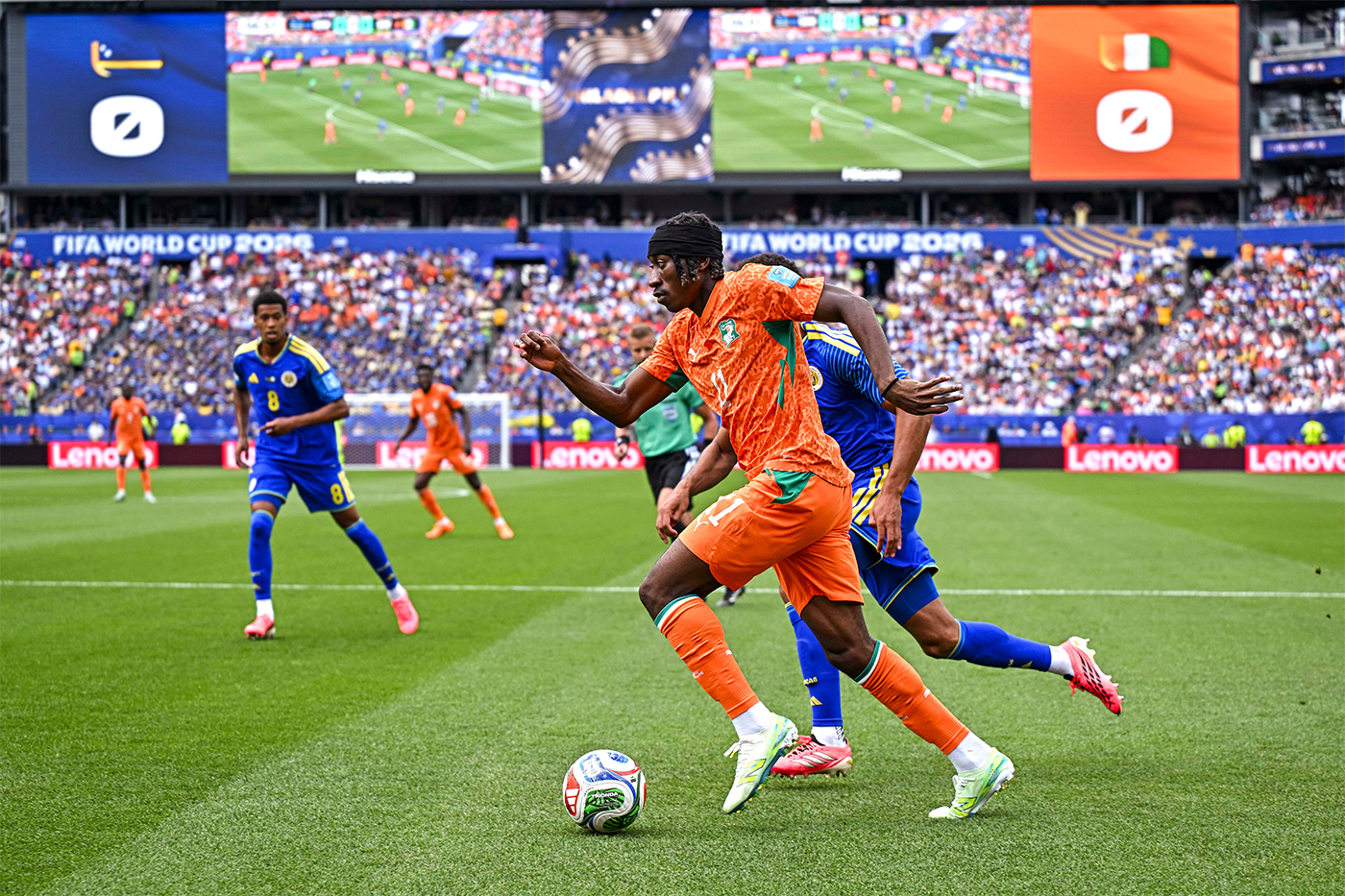
The 2026 World Cup has entered the knockout stage, starting Sunday with Canada’s 1-0 win over <a href="https://absafricatv.com/spain-reconnects-with-south-africa-as-direct-johannesburg-flights-take-off/” title=”Spain reconnects with South Africa as direct Johannesburg flights take off”>South Africa. The tournament’s intensity only accelerates from here, with three knockout matches per day from Monday through Friday, as the competition builds toward the final on July 19.
The graphic below shows the first wave of matches and the disparity between the teams in the world FIFA rankings
There’s an intriguing mix of closely ranked teams facing off, and also a wider disparity between opponents.
Here are three intriguing matches to watch in the round of 32, based upon data that provides insight into the teams’ contrasting styles of play in the group stage
Netherlands vs.MoroccoMonday, June 29, 9 p.m., EDT
Netherlands built offense through midfielders Frenkie de Jong and Ryan Gravenberch, who initiated attacks with sharp passing. The team’s passing map took the shape of a bowl (see graphic, bottom left), reflecting how the Dutch used both flanks to advance the ball before crossing passes into the box for forward Brian Brobbey, who scored three goals in the group stage. Netherlands ranked sixth in crossing passes during the group stage
Morocco, meanwhile, relied on dribbling to jumpstart its offense, particularly up the right side with defender Achraf Hakimi. The team averaged 19 dribble attempts and 10 completed dribbles per game — fifth in the tournament. The graphic below (bottom right) shows how Morocco executed long dribbles and carries up the sides of the pitch
Ivory Coast vs. NorwayTuesday, June 30, 1 p.m., EDT
Second in completed dribbles per game, Ivory Coast used quick ball movement and individual creativity to create chances. Its goal against Germany illustrates this (graphic below, bottom left) — after an initial failed attempt to reach star forward Yan Diomande, Ivory Coast quickly regained possession, worked the ball across the pitch, and found Diomande, who drove forward and delivered the crossing pass that led to the score
Norway scored all seven of its group-stage goals inside the shooting box (graphic below, bottom right) — a deliberate strategy to generate high-xG chances close to the net; xG measures the probability that a shot results in a goal. Forward Erling Haaland, a prolific scorer, anchors that approach; he recorded the fastest top speed per match in the group stage at 22.3 mph, and two teammates also finished in the top 15 in that category
Belgium vs. SenegalWednesday, July 1, 4 p.m. EDT
Belgium generated the most shots of any team in the group stage, averaging 24.3 per game (graphic below, bottom left) — but quantity didn’t translate to quality. Its xG per shot was below average, with roughly a third of attempts coming from outside the scoring box. Belgium also carries a larger narrative into the knockout stage: this year is considered the final World Cup run for the remaining members of the “golden generation” that once ranked No. 1 in the world and finished third in 2018.
Senegal’s attacking threat centers on forward Ismaila Sarr, who lines up on the right but regularly drifts to the center to find scoring positions. That movement opens running channels for teammates around the box — a strategy on display against Norway, when a Sadio Mane pass split the defense and found Sarr in prime position to score (graphic below, bottom right)
Data analysis provided by Brennan Klein, director for Northeastern University’s NetSI Sport research group.





