

The 48th session of the World Heritage Committee in South Korea expands the list to 1,273 sites and grants first-ever inscriptions to three African nations
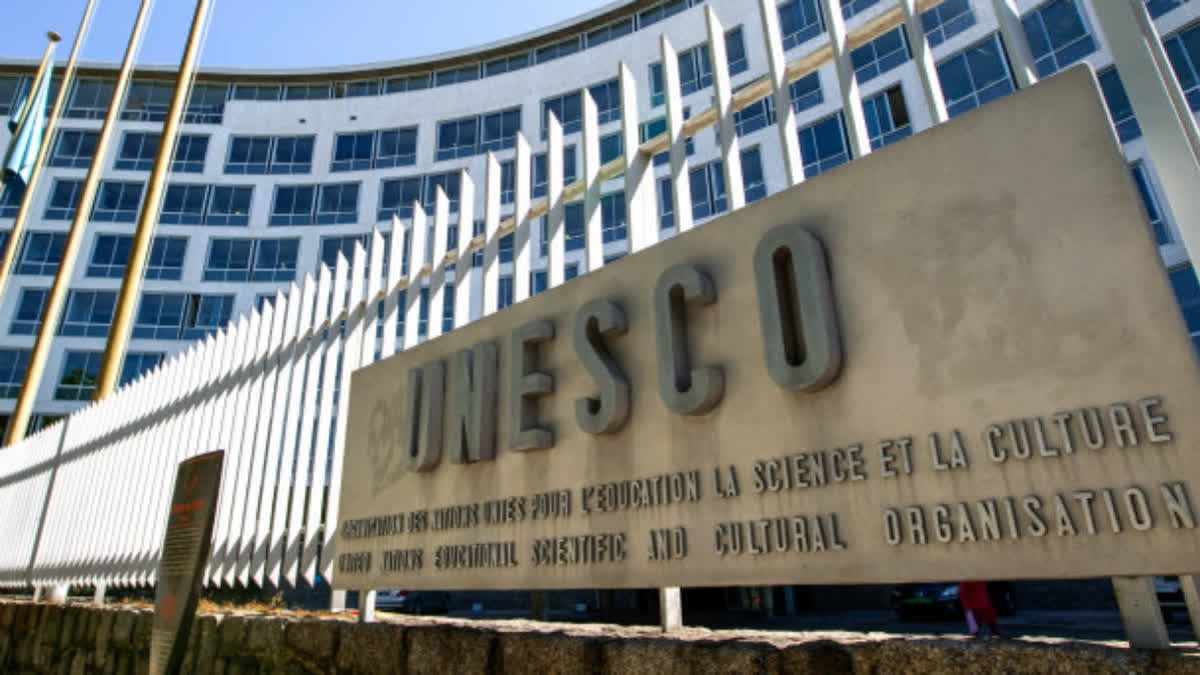
This photograph shows the United Nations Educational, Scientific and Cultural Organisation (UNESCO) headquarters in Paris. (IANS)
New Delhi:India’s ancient Buddhist site of Sarnath, Alamut Castle and Related Fortifications in Iran, and Jordan’s Aqaba Marine Reserve are among the 25 sites which have been inscribed on the UNESCO World Heritage List. The decisions were taken during the 48th session of the World Heritage Committee, held from July 19-29 in South Korea’s Busan. India’s ancient Buddhist site of Sarnath in Uttar Pradesh was inscribed on the UNESCO World Heritage List on July 25.
“This session also marks the first-ever inscriptions on the UNESCO World Heritage List for three African countries – Comoros, Sao Tomé and Principe and South Sudan – showcasing the Organisation’s commitment to a more balanced and representative List,” UNESCO said in a statement.
The committee also added six sites to the List of World Heritage in Danger, recognising both the sites’ outstanding value and the need to protect them, it said.
“The World Heritage Committee wrapped up its 48th session in Busan, Republic of Korea, with the addition of 25 new sites to UNESCO’s World Heritage List. All inscriptions during the session were adopted by consensus, reflecting the cooperative spirit that underpins the 1972 World Heritage Convention,” it said.
Other inscriptions include the US’ Okefenokee National Wildlife Refuge — the property, located in southeastern Georgia and northeastern Florida. The site protects the Okefenokee Swamp, the largest lowland freshwater peatland in the subtropical zone worldwide and one of the largest and most intact ecosystems within the North American Coastal Plain global biodiversity hotspot.
Japan’s ancient capitals of Asuka and Fujiwara, Uzbekistan’s Tashkent Modernist Architecture, and the Roças of São Tomé and Príncipe: Colonial Agricultural System and Forced Migration, and the wider area of Mount Olympus in Greece are also now on the list.
With these new inscriptions, the UNESCO World Heritage List now comprises 1,273 sites across 173 countries. These newly inscribed properties now benefit from the highest level of international recognition and protection, UNESCO said in its statement on July 28.
Building on dialogue and consensus, the committee inscribed 25 new properties on UNESCO’s World Heritage List — 19 cultural sites, five natural ones and one mixed; and approved the extension of two already inscribed sites–– including one in the host country, the Getbol, Korean Tidal Flats (Phase II).
The committee also agreed on the renomination of the Garamba National Park in the Democratic Republic of the Congo, meaning the value of the site already inscribed revealed new criteria and the committee proceeded to re-examine it.
This session also marks the first World Heritage inscriptions for three African countries, including two Small Island Developing States (SIDS): Comoros and São Tomé and Príncipe, as well as South Sudan. Following these inscriptions, the number of States Parties without a World Heritage property decreased from 26 to 23, it said.
The World Heritage Committee also decided to remove Historic Centre of Vienna (Austria) from the List of World Heritage in Danger.
Since 2023, the World Heritage List includes “sites of memory” to recognise events that a country and its people and communities wish to memorialise. Today, these Sites of Memory are places of reconciliation, contemplation and peaceful reflection. During this committee session, the Beaches of the D-Day Landings, Normandy, 1944 (France) joined the World Heritage list as sites of memory, honouring the remembrance of the Allied landings of June 6, 1944 (during World War II), it said.
The next session of the World Heritage Committee, in 2027, will be held in Istanbul, Turkiye.
Proud Moment For Every Indian: PM Modi On Sarnath Being Inscribed On UNESCO World Heritage List

