

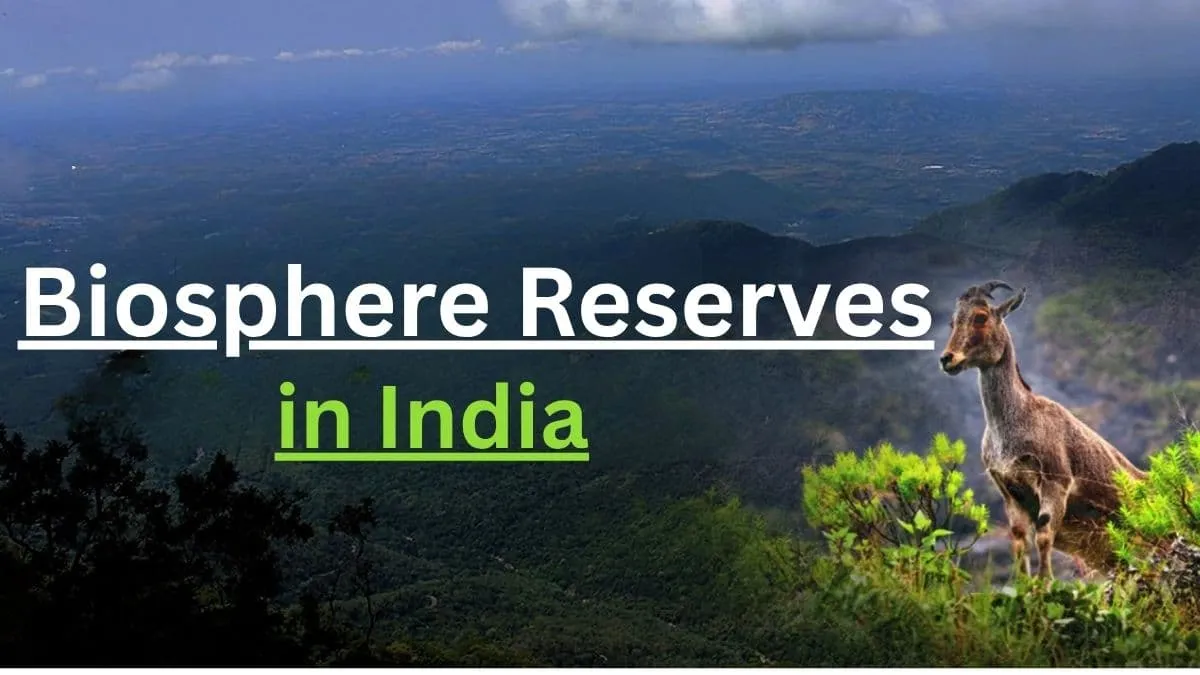
Biosphere Reserves in India: Check the Complete List Here!
This article presents a comprehensive list of India’s Biosphere Reserves, detailing their establishment dates, UNESCO recognition years, geographical locations, and notable species.
In India, Biosphere Reserves are designated by UNESCO (United Nations Educational, Scientific and Cultural Organization) to safeguard significant natural and cultural regions. These protected zones can encompass extensive terrestrial, coastal, or marine ecosystems, or even a blend of these environments. Their primary role involves preserving the diversity of plant and animal life, maintaining natural ecosystems, and fostering both economic and social progress.
A biosphere reserve is a specific location officially designated as part of UNESCO’s Man and the Biosphere (MAB) Program. These sites function as dynamic “living laboratories,” crucial for advancing sustainable development. They serve as convergence points where scientific knowledge, cultural understanding, and effective governance unite to uphold the principle that both human communities and natural ecosystems can be preserved.
India currently hosts 18 Biosphere Reserves, collectively spanning approximately 91,425 square kilometers. Of these, 13 have received recognition from UNESCO, becoming part of its global network.
Established in 1986, the Nilgiri Biosphere Reserve, recognized by UNESCO in 2000, covers 5,520 km² across Tamil Nadu, Karnataka, and Kerala, protecting species like the Nilgiri Tahr and Tiger.
The Nanda Devi Biosphere Reserve, founded in 1988 and UNESCO-recognized in 2004, spans 5,860 km² in Uttarakhand, home to the Snow Leopard and Musk Deer.
Established in 1988, Nokrek Biosphere Reserve in Meghalaya, recognized by UNESCO in 2009, encompasses 820 km² and is known for the Red Panda and Hoolock Gibbon.
The Gulf of Mannar Biosphere Reserve, designated in 1989 and UNESCO-recognized in 2001, covers 10,500 km² in Tamil Nadu, safeguarding species such as the Dugong and Olive Ridley Turtle.
Established in 1989, the Sundarbans Biosphere Reserve in West Bengal, recognized by UNESCO in 2001, spans 9,630 km² and is famous for the Royal Bengal Tiger.
The Manas Biosphere Reserve, created in 1989 in Assam, covers 2,837 km² and protects the Asiatic Elephant and Golden Langur, though it is not included in the UNESCO MAB network.
Designated in 1989, the Great Nicobar Biosphere Reserve in Andaman & Nicobar, recognized by UNESCO in 2013, covers 885 km² and hosts the Saltwater Crocodile and Nicobar Megapode.
The Simlipal Biosphere Reserve, established in 1994 in Odisha and UNESCO-recognized in 2009, encompasses 4,374 km², protecting Gaur, Tiger, and Elephant populations.
Founded in 1997, the Dibru-Saikhowa Biosphere Reserve in Assam covers 765 km² and is home to the Gangetic Dolphin and Bengal Tiger; it is not part of the UNESCO MAB network.
The Dihang-Dibang Biosphere Reserve, established in 1998 in Arunachal Pradesh, spans 5,112 km² and protects species like the Takin and Red Panda, but is not UNESCO-recognized.
Designated in 1999, the Pachmarhi Biosphere Reserve in Madhya Pradesh, recognized by UNESCO in 2009, covers 4,981 km² and is known for the Indian Giant Squirrel.
The Khangchendzonga Biosphere Reserve, established in 2000 in Sikkim and UNESCO-recognized in 2018, encompasses 2,620 km² and protects the Red Panda and Snow Leopard.
Founded in 2001, the Agasthyamalai Biosphere Reserve, recognized by UNESCO in 2016, spans 3,500 km² across Kerala and Tamil Nadu, protecting the Nilgiri Tahr and Elephant.
The Achanakmar-Amarkantak Biosphere Reserve, established in 2005 and UNESCO-recognized in 2012, covers 3,835 km² across Madhya Pradesh and Chhattisgarh, home to the Wild Dog and Sarus Crane.
Designated in 2008, the Great Rann of Kutch Biosphere Reserve in Gujarat covers 12,454 km² and protects the Indian Wild Ass; it is not included in the UNESCO MAB network.
The Cold Desert Biosphere Reserve, established in 2009 in Himachal Pradesh and UNESCO-recognized in 2025, encompasses 7,770 km² and is known for the Snow Leopard.
Founded in 2010, the Seshachalam Hills Biosphere Reserve in Andhra Pradesh covers 4,755 km² and protects the Slender Loris, though it is not part of the UNESCO MAB network.
The Panna Biosphere Reserve, established in 2011 in Madhya Pradesh and UNESCO-recognized in 2020, spans 2,998 km² and is home to the Bengal Tiger and Chinkara.

