

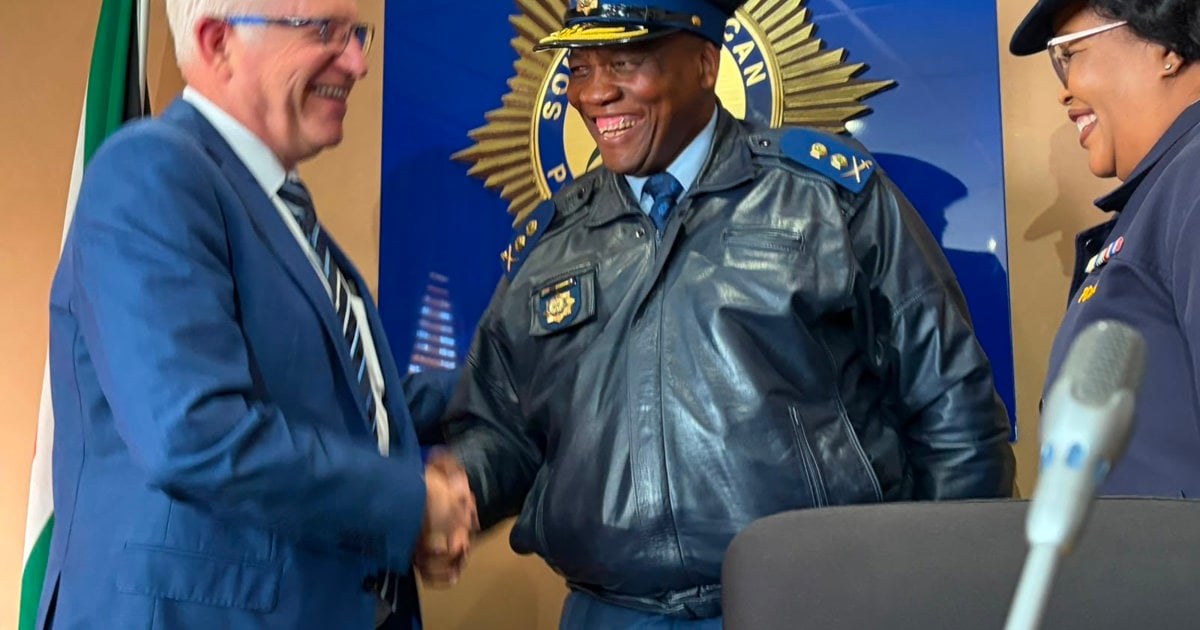
Western Cape’s new top cop has vowed to crack down on gun violence and gender-based violence when he takes office this weekend.
On Wednesday, Acting National Police Commissioner Lieutenant General Puleng Dimphane announced Lieutenant General Sizakhele Dyantyi as the province’s new Police Commissioner.
Dyantyi officially takes over on Saturday, replacing Lieutenant General Thembisile Patekile, who retired at the end of June after five years in the post.
Lieutenant General Dyantyi says he is honoured by the confidence shown in him by SAPS leadership and the Western Cape government.
Over the 34 years in the police service, the veteran has held several senior positions in both the Western and Eastern Cape.
He said his immediate priorities include strengthening police stations and using <a href="https://absafricatv9491.live-website.com/semicon-firm-marvell-to-invest-250-mn-in-technology-talent-and-infrastructure-in-india/” title=”Semicon firm Marvell to invest $250 mn in technology, talent and infrastructure in India”>technology to support intelligence-led policing.
“I have faith in the competence and support of the policemen and policewomen in the province in ensuring that all people of the Western Cape are safe and do feel safe.”
Dyantyi is one of four newly appointed provincial police commissioners announced by SAPS, with Limpopo, North West and Mpumalanga also receiving new provincial leadership.
Never miss a major story. Get breaking news and the latest developments from South Africa and beyond as they happen.
Trending News
- 2 hours ago
- 3 hours ago
- 4 hours ago
- 5 hours ago
- 7 hours ago
- 7 hours ago
- 12 hours ago
- Yesterday
- Yesterday
- Yesterday
- Yesterday
- 28/07, 14:00
More in Local
Toyota recalls over 2,000 Urban Cruisers over faulty fuel gauge metre
- Product recall
- National Consumer Commission (NCC)
Matlala trial: Defence accuses lead officer of fabricating details in Musa Kekana’s arrest
- Vusimuzi Matlala
Pretoria High Court hears DA challenge as Tshwane Council argues matter lacks urgency
- City of Tshwane
- Pretoria High Court

