

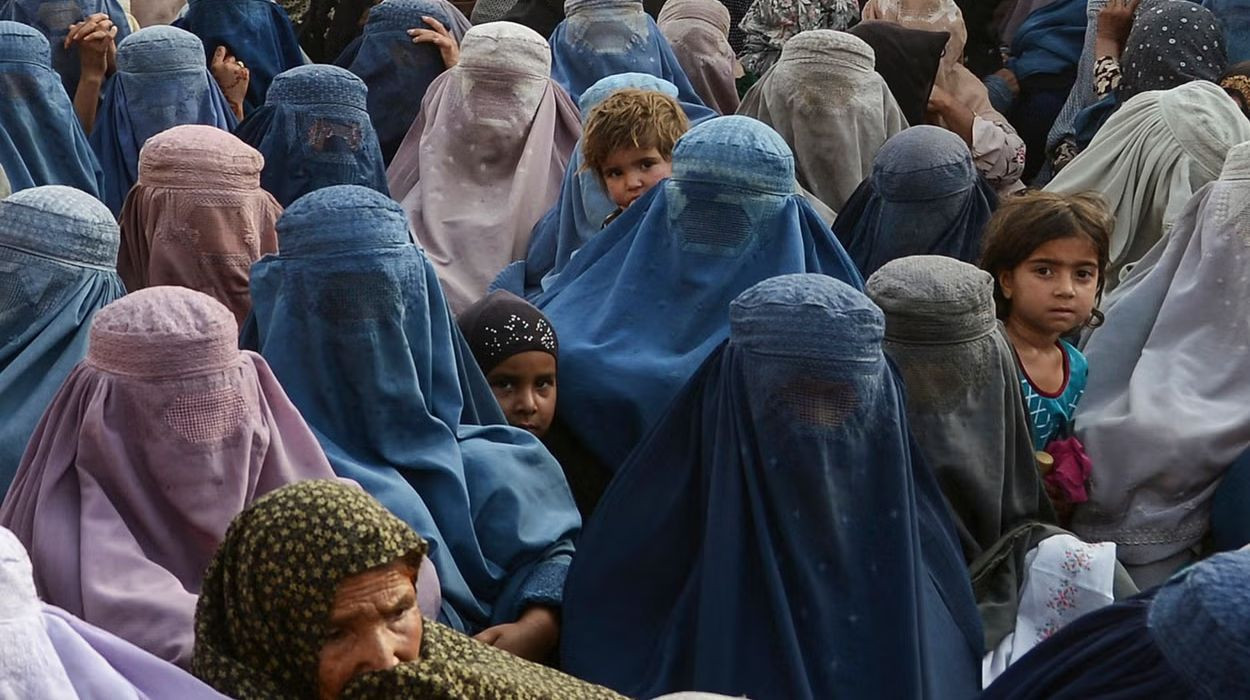
The Taliban’s latest decree has intensified alarm over the worsening treatment of women and girls in Afghanistan, because it appears to move discrimination from the realm of practice into the realm of formal law. By making child marriage easier to sustain and much harder to contest, the measure strengthens concerns that the regime is not simply ignoring rights, but actively shaping a legal order that restricts women’s autonomy, mobility, and dignity. Seen through that lens, the decree is not a narrow domestic issue; it is a broader test of whether the international community will treat systematic discrimination as a serious global human rights crisis.
Taliban Child Marriage Decree Escalates Rights Concerns
“Code on Judicial Separation of Spouses,”
has drawn widespread criticism because it appears to legitimize child marriage while also making it more difficult for girls and women to leave forced or unwanted unions. The law reportedly treats a girl’s silence after puberty as consent, expands the authority of male relatives in arranging marriages, and creates a structure in which girls must face major legal hurdles if they later try to challenge those marriages. That combination is deeply alarming because it turns a fundamental question of personal freedom into a state-regulated process, where the burden falls on children and women rather than on those arranging the marriage.
This matters because the decree does not stand alone. It comes after years of severe restrictions on education, movement, public participation, and civic life for Afghan women and girls, which means the new law should be read as part of a larger architecture of control. Instead of protecting children from coercion, the policy seems to normalize the idea that girls can be transferred into marriage through family pressure, legal approval, and official acceptance. In practical terms, that risks embedding gender inequality so deeply that it becomes harder to challenge even in the future.
Human Rights Groups Warn of Institutionalized Discrimination
Human rights organizations have argued that the Taliban’s actions are not isolated violations but part of a systematic campaign against women and girls. The concern is not only that child marriage is being tolerated, but that it is being given legal legitimacy inside a broader state framework that already limits women’s access to education, employment, travel, and public life. When these restrictions are combined, they create a coercive environment in which girls and women have very little real power to refuse or escape harmful arrangements.
The deeper issue is that the decree helps convert social repression into institutional practice. Once a discriminatory measure is written into law, it becomes more than a moral failure; it becomes an official mechanism for enforcement. That is why many observers see the Taliban’s approach as especially dangerous: it does not merely reflect prejudice, it transforms prejudice into a legal routine that can be repeated, defended, and expanded by state institutions.
International Law Conflict Grows Sharper
The decree places Afghanistan in clearer conflict with international human rights standards, especially those related to women’s equality, child protection, and free consent in marriage. A system that treats silence as consent undermines the basic principle that marriage must be voluntary, informed, and free from coercion. In that sense, the law is not just controversial; it is structurally incompatible with core international norms that protect girls from exploitation and recognize women as equal legal persons.
The international legal significance is important because it strengthens the argument that the Taliban’s conduct may warrant a formal response beyond public condemnation. When a regime codifies discrimination in this way, the issue becomes easier to document, easier to argue before international bodies, and harder to dismiss as mere local custom. That is one reason the decree is being discussed not only as a rights abuse, but as evidence that can support legal accountability on the world stage.
State Policy Turns Discrimination Into Procedure
What makes this measure especially troubling is that it appears to formalize discrimination as State Policy. Rather than leaving child marriage to informal pressure or local customs, the Taliban has created a legal structure that appears to recognize, regulate, and protect the practice. This is significant because once discrimination is embedded in policy, it gains the force of administration: courts, officials, and family structures can all be used to enforce the same unequal outcome.
This shift from social abuse to state-backed procedure changes the nature of the problem. It means the law itself becomes part of the harm, not a shield against it. It also means that international criticism must go beyond outrage and move toward accountability, because the regime’s actions now look deliberate, organized, and systemic rather than accidental or incidental. In that sense, the decree is a clear example of how state power can be used to entrench inequality for an entire generation.
Australia’s Push for Global Legal Action Gains Weight
Australia’s role in the international effort against Afghanistan’s violations has become more significant because the legal and political case is now easier to define. If the Taliban is using formal law to normalize child marriage and restrict the rights of women and girls, then the argument for international legal action becomes stronger and more urgent. Australia’s support helps transform concern into pressure, and pressure into a process that could eventually reach the International Court of Justice.
That matters because the world has already seen that statements of concern alone do not change the Taliban’s behavior. The regime continues to defend its decisions and present them as legitimate, even as rights groups and UN bodies warn that the consequences are severe. In this context, Australia’s push is important not only for Afghanistan, but for the wider principle that international law should have teeth when <a href="https://absafricatv.com/government-to-earn-ksh22-5-million-monthly-from-mombasa-lpg-terminal-lease/” title=”Government to Earn KSh22.5 Million Monthly From Mombasa LPG Terminal Lease”>governments or governing authorities systematically violate women’s rights.
Why the Taliban Decree Matters Globally
The broader significance of the decree is that it shows how quickly rights can be erased when law is used to enforce inequality. Afghanistan is not just dealing with a single controversial regulation; it is confronting a governance model in which the legal system itself is being used to control women’s lives and limit children’s futures. That makes the issue global, because it raises a larger question about how the international community responds when a regime turns discrimination into official policy and then claims legitimacy from that policy.
It also matters because the case may set an important precedent. If international legal action can be taken seriously here, it may encourage stronger responses in other situations where rights violations are formalized through state institutions. For that reason, the decree is both a national crisis and an international warning sign: when a government uses law to normalize child marriage, silence is no longer neutrality, it is complicity.
Human Rights Demand Accountability
The Taliban’s child marriage decree has become a powerful symbol of the wider crisis facing Afghan women and girls, because it shows how discrimination can be hardened into law and defended as policy. That is why the issue cannot be reduced to a cultural debate or an internal administrative decision; it is a direct challenge to human rights, equality, and the rule of law. The stronger the legal architecture of repression becomes, the more urgent the global response must be.
The international community now faces a clear choice: accept the normalization of coercion, or treat it as a serious violation that demands legal and diplomatic consequences. If the world fails to respond meaningfully, the message will be that state-backed discrimination against women and girls can be written into law without real consequences. If it does respond, it can help affirm that human dignity is not negotiable, even under authoritarian rule.
