

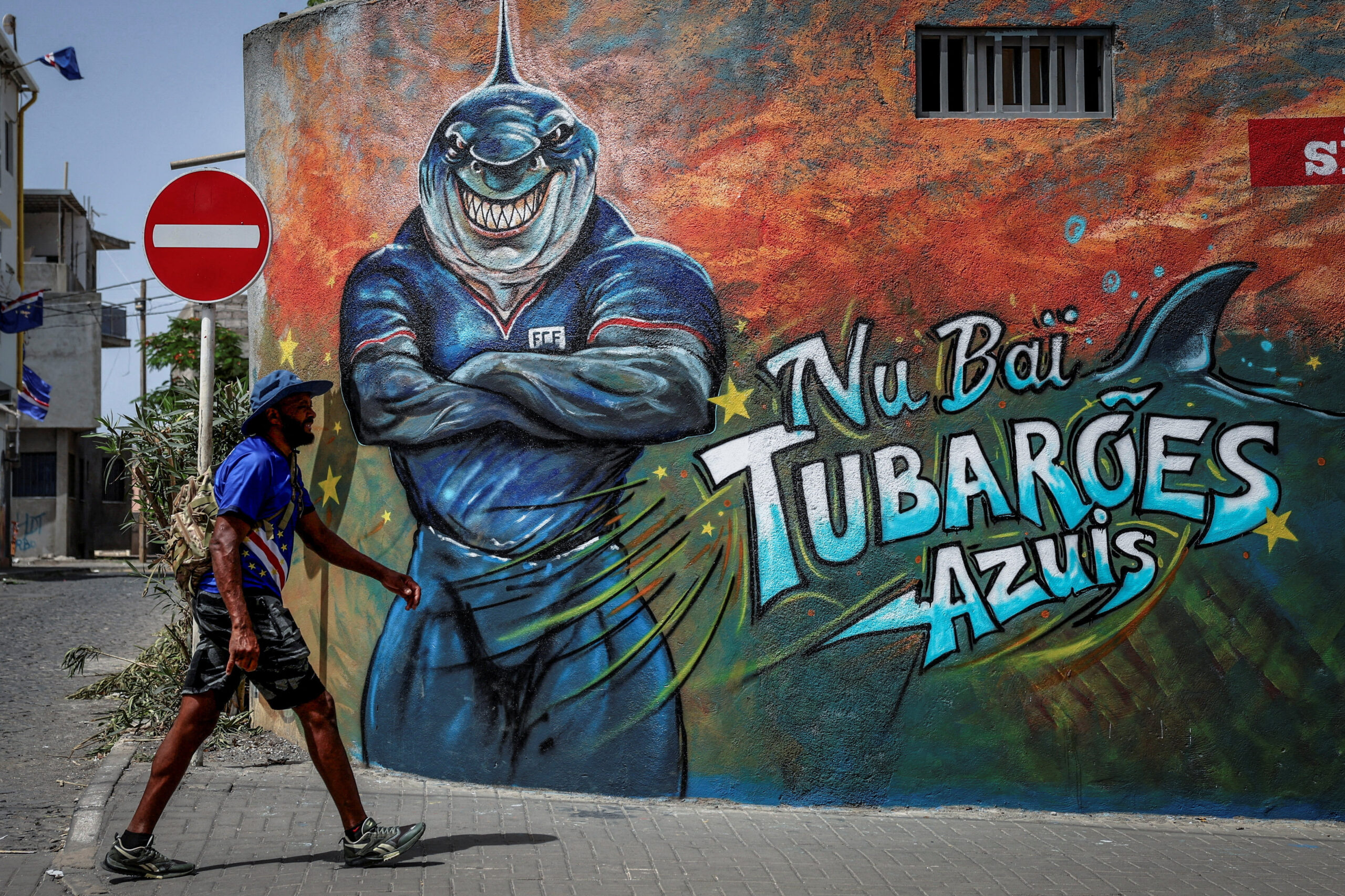
Africa did more than gain greater representation at the 2026 FIFA World Cup.
Nine of its ten teams advanced from the group stage, a 90 percent success rate that exceeded Europe’s 81 percent and far outpaced Asia’s 11 percent. The result demonstrated that Africa is competitive on the field.
These teams’ success did not emerge from a single model of player development. African teams drew on different combinations of domestic leagues, youth academies, diaspora recruitment, federation leadership, infrastructure, and international investment.
According to two migration researchers, nearly one in four players at the 2026 FIFA World Cup represented a country other than where he was born, the highest proportion in tournament history. Among the ten African teams, the share was considerably higher. By Transfermarkt data, 114 of 259 players, or 44 percent, were born outside the country they represented.
Yet this regional figure masks striking differences in how national teams draw on domestic and diaspora talent. Foreign-born players, according to the two migration researchers, accounted for 85 percent of the Democratic Republic of the Congo’s squad and 73 percent of Morocco’s, compared with just 4 percent for Egypt and none for South Africa. Ghana, Senegal, Ivory Coast, Algeria, Tunisia, and Cape Verde occupied different positions along that spectrum. These differences matter because they point to distinct approaches to building national teams, from reliance on domestic talent pipelines to extensive recruitment from diaspora communities.
The larger lesson is simple: Countries produce stronger results when institutions identify talent, coordinate stakeholders, and execute long-term strategies. No single pathway explains Africa’s success, but the pathways that lead to excellence all require countries to have these strong institutions.
Institutions win before teams do
Africa’s World Cup breakthrough demonstrates a simple truth: A country’s sports institutions determine whether talent translates into opportunity, performance, and long-term success.
To be sure, continent-wide institutions play a role. For example, FIFA and the Confederation of African Football (CAF) have supported football development over several decades. For example, since 2016, the FIFA Forward Development Programme has provided funding and technical support for infrastructure, competitions, administration, women’s football, and capacity development across member associations.
Institutions on a national level can change a country’s sports story. Morocco illustrates a hybrid model, combining domestic investment with one of Africa’s most sophisticated diaspora recruitment systems. After becoming the first African team to reach the semifinals in 2022, Morocco reached the final eight this time, the farthest any African team reached in 2026. Its longer-term test will be whether the country’s investments strengthen clubs, expand the football economy, and produce more senior internationals from domestic pathways.
As recently as June 2024, seventeen African countries scheduled to host World Cup qualifiers were forced to play in neutral venues because available stadiums failed to meet CAF and FIFA requirements. The problem imposed financial costs on federations and deprived teams of home advantage. It offers a concrete example of how infrastructure failures constrain football performance, even where player talent exists.
It’s not just about team success
During diplomatic assignments in Guinea-Bissau and Angola, I encountered talented young footballers everywhere. The challenge was rarely talent, but the ecosystem surrounding the players. The quality of coaches, competitions, transportation, and facilities often determined whether potential became opportunity.
I saw another dimension of sport while serving in Niger. Through a US Department of State Sports Visitor Program, the US embassy partnered with the Nigerien Football Federation to bring twenty young women to the United States for an exchange focused on leadership, inclusion, and public health. Upon returning home, participants partnered with local health organizations to organize football clinics that promoted women’s participation and positive health outcomes, demonstrating how sports can advance broader development goals.
These experiences showed that sports deliver the greatest value when countries build systems around the athlete. As the United Nations Educational, Scientific, and Cultural Organization points out, government investment in sports is capable of generating measurable social and economic returns.
Those returns depend on investments that extend beyond the athlete. Strong sports ecosystems create jobs, strengthen institutions, and expand opportunities across education, public health, and economic development.
Universities are the missing partner
However, universities—which train the next generation of sport coaches, physicians, administrators, and even athletes—remain largely absent from conversations about sports development.
Universities are uniquely positioned to prepare this talent while connecting sport with research, workforce development, and international engagement. Yet discussions about sports partnerships often focus on tournaments and exhibition matches rather than the institutions needed to sustain long-term success.
Howard University’s 2024 volleyball exchange in Botswana offers a different model. The program combined athletic competition with clinics, community service, and cultural exchange, demonstrating how sport can serve as an entry point for deeper academic and community partnerships. Such efforts suggest that universities can play an important role in connecting sport with higher education, diplomacy, and development.
Steps to take now
Now that the 2026 FIFA World Cup has wrapped, policymakers hoping to achieve tournament breakthroughs on a scale comparable to Africa’s successes this year should focus on the following.
First, universities should become central partners in national sports strategies through scholarships, research, and exchange programs. Foundations and philanthropies can accelerate these partnerships through investments in higher education and workforce development.
Second, governments, federations, foundations, and investors should adopt outcomes-based measures to determine whether sports investments are strengthening a country’s institutions and creating sustainable pathways for young people. Tournament results alone cannot show whether investments are producing stronger communities, greater workforce capacity, or lasting social and economic returns.
Finally, governments should adopt whole-of-government approaches that connect sports with education, public health, economic development, tourism, and diplomacy. Sport policy should not reside solely within ministries of sport. Effective sports ecosystems require coordination across government, higher education, philanthropy, and the private sector.
While much of today’s investment rightly focuses on athletes, facilities, and youth programming, the next generation of sports development should also invest in the workforce and institutions that make long-term success possible.
A legacy that endures
Africa’s World Cup wins were not the product of one football model. They were the result of countries finding different ways to organize talent, build partnerships, and translate opportunity into performance.
Their significance extends far beyond the tournament itself.
The legacy the World Cup leaves is still being written. A lasting legacy could take shape if governments, universities, foundations, and the private sector use the opportunity of this tournament and the years leading up to the next one to rethink how sport contributes to higher education, workforce preparation, diplomacy, public health, and economic development.
That conversation has only begun.
Deneyse A. Kirkpatrick is a nonresident senior fellow at the Atlantic Council’s Africa Center and founder and chief executive officer of Kirkpatrick Global Strategies. She served for two decades as a US foreign service officer with assignments across Africa, the Middle East, and Latin America, and as the senior advisor to the US Advisory Commission on Public Diplomacy.
Further reading
Governments are still underestimating the power of sports
Governments should harness the power of sports for their economic development strategies.
The 2025 Africa Cup of Nations was an economic success. Here’s how other tournaments can replicate it.
Africa needs a united committee focused on opportunities for sponsorship and investment across multiple sporting events and tournaments.

African soccer needs digital innovation, not just investment
A new league that focuses on digital-first entertainment would demonstrate that Africa can innovate, building world-class sporting competition and soft power on the global stage.

