

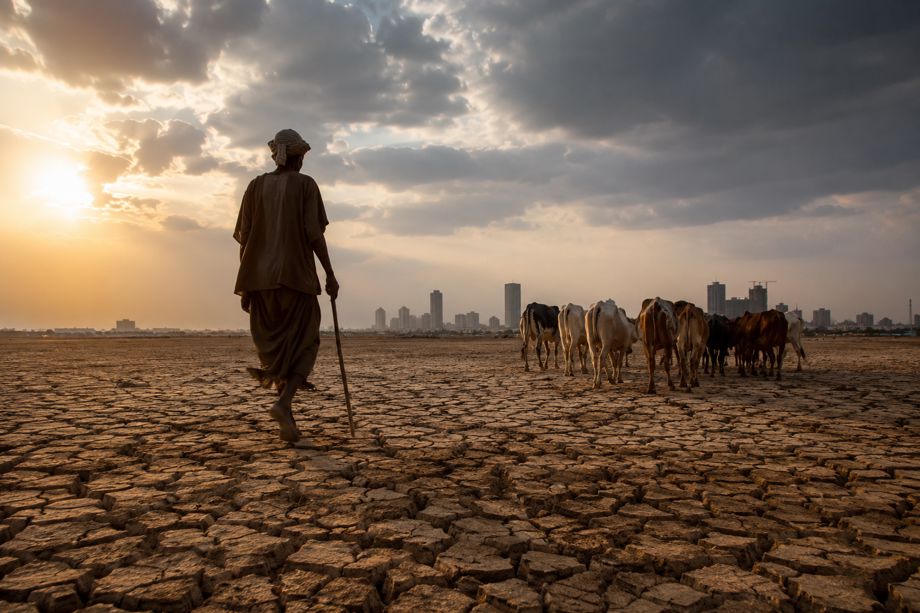
Building Africa for a Hotter Future: Climate Risks Put Cities, Farms and Infrastructure on Alert
Africa faces rapidly rising climate costs despite contributing only about 4% of global energy-related emissions, making resilient infrastructure, stronger adaptation and better climate finance increasingly critical to development. Governments, development partners and private investors must act now to turn climate plans into investment, protect economic growth and avoid locking Africa into costly, climate-vulnerable development.
Africa’s climate challenge is becoming an economic and development issue that governments, investors and international institutions can no longer treat separately from growth planning. The 2026 report New Data for Africa’s Changing Climate: Mapping Risks, Readiness and Policy Action, prepared through work involving the Organisation for Economic Co-operation and Development (OECD), OECD Sahel and West Africa Club (SWAC), World Bank Group and Global Green Growth Institute (GGGI), shows that the continent faces rapidly increasing climate risks despite contributing only about 4% of global energy-related greenhouse gas emissions. Its evidence suggests that the decisions governments make on infrastructure, cities, agriculture and climate finance over the next decade could determine whether climate change becomes a persistent drag on development or an opportunity to build more resilient economies.
From Climate Shocks to an Economic Bill
Climate disasters are already becoming more expensive. Across selected African countries, average cumulative economic costs from climate-related disasters increased almost 15-fold, from about $0.18 billion in 1994–1998 to around $2.7 billion in 2020–2024.
Individual disasters demonstrate the scale of the risk. Mozambique’s consecutive cyclones in 2019 caused more than $3.7 billion in damage, while Nigeria recorded over $6.1 billion in flood-related damage in 2022. Such losses can weaken public finances, destroy infrastructure, interrupt businesses and divert government spending away from education, healthcare and development programmes.
Extreme heat is another growing threat. The frequency of days above 35°C has nearly doubled since the 1990s, while extreme precipitation has increased by more than 150%. Nearly half of the countries studied experienced more than 300 days of strong heat stress annually on average during 2020–2024.
For policymakers, the message is clear: climate risks need to be incorporated into budgets, public investment decisions, infrastructure standards and national development plans before disasters occur.
Africa’s Urban Boom Creates a Critical Investment Window
Africa’s urban population is projected to increase by more than 700 million between 2020 and 2050, reaching around 1.4 billion. About two-thirds of Africans could be living in urban areas by mid-century.
This rapid expansion creates both risk and opportunity because an estimated 61% of the urban area expected to exist by 2050 has yet to be built. Governments therefore still have an opportunity to design safer cities rather than paying later to retrofit vulnerable infrastructure.
West Africa illustrates the urgency. By 2050, around 2,712 small cities, 229 intermediate cities and 23 large cities could experience more than 180 hot days annually under a very high-emissions pathway. Around 796 urban agglomerations are also potentially exposed to major flooding.
Transport infrastructure is equally vulnerable. Roads carry more than 80% of goods and around 90% of passenger traffic in Africa. In West Africa, 39,773 kilometres, or 42% of the main road network examined, lies in extreme-precipitation zones.
For construction companies, utilities, insurers, transport operators and infrastructure investors, climate resilience is therefore becoming an important commercial consideration.
Adaptation Can Protect Growth, Jobs and Public Finances
The report presents adaptation not simply as an environmental expense but as a form of economic protection. World Bank country assessments indicate that, without effective adaptation, climate-related damages could exceed 10% of GDP by 2050 in some African economies.
Investment opportunities span resilient roads, electricity networks, water systems, buildings, digital infrastructure, healthcare, education, social protection, land restoration, and watershed management.
Agriculture deserves particular attention. More than half of cropland across almost all the selected countries is exposed to extreme precipitation, while drought and declining soil moisture threaten production elsewhere. These pressures can affect food prices, exports and rural incomes while increasing risks for banks, agribusinesses, insurers and food-processing companies.
International development partners can help close financing and implementation gaps through concessional finance, guarantees, blended finance, technical assistance and stronger project preparation. Better climate data and stronger local institutions are equally important because funding alone cannot deliver resilience without implementation capacity.
Climate Policy Must Move From Plans to Delivery
Africa made significant progress in strengthening mitigation policies during the 2010s, particularly following the Paris Agreement, but momentum has slowed since 2021. Electricity, buildings and industry recorded notable policy improvements, while transport and waste remain comparatively weak areas.
The continent also relies heavily on regulations and standards. Market-based instruments account for about 15.3% of measured mitigation action, compared with approximately 52.2% for non-market instruments and 32.5% for targets, governance and climate-data measures.
For governments, the next stage should focus less on simply announcing new strategies and more on implementation. Climate considerations need to influence land-use decisions, infrastructure procurement, fiscal planning and investment pipelines. Better subnational climate data will also be essential because national averages can hide highly vulnerable cities and communities.
For development partners, the priority is helping countries translate climate plans into bankable and implementable projects. For private investors, opportunities are emerging in renewable energy, resilient construction, efficient buildings, electric mobility, water management, climate-smart agriculture, insurance and digital climate services.
Africa still has a rare advantage: much of the infrastructure that will serve its future population has not yet been constructed. Building it with climate risks in mind could protect development gains, attract sustainable investment and reduce future disaster costs. Failing to do so could lock rapidly growing economies into decades of higher losses, expensive retrofits and increasing climate vulnerability.
- FIRST PUBLISHED IN:
- Devdiscourse

