

Ahead of pivotal global environmental negotiations, African civil society has united behind just finance, stronger community rights and greater accountability for action on nature, climate, land and plastic pollution.
African civil society organisations have set out a shared agenda for just environmental finance, stronger community rights and greater accountability as countries prepare for major global negotiations on biodiversity, climate change and desertification, and as governments continue efforts to conclude an ambitious global legally binding instrument to end plastic pollution.
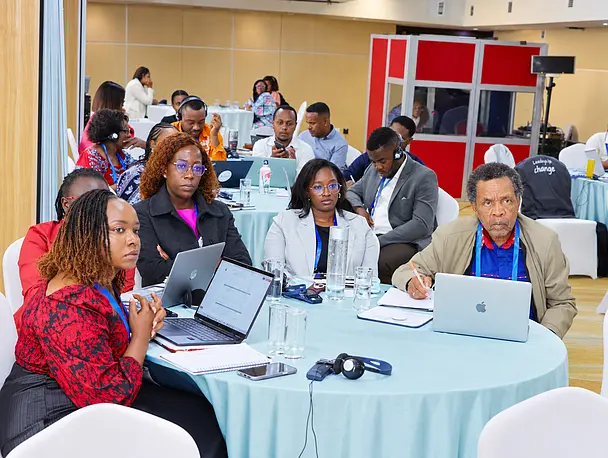
The priorities are contained in a joint statement emerging from the Africa Civil Society Forum on Nature, Climate and Environmental Governance, held in Addis Ababa from 12 to 14 September 2026. Organised by WWF and UNEP, the Forum brought together civil society organisations, Indigenous Peoples, pastoralists, local communities, women, youth and policy actors.
Participants agreed that Africa must move beyond fragmented engagement and use coordinated, evidence-based advocacy to influence global decisions and ensure that international commitments deliver tangible benefits for people and nature.
“African Civil Society Organisations must be intentionally pan-African while championing Africa’s indelible place and space in multilateralism and work together to offer their expertise to governments even as they hold them to account,” said David Munene, Program Manager of CYNESA.
The statement calls on national focal points and negotiators under the three Rio Conventions, on climate change, biodiversity and desertification, to identify common implementation priorities through institutionalised coordination. Participants also highlighted the importance of strengthening coherence between implementation of the Rio Conventions and ongoing efforts to tackle plastic pollution, recognizing its impacts on biodiversity, climate systems, land health, livelihoods and human well-being. However, it cautions that greater coherence must not merge or weaken the distinct mandates and obligations of each convention.
The CSOs called for funding that is adequate, predictable, accessible and equitably distributed. They warned that environmental and climate finance should not deepen Africa’s debt burden but should instead support resilient and sustainable development. This includes mobilizing resources to address plastic pollution across the full lifecycle of plastics, while supporting sustainable consumption and production, waste management, circular economy approaches, and a just transition for affected workers and communities.
They also called for simplified, direct-access financing for Indigenous Peoples, pastoralists, local communities, women, youth, persons with disabilities and grassroots organisations. Private investment can play a complementary role, the statement notes, but it should not replace public finance or international obligations. All financing should be backed by strong environmental and social safeguards, transparency and accessible grievance mechanisms.
“Africa’s influence depends on coordination, political leadership and evidence-based implementation,” said Laurent Somé, an international conservation, governance and policy expert. “This means taking proven local solutions into negotiation rooms and translating COP decisions into national budgets, laws and action on the ground.”
Ahead of the review of progress in implementing the Kunming–Montreal Global Biodiversity Framework at CBD COP17, the CSOs argued that success should not be measured by the number of plans, reports or decisions adopted. Progress should instead be visible in healthier ecosystems, improved livelihoods, secure community rights, food and water security, and greater resilience to drought.
The statement also calls for scientific evidence to be combined with Indigenous and local knowledge. Communities must be recognised not simply as beneficiaries, but as knowledge holders, innovators and implementers. Their meaningful involvement must extend from priority-setting and planning to financing, implementation, monitoring and accountability.
Attention is given to pastoralists as ecosystem stewards. Building on the momentum of the International Year of Rangelands and Pastoralists 2026, the CSOs enjoined governments to recognise pastoral mobility, customary tenure, access to land and water, and ecological connectivity in conservation and restoration policies.
As Isaiah Otieno of the UNEP Civil Society Unit told the Forum, civil society actors “are not simply observers in environmental governance; they are essential partners in shaping solutions and driving implementation.”
The Forum further reaffirmed Africa’s call for stronger means of implementation to support environmental commitments and for an ambitious, legally binding, and effective global instrument on plastic pollution. Such an instrument should address the full lifecycle of plastics, provide adequate support for implementation, and respond to Africa’s development priorities and environmental realities.
African CSOs called for funding that is adequate, predictable, accessible and equitably distributed
© Brian Nderitu/CYNESA
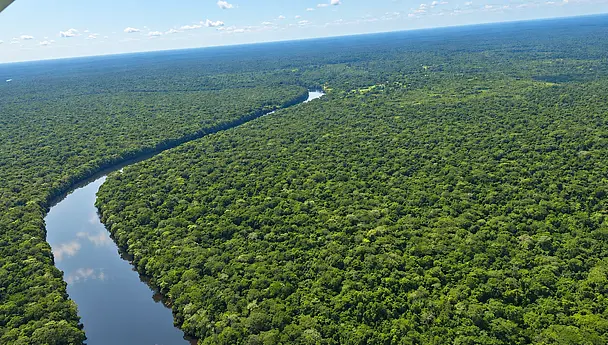
The Congo Basin Forest is one of Africa’s biodiversity wonders
© Fidelis Manga/WWF

