

‘We reaffirm our conviction that the authority of international law derives not merely from its proclamation, but from its enforcement,’ co-sponsors say in statement
Merve Aydogan
26 September 2026•Update: 26 September 2026
HAMILTON, Canada
South Africa and Malaysia convened a high-level meeting on Friday at UN headquarters in New York, bringing together foreign and justice ministers, and senior diplomats from 40 states to discuss ways to strengthen enforcement of international law.
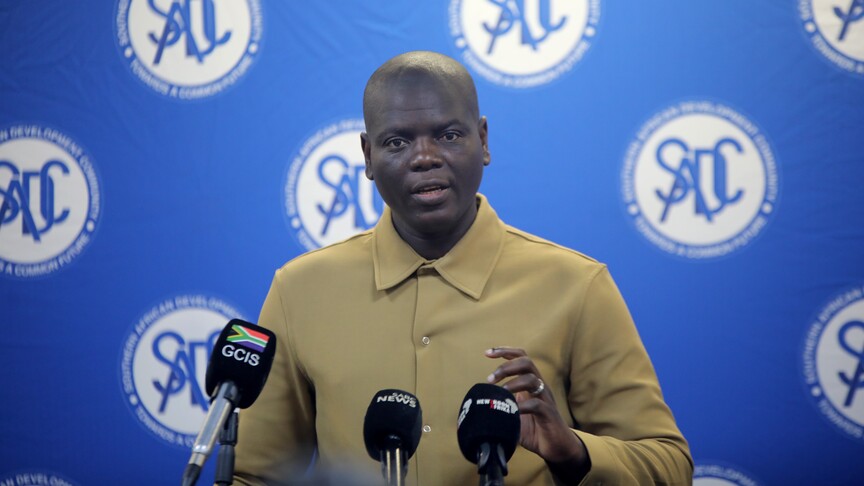
“We reaffirm our conviction that the authority of international law derives not merely from its proclamation, but from its enforcement,” co-sponsors Ronald Lamola, <a href="https://absafricatv.com/ellis-announces-south-africa-squad-to-face-madagascar-in-olympic-qualifiers-africa-top-sports/" title="Ellis announces South Africa squad to face Madagascar in Olympic qualifiers – Africa Top Sports”>South Africa‘s international relations minister, and Mohamad Hasan, Malaysia’s foreign minister, said in a statement.
Participants proposed a new UN mechanism modeled on the 1962 Special Committee against Apartheid to monitor compliance with international law, alongside continued efforts toward a UN Security Council arms embargo on Israel and coordinated measures to shield the International Criminal Court, its judges and officials from sanctions and intimidation.
The statement pointed to the occupied Palestinian territory, including East Jerusalem, as “an urgent test” of the multilateral system, noting that violations have persisted despite the International Court of Justice’s July 2024 advisory opinion and the General Assembly’s subsequent resolution.
Discussions centered on three themes: building a multilateral system reflecting sovereign equality among states; moving states “from complicity to compliance” with their existing legal obligations; and shifting from “impunity to accountability” for those obstructing international courts and human rights bodies.
The co-sponsors said they would continue consultations with participating states, describing the defense of international law as “a common responsibility” rather than that of any single state or institution.

