

From a war-crimes court to rogue tankers to Himalayan floods, the international order is fraying. The European Union is mostly reduced to watching from the sidelines.
The world’s post-1945 institutional architecture rests on a simple assumption: that states, companies, and individuals will find it costlier to defy shared rules than to comply with them. Three events in recent weeks suggest that assumption is fraying. Not dramatically, but steadily, and in ways that compound one another.
The cases are superficially unrelated. A French insurer quietly drops a war-crimes court. A shadow fleet of oil tankers defies European navies. A Himalayan flood kills more than 1,400 people in a region where data-sharing frameworks barely exist.
Each case illustrates the same underlying problem: the institutions designed to manage collective challenges are losing the coercive and cooperative capacity on which they depend. In each case, the EU has tools it has not yet used.
If historical hydrological data is no longer a reliable guide for planning because of climate change, it calls into question the models on which Nepal’s hydropower ambitions rest. — International Institute for Strategic Studies
Start with the International Criminal Court. The ICC has spent the past year quietly dismantling its dependence on American infrastructure. It has shifted its office software from Microsoft to Germany’s openDesk. It has sought workarounds for staff who cannot hold US credit cards, purchase mobile phones, or receive packages its contract with AXA, effective 1 October, did
When insurance becomes a geopolitical act
The Paris-based insurer did not want to leave. AXA held months of discussions internally and with the court about potential workarounds. It found none. Without a so-called blocking statute—a legal mechanism shielding companies from being forced to comply with another country’s sanctions—the insurer faced an impossible choice between its ICC contract and its access to the American financial system. It chose the latter.
The episode illustrates how US sanctions function less as a targeted tool than as a gravitational field. US Secretary of State Marco Rubio launched a campaign in July to dismantle the ICC “brick by brick”, calling on member states to withdraw from the court.
US President Donald Trump told the UN General Assembly that the ICC was “out of control” and an “evil group of people”. The court now has 13 officials (including half of its 18 judges) under US sanctions.
The EU’s response has been notably timid. A group of MEPs has been calling for the bloc to trigger a blocking statute in relation to US sanctions against the ICC, but while there is support among dozens of MEPs for such a measure, no such statute has been activated. The European Commission said it was “in constant touch with our member states, but diplomatic outreach remains our preferred option”. That is a polite way of saying Brussels will not pick this fight.
AXA put it plainly: “It is a complex and sensitive case given the risks arising from the extraterritorial application of US sanctions. Situations of this kind, which are extremely difficult for the individuals affected, are relatively new and reflect an international environment that has become increasingly tense and complex for businesses.”
A statute too far
The court is not collapsing. Deputy prosecutor Nazhat Shameem Khan told the Financial Times that the ICC had taken steps to insulate itself against further US sanctions, “ensuring that we are autonomous for the future”.
But autonomy achieved by avoiding American systems is a diminished kind of autonomy. The ICC’s authority rests on the willingness of states and companies to treat it as legitimate. Each quiet accommodation chips away at that.
The EU has a direct remedy it has declined to apply. Adding the relevant US executive orders to the annex of the EU Blocking Statute (Regulation 2271/96) would make it illegal for any EU firm to comply with those sanctions and open the door to damage-recovery suits in European courts.
A €250m ICC Resilience Fund could reimburse insurers, cover legal costs, and guarantee salary continuity for sanctioned officials. (The fund is a policy recommendation championed by specific civil society networks and the pan-European political party Volt Europa, to be financed jointly by the EU budget and member states.)
The shadow fleet is evolving into a parallel trading system, supported by its ownh, Chatham House
The EU could also fast-track its Anti-Coercion Instrument, coordinate demarches among all 124 Rome Statute parties, and table a UN General Assembly resolution reaffirming the court’s independence. None of these steps requires a treaty change. But all of them require shared political will, something in short supply.
A fleet beyond reach
The shadow fleet tells a different story, with a common denominator and rougher edges. Before Russia’s invasion of Ukraine in 2022, around 200 dark ships operated globally, evading sanctions by turning off tracking transponders, swapping flags of convenience, and conducting ship-to-ship transfers at sea.
Today, estimates put the fleet at more than 1,300 vessels — at least one in every five oil tankers worldwide. Sanctioned crude now accounts for 18 per cent of global tanker capacity.
Western governments initially treated this as a temporary nuisance. It is becoming something more durable. As Nitya Labh of Chatham House warns, “the shadow fleet is evolving into a parallel trading system, supported by its own
Russian marine insurers reported a 42 per cent increase in hull and machinery premiums in 2024. Nearly one in three tankers crossing the Baltic now carries certificates from Russian or Russian-linked insurers. India approved four Russian insurers in 2024 to provide cover for tankers entering Indian ports.
The Hormuz crisis has accelerated this process. Following the energy shock triggered by the Strait’s closure, countries turned to sanctioned crude as an alternative. In March, the Philippines’ sole oil refinery bought 2.5 million barrels of Russian crude to bolster dwindling stocks. In July, a dark tanker conducting ship-to-ship transfers of Iranian oil was spotted in Malaysia’s Eastern Outer Port Limits zone.
As Ms Labh notes, “(this) hasn’t just increased global tolerance for the shadow fleet but provided it with an important
Escalation without resolution
Western enforcement has intensified, and so has the risk. In the first six months of this year, nine suspected shadow fleet vessels were seized across Europe. In June, Britain’s Royal Navy intercepted a Russian shadow fleet vessel in the English Channel carrying more than 100,000 tonnes of Russian crude.
Russia responded in May to Estonia’s attempt to detain the sanctioned tanker Jaguar by dispatching a Su-35 fighter jet into NATO airspace. President Vladimir Putin described European seizures of Russian merchant vessels as “acts of piracy”.
We are in constant touch with our member states but diplomatic outreach remains our preferred option (in dealing with the ICC crisis). — the European Commission
Russia has since drafted a presidential decree to extend Russian flag status to more shadow fleet ships, bringing them under state protection. American and European officials have acknowledged that seizing a vessel flying the Russian flag would be far riskier, as it raises the likelihood of a military confrontation. The enforcement spiral is real, and leads to dangerous territory.
The deeper problem, as maritime executives told Chatham House’s Global Shipping Roundtable in June, is structural. The shadow fleet is both a symptom of institutional fragmentation and a cause of it.
A fragmented response
The EU’s response has so far been fragmented. A unified vessel blacklist could merge member-state lists and cover all tankers sanctioned under the 20th and 21st packages. It would close the gaps that dark operators currently exploit. Mandating real-time Automatic Identification System streaming as a condition of EU port access, with “dark” episodes triggering automatic denial, would raise the cost of evasion.
It is a complex and sensitive case given the risks arising from the extraterritorial application of US sanctions
The EU’s Anti-Money-Laundering Authority could monitor commodity-trade finance and force EU banks to freeze payments linked to blacklisted vessels. An EU-G7 shadow-fleet fusion cell, hosted by the European Maritime Safety Agency, could pool satellite imagery, flag-state records, and cargo-tracking data.
At the International Maritime Organization, the EU could push for minimum hull-integrity and liability-insurance standards for tankers older than 15 years. That would put structural cost pressure on the oldest and most dangerous ships in the illicit fleet.
When preparedness is not enough
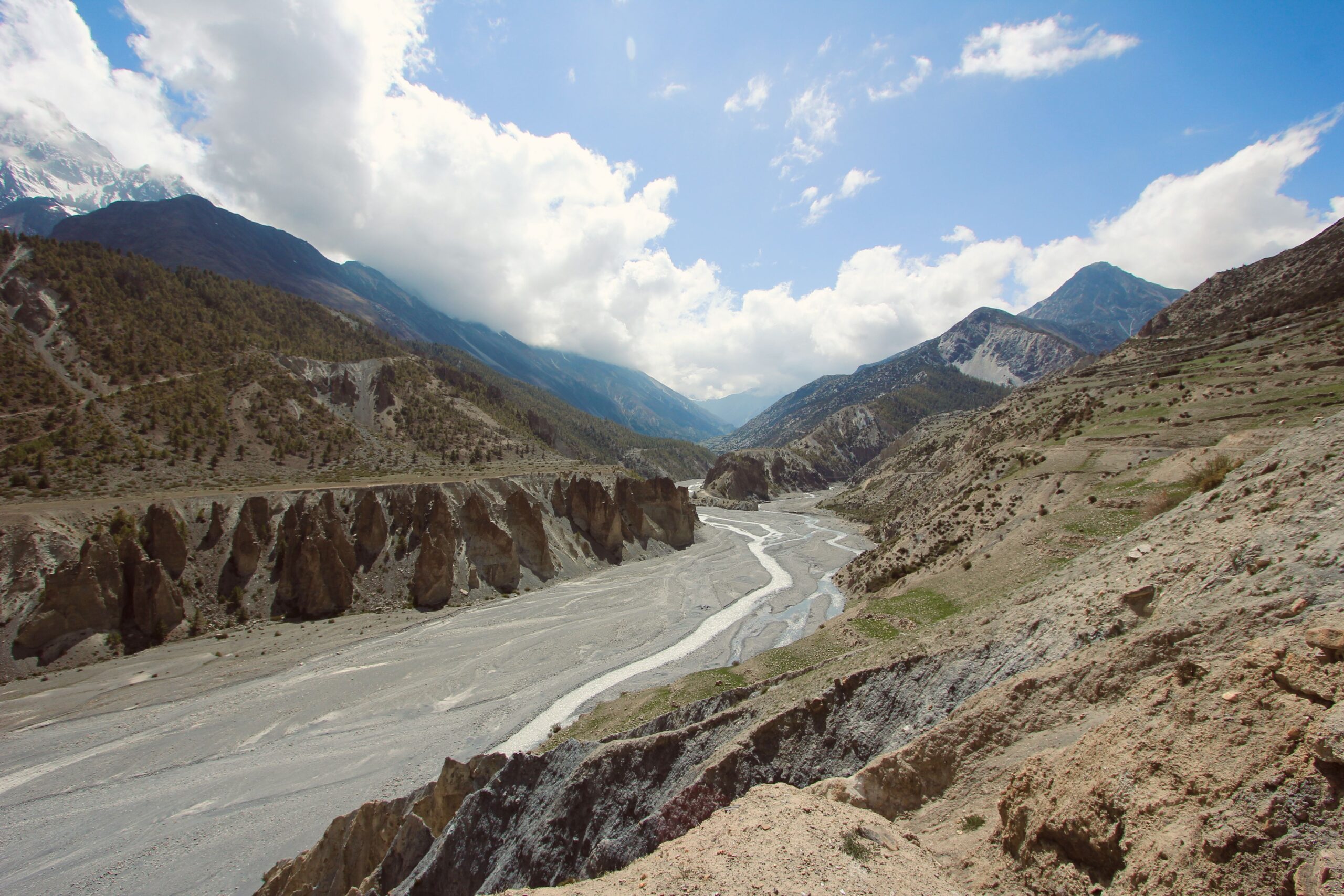
The third case is different in character but not in implication. The Rasuwa disaster of 26 August 2026 killed at least 1,403 people in Nepal and left more than 6,000 missing. A landslide and glacial collapse—a combined event powerful enough to register on the Richter scale—triggered a 20-metre-high wall of water travelling at between 150 and 170 kilometres per hour downstream along the Bhotekoshi River. Hydropower workers, Indian pilgrims, and British tourists were among the dead.
Nepal is not unprepared in any simple sense. Early-warning systems exist. Mobile phone alerts went out. A headmaster who received warnings through a chain of phone calls from friends upstream told his 900 students to move to higher ground. Some lives were saved. But the landslide swept away the monitoring equipment intended to warn of rising river levels. The warning system destroyed itself in the act of being needed.
The IISS analysis of the disaster identifies a deeper failure: the collapse of regional data-sharing in one of the world’s most hazard-prone regions. Nepal said after the disaster that it had received no information from China. The International Centre for Integrated Mountain Development recorded more than 54,000 glaciers across the Himalayan region in 2011. The number actively monitored in Nepal is only in double digits.
Distrust rules
The consequences are self-reinforcing. “If historical hydrological data is no longer a reliable guide for planning because of climate change, it calls into question the models on which Nepal’s hydropower ambitions rest,” the IISS analysis reads. Downstream states assume upstream neighbours are deliberately withholding data. Upstream neighbours may simply have no data to share. Distrust fills the gap where information should be.
Regional frameworks exist on paper. The South Asian Association for Regional Cooperation has a Disaster Management Centre. Its role is largely advisory. Tensions between India and Pakistan have paralysed SAARC as an operational body. Neither grouping includes China.
The 2023 Sikkim disaster prompted tentative bilateral discussions between China and India on data-sharing for the Teesta River. The Rasuwa disaster was faster than any diplomatic process could accommodate.
(The shadow fleet) hasn’t just increased global tolerance for the shadow fleet but provided it an important
The EU is not a Himalayan power, but it has relevant assets. Its Copernicus earth-observation programme could provide free, processed satellite products tailored for glacier-lake monitoring, mirrored on regional platforms to avoid cross-border bandwidth constraints.
Under Horizon Europe, the EU could fund a data-trust with the International Centre for Integrated Mountain Development, deploying secure computation tools that allow each country to query shared datasets without exposing militarily sensitive layers.
The EU could also offer to facilitate a narrowly scoped ‘Koshi Basin Data Compact’ among India, Nepal, and China. It could focus solely on hydrological safety and use the EU Peace Facility to finance joint disaster-response drills that give all three governments a tangible reason to participate. Tying Green Deal trade incentives to measurable data-sharing milestones would give the compact teeth.
The pattern beneath the cases
Three institutions, three failures of different kinds. The ICC cannot find an insurer. European navies cannot safely board a Russian-flagged tanker. A Himalayan early-warning system cannot survive the event it was built to detect.
What connects them is not incompetence. It is the erosion of the shared frameworks that make collective action possible. Sanctions, intended to enforce norms, are inadvertently building a rival trading system. Diplomatic caution, intended to preserve relationships, is leaving a war-crimes court to fend for itself. Data-sharing agreements, intended to manage transboundary risk, do not exist at the scale or speed the hazards demand.
In each case, the EU holds instruments it has not deployed: a blocking statute left unamended, a vessel blacklist left fragmented, a satellite programme left untargeted. The rules-based order was never a finished project. It was always a work in progress, dependent on continuous political investment. That investment is now in question; the costs of its absence are becoming visible, one quiet accommodation at a time.

