

Oct 13, 2026
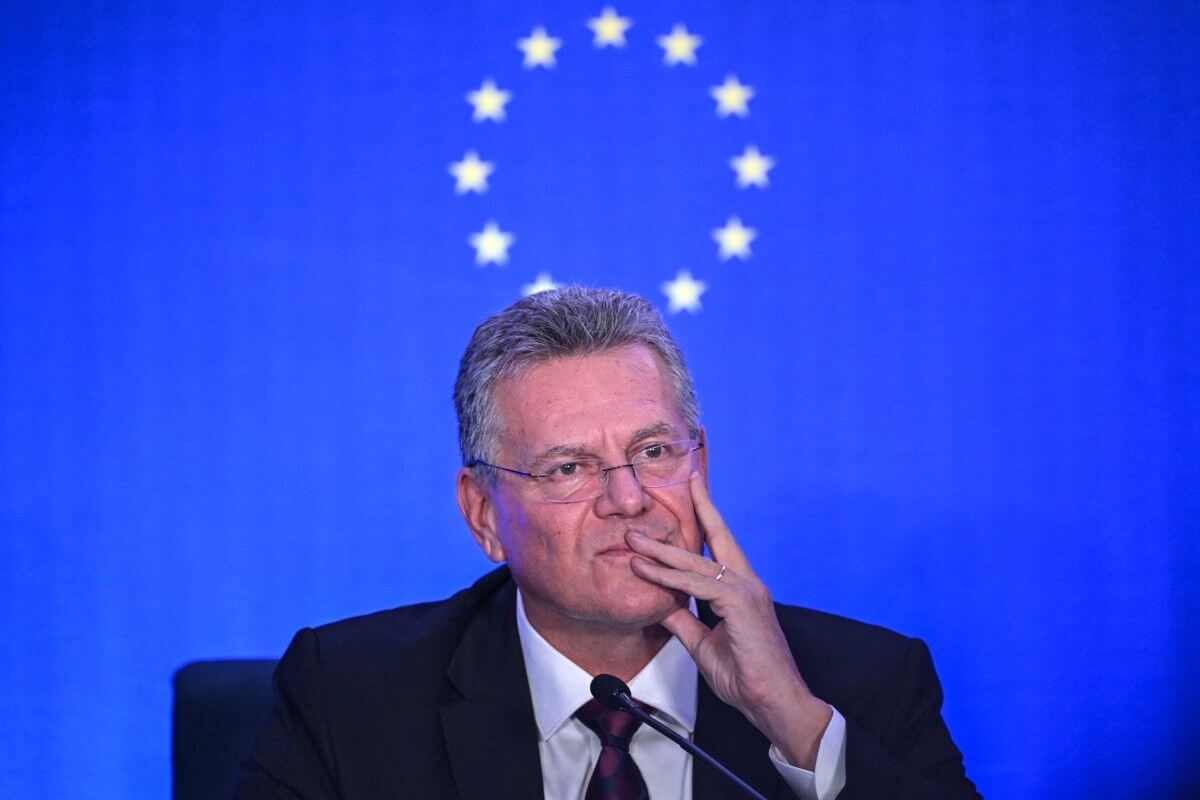
COMMENTARYPhoto credits: ADEK BERRY / AFP
Georg RiekelesAssociate Director and Head of Europe’s Political Economy Programme
Ian HernandezPolicy Analyst
SEE MORE
ECONOMIC SECURITY
EUROPEAN COUNCIL
EUROPEAN UNION CHINA
Beijing has turned down the heat just enough to keep Europe in the pot. But the frog is still boiling. Unless the European Council uses this reprieve to set a timetable for rebalancing and corrective action, this will be a tactical win for Beijing.
Maroš Šefčovič’s account of the Beijing talks identifies three shared understandings: moderating hybrid exports, lowering tariffs on almost €4 billion of European goods and facilitating rare-earth licensing. Until member states receive the full debrief, caution is warranted. The baseline, legal form, enforceability and permanence remain unclear. Beijing’s approach was predictable: reject significant concessions, then offer enough to preserve the process. Nothing announced changes the fundamental imbalance.
That makes the European Council on 15 and 16 October a test. Any hint of satisfaction, or a request that the Commission ‘explore further talks and options’, would signal weakness to Beijing. Leaders should set clearer red lines, a timetable and milestones for increasing EU rebalancing measures and corrective action. They should mandate full use of existing instruments and request a systemic response instrument with the Commission in the lead and with automatic triggers, to overcome Europe’s collective action challenges.
What Europe should take from the Beijing talks:
1. This is a reprieve, not proof of rebalancing
It is too early to call the outcome a proof of concept. An unpublished understanding on one vehicle category cannot answer an EU goods deficit with China of close to €1 billion every calendar day. The hybrid understanding may halve projected exports, but volumes could still rise. The tariff changes promise €225 million in savings. The rare-earth ‘green channel’ does not remove Europe’s strategic vulnerability. Europe needs a deal, but not just any deal. Progress means overall rebalancing: predictable critical-mineral supplies, verifiable restraint across all exposed sectors and additional market access. The understandings are a starting point, not a reason to suspend European action.
2. Europe faces a systemic challenge, not an automotive dispute
The core problem is China’s industrial overcapacity, state finance, weak domestic consumption, renminbi undervaluation and the deliberate control over upstream value chains. Recent analysis estimates that the renminbi is undervalued by 20–30%. That is, using industrial producer-price indices adjusted for exchange-rate movements, the euro area’s relative cost position against China deteriorated by more than 40% between January 2020 and January 2026. As we’ve argued, this is much more than a competitive challenge. It is a major economic, technological, social, political and security challenge for Europe. Europe is being asked to absorb Chinese industrial adjustment through lost production and jobs, while accumulating dependencies Beijing has shown itself willing to weaponise. An automotive settlement cannot imply tolerance of distortions in batteries, robotics, wind equipment, machinery, chemicals or biotechnology. Nor can it paralyse Europe while a fast-moving train bears down on it.
3. Europe has more leverage than it thinks
Europeans must understand that China may look formidable, but it is not omnipotent. Weak domestic consumption and a more restrictive US market make access to the EU single market indispensable to Beijing. The notion of a ‘Fragile China’ matters: Beijing’s vulnerabilities make it more assertive, but they also give Europe significant bargaining power. The lesson from the Trump–Xi summit is that interdependence becomes leverage only when the other side believes it will be used. Europe cannot remain the adjustment variable in bargains struck elsewhere. That is a doctrine of reactive assertiveness, which must guide Europe: set red lines and remain open to negotiation, but ensure that persistent distortion and coercion trigger proportionate consequences.
4. Europe must use today’s instruments while building tomorrow’s
The French-German non-paper can be a breakthrough. It supports both the full use of existing tools and the preparation of a systemic instrument covering whole sectors, subsidies and currency manipulation, with access to the single market restricted unless a qualified majority blocks Commission action. This recognises that Europe’s collective action problem requires stronger Commission powers. The trigger must cover the severe and persistent distortion, not only efforts to obstruct an EU response.
Nothing should wait for new legislation. The European Parliament’s 454-to-86 vote for reciprocity, de-risking and proportionate countermeasures provides a broad mandate for action. Leaders should instruct the Commission to use safeguards, ex officio trade defence cases, the Foreign Subsidies Regulation and the International Procurement Instrument more systematically, and the Anti-Coercion Instrument whenever its legal test is met. Implementation also requires staff. The relevant DG Trade teams in Directorates F and G are roughly UK-sized and only one quarter to one fifth of comparable US capacity. Those numbers are no basis for navigating a far tougher geopolitical environment.
5. Unity must be organised before Beijing tests it
Beijing can read Europe’s political calendar. Germany is under strain, France is approaching a portentous presidential election, and Ukraine, energy, debt and the next EU budget compete for leaders’ attention. China’s new anti-dumping investigation into an EU chemical product cannot yet be labelled retaliation but sends a clear signal. Europe needs solidarity arrangements and support for sectors and member states hit by coercion.
This unity will not organise itself. The Commission must lead. France knows what it wants, Germany is moving towards a firmer position, Spain knows what it opposes. The Commission cannot wait for 27 national positions to converge before defining the European interest and building a coalition behind it. Most European capitals are looking to the Commission for direction.
Collective action is also needed abroad. The French-German non-paper calls for closer cooperation with like-minded countries. The EPC’s work on an Economic Security Alliance would give this commitment practical form. It could begin with the EU-Canada partnership and expand plurilaterally to Japan, the United Kingdom, South Korea and others, coordinating monitoring, diversification, crisis support and responses to coercion.
The Beijing understandings may offer useful breathing space. They will count as a step forward for Europe only if leaders use that space to increase pressure. Otherwise, Beijing will simply have turned down the heat for a moment, while Europe remains in the pot.
Georg Emil Riekeles is Associate Director and Head of Europe’s Political Economy Programme at the European Policy Centre.
Ian Hernandez is a Policy Analyst within the EPC’s Europe’s Political Economy Programme.
The support the European Policy Centre receives for its ongoing operations, or specifically for its publications, does not constitute an endorsement of their contents, which reflect the views of the authors only. Supporters and partners cannot be held responsible for any use that may be made of the information contained therein.
Related publications
OP-EDEU budget 2028–2034: Why democracy funding must be protected in the MFF
Oct 13, 2026
by
Johannes Greubel
DEMOCRACYMFF 2028-2034
DISCUSSION PAPERNavigating uncertainty: EU responses to migrant smuggling and instrumentalisation after Ceuta
Oct 12, 2026
by
Anna Paus
MIGRATION
COMMENTARYBosnian elections 2026: How Dodik won without running
Oct 12, 2026
by
Berta López Domènech
BOSNIA-HERZEGOVINAEU ENLARGEMENT
COMMENTARYEverything must change in EU migration policy, for everything to stay the same? Lessons from Lampedusa
Oct 08, 2026
by
Alberto-Horst Neidhardt
ASYLUMMIGRATION
To the PointThe Multiannual Financial Framework needs financial innovation, not just more money
Oct 07, 2026
by
Fabian Zuleeg
MFF
COMMENTARYEurope must be more than enlargement-proof
Oct 06, 2026
by
Janis A. Emmanouilidis
EU ENLARGEMENT
EPC ROUND-UPEPC expert reactions to SOTEU 2026
Sep 17, 2026
by
Georg Riekeles, Johannes Greubel, Corina Stratulat, Juraj Majcin, Svitlana Taran, Amanda Paul, Ian Hernandez, Myriam Iehl, Iana Maisuradze, Eric Maurice, Brooke Moore, Marianna Gorgerino, Elizabeth Kuiper, Stefan Šipka, Mihai Sebastian Chihaia, Liza Saris, Tabea Schaumann, Fabian Zuleeg, Michele Migliori, Alberto-Horst Neidhardt, Philipp Lausberg, Janis A. Emmanouilidis, Karina Smreková, Valentina Caimi, Berta López Domènech
EUROPEAN COMMISSION
EPC ROUND-UPState of the European Union 2026: EPC experts preview von der Leyen’s SOTEU
Sep 10, 2026
by
Georg Riekeles, Johannes Greubel, Eric Maurice, Elizabeth Kuiper, Almut Möller, Stefan Šipka
AI AND DIGITAL POLICIESCLIMATE & SUSTAINABILITYEUROPEAN COMMISSION
EPC ROUND-UPThe EPC Summer Reading List
Aug 14, 2026
by
Georg Riekeles, Johannes Greubel, Fabian Zuleeg, Helena Hahn, Brooke Moore, Elizabeth Kuiper, Paweł Świeboda, Varg Folkman, Samuel Goodger, Talisa Mazzoni, Liza Saris, Tabea Schaumann, Javier Carbonell, Linda Solstrand Dahlberg, Edward Fishman, Bart Hogeveen, Levente Kocsis, Maria Martisiute, Maria Demertzis, Tobias Etzold, Vanna Curin
To the PointChina is hollowing us out. Europe needs to fight back.
Jun 10, 2026
by
Georg Riekeles
CHINAECONOMIC SECURITYINDUSTRIAL TRANSFORMATIONS
PUBLICATIONFrom openness to deterrence: Europe’s doctrine of reactive assertiveness
May 31, 2026
by
Georg Riekeles, Varg Folkman
BRUSSELS ECONOMIC SECURITY FORUMECONOMIC SECURITY
PUBLICATIONBRUSSELS ECONOMIC SECURITY REVIEW, Vol. I
May 26, 2026
by
Georg Riekeles, Elizabeth Kuiper, Paweł Świeboda, Varg Folkman, Fabian Zuleeg, Edward Fishman, Bart Hogeveen, Jessica Moss, Maria Demertzis, Bianca Baumler
ECONOMIC SECURITY

