

The team’s management needs to offer decisions that make sense, rather than spurious justifications for ones that don’t
No homecoming for the Australian Test team will ever be as hostile as the aftermath of the sandpaper debacle in 2018, but the team making the equivalent trip from South Africa in 2026 will still find that some knives are out. Having led 1-0 after Durban, reversing a trend of poor starts, the side managed to surrender the series across the next two contests, bowled out for 99 in Gqeberha and 111 in Cape Town. As Charlton Heston may have observed: you maniacs, you blew it up.
Pat Cummins as captain strives for equanimity, fond of saying that good performances don’t make his team great and bad ones don’t make them terrible. He concluded his post-match interview in Cape Town by saying that he was “overall relatively happy with how we’re going”. Perhaps, having twice had a team 4 for 40, then gone on to lose both matches by a mile, he should be willing to signal more concern. This team has long had batting problems and made decisions that entrenched them, while a habit of playing down evident concerns has become entrenched across its leadership, from Cummins to coach Andrew McDonald to selection chair George Bailey.
Nothing is more glaring than the Nic Maddinson fiasco, which with a month’s consideration remains one of the worst selection decisions ever handed down by an Australian panel. It was irresponsible, capricious, indefensible, none of those requiring hindsight wisdom but clear from the minute it was made.
To pluck a player whose last good innings in first-class cricket was more than two and a half years earlier, who hadn’t even played in 19 months, who had undergone the disruption of a frightening illness, and who had never been a world-beater anyway, was beyond bizarre. Asking that player to open the batting in Test cricket facing Kagiso Rabada in the dark? It gave him no realistic chance of success, which must be the first criteria selectors have to satisfy. It was unfair on the player, it diminished the team, it disrupted the order, and, in what may be the most lasting damage, it caused bitter disillusionment through state ranks that hard work doesn’t count for those not in the inner circle.
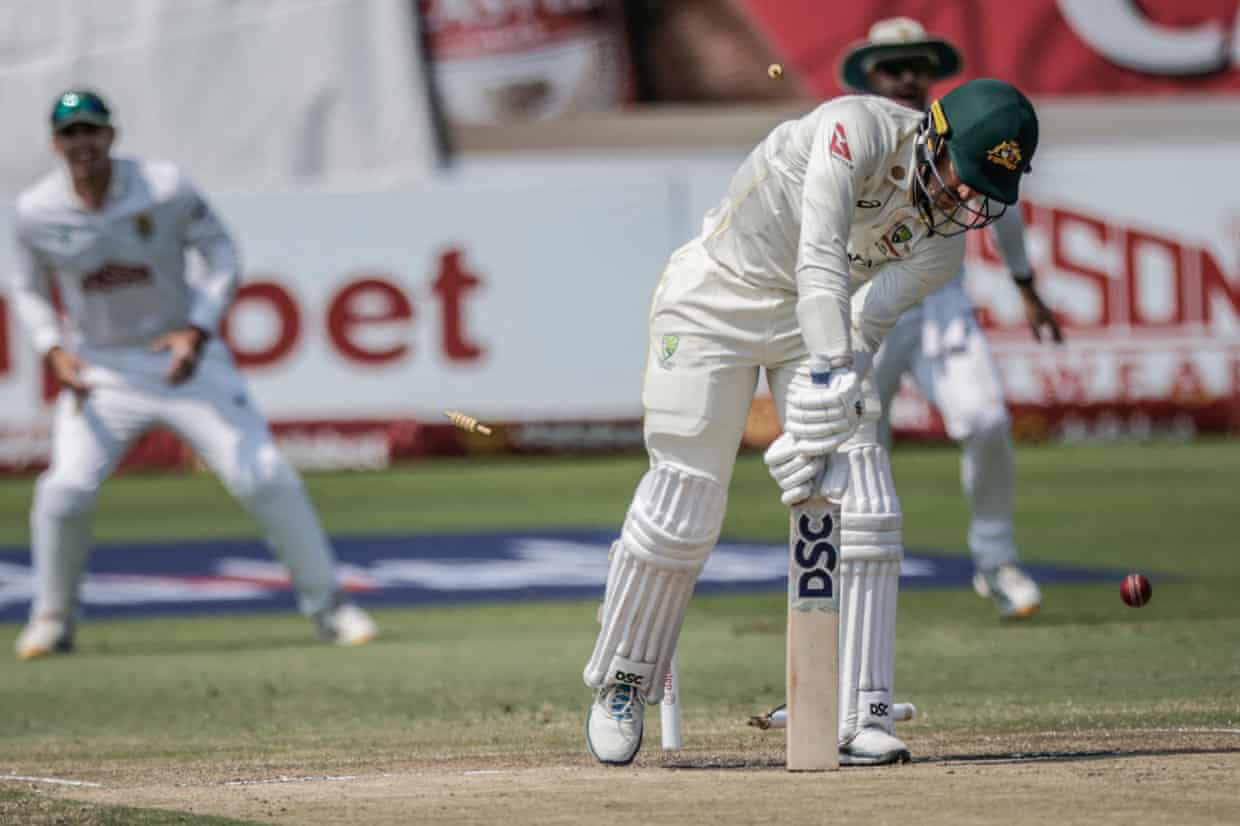
Inevitably, it went poorly: four innings for 56 runs, feet frozen except when retreating to leg, hands slashing the odd desperate four before a catch, no hint of rhythm. On making such a predictable error, the consequences for selectors must be existential. It is quite simply disqualifying from the job.
Yet at no stage has there been any acknowledgment of reality. Before the series was Bailey’s smug dig that sought to contrast armchair selectors reading Shield scores to his panel’s superior knowledge: “If people are trying to run down a list of last year’s run scorers, that’s going to be a challenge for them.” After the first Test, McDonald, with White House press secretary levels of fabulism, announced that a 33-ball duck full of air swings had in fact been a fine example of leaving the ball.
Sometimes, conventional wisdom becomes convention for good reason. Players who are playing cricket are generally better suited to it than those who are not. Players who haven’t made runs for years probably won’t. To have an opener in Jake Weatherald handed an expensive national contract, then booted from the squad after one Test, is admission that at least one of those moves was a mistake. To have his replacement finish the series not at Cape Town but back home in the New South Wales middle order is another.
So has gone the denial of reality, on through the playing list. Marnus Labuschagne clearly looked in need of a reset during the Ashes or the Bangladesh series after a poor three years, something that untold numbers of onlookers could identify, but he and selectors both persisted with playing him beyond any reasonable duration in the team’s most important position at three. His 0 and 4 in the Cape Town match played a huge part in losing it.
Then there’s the needless promotion of Alex Carey to six: a good Test batter who is not about to become a great one at the age of 35. Moving him up adds nothing to what Carey can offer, but gives him a shorter break after keeping wicket, is less suited to his counterpunching, and has variously pushed Josh Inglis, Beau Webster and now Cooper Connolly into the confusingly peripheral spot at seven. What is normal for keepers is less comfortable for all-rounders who now don’t feel the responsibility or trust of being part of the top six. It rarely produces good results, and has coincided with Webster’s decline and replacement by Connolly.
Which brings about another point of confusion. Connolly has talent, but the attempt to fast-track him as a Test option has no foundation in results: framed as an all-rounder, he made his debut in 2025 with neither a first-class hundred nor a first-class wicket to his name. During 20 months between that Test and his second match this week, his wicket column had soared to five and his century column hadn’t moved. He bowled 13 overs in the match, having little influence as a player without a clear job to do.
Without even getting into bowling selections, the batting problems have long been evident. An Inglis century in Cape Town and Cameron Green’s recent improvement increases the candidate list for the middle order, but doesn’t solve problems higher up, like whether Travis Head’s gangbusters approach is helpful when the batting gets tough. How to get the best out of Steve Smith also remains an open question after his erratic tour.
This team’s management needs to offer decisions that make sense, not spurious justifications for ones that don’t. There is a reason supporters are so upset with the failure in South Africa. The armchair selectors saw it coming, and the highly paid ones were those left blinking in surprise.
Explore more on these topicsReuse this content

