

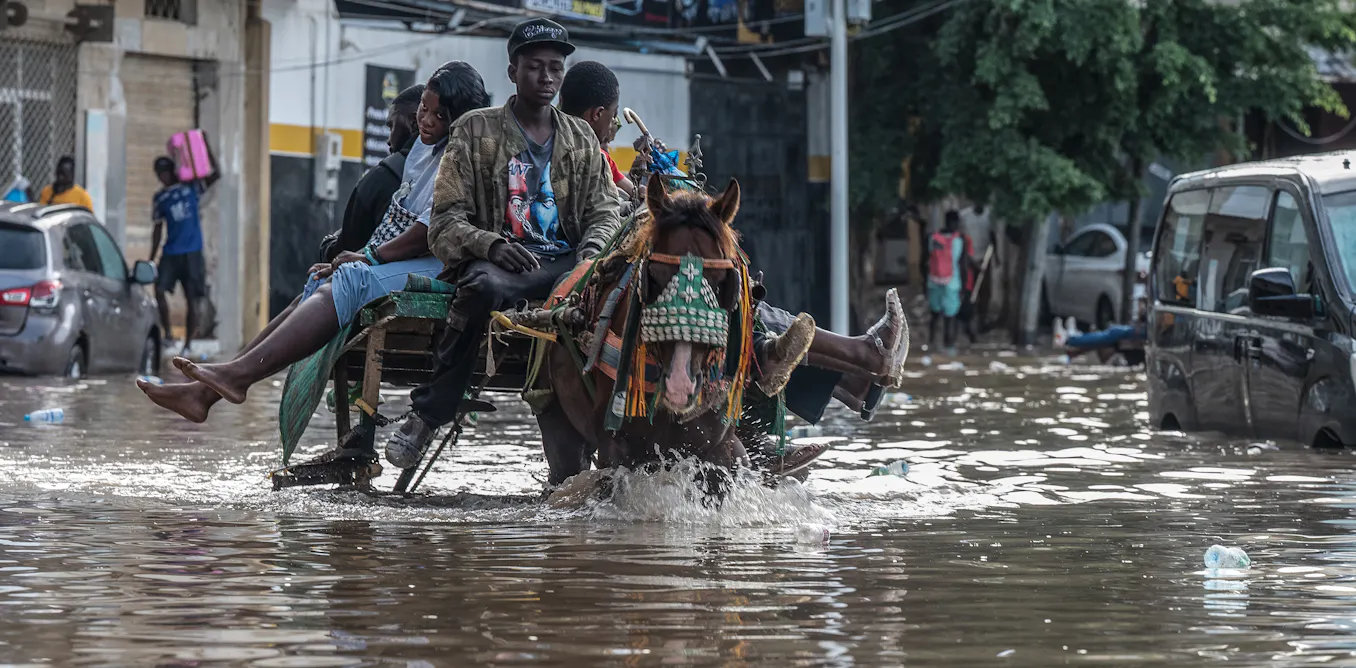
When a flood destroys a road, government officials can estimate the cost of rebuilding it. When drought ruins a harvest, lost income can be calculated. But how should a country record or measure the loss of a sacred place? Or the emotional strain that people experience when they are displaced from their homes by a climate-related disaster, the breakdown of community bonds, or a child’s lost sense of safety?
Across Africa, floods, droughts, coastal erosion and extreme heat are affecting livelihoods and public services. Stronger infrastructure, early-warning systems and resilient farming can reduce some impacts. But not all damage can be prevented or fixed afterwards. In climate policy, these unavoidable or irreversible impacts are described as “loss and damage”.
As African countries prepare for the annual climate change conference, this year COP31 in Türkiye, a key issue for the continent is how international commitments to pay into the fund for responding to loss and damage can be translated into practical support for countries most affected by climate change.
We are climate governance researchers who recently investigated ten years’ worth of climate policies, adaptation plans, laws and disaster-management frameworks from Burkina Faso, Ghana, Nigeria, Senegal and Sierra Leone.
We wanted to find out how these policies recognise what communities lose, and the damages they suffer, and whether they set out clear responsibilities and arrangements for providing support.
Our research found that west African climate plans recognise the cost damage to infrastructure and livelihoods. But there are gaps.
Firstly, the five countries address climate-related losses and damages differently. This makes it unclear which agencies should assess the impact of climate disasters and coordinate support.
Secondly, they also often overlook losses to culture, mental health and community ties. Rebuilding bridges, schools and houses is essential, but communities cannot fully recover if they are left disconnected from their livelihoods, communities, wellbeing and heritage.
Recognising these less visible losses will not make recovery easy. It can, however, support better-informed decisions and the kind of assistance communities value. That is a step from repairing damaged places towards restoring lives with dignity.
We conclude from our findings that governments need to clarify who will assess losses, coordinate assistance and secure the financing to repair damage. This would give affected people a clearer route to timely and appropriate support.
What gets counted shapes what gets restored
Across all five countries, climate policies focused largely on finding ways to repair damage that can be measured. This was especially the case in agriculture and infrastructure like roads, bridges and buildings. Displacement, cultural erosion and psychological harm were less recognised.
This is important because official assessments do more than record what happened. They shape government priorities, recovery budgets and requests for international assistance. Losses that are not documented are therefore less likely to influence recovery decisions or be included in them.
For example, a coastal community forced to relocate because of erosion. New housing may meet the immediate need for shelter. But relocation can separate people from their fishing grounds, family networks, burial sites and places connected to their history.
Similar gaps arise in education and health. Rebuilding a damaged school does not mean a child recovers months of lost learning. It can’t undo the longer-term effects on children’s opportunities. Disaster assessments may record deaths and physical injuries. But grief, anxiety and the emotional consequences of losing a home, community bonds, or livelihood receive far less attention.
Not every loss can or should be measured in money. However, affected people still need funding and services to recover. This could mean helping children return to school, offering counselling, and helping displaced communities stay connected and maintain their cultural practices.
Communities can help complete the picture
Governments can capture a wider range of losses and damages by combining cost assessments with input from affected communities on non-monetary losses. Local authorities, women’s organisations, traditional leaders, young people, people with disabilities and civil society groups can help identify losses that official assessments often overlook.
Working together in this way should begin before disaster strikes. Communities can map culturally important places, document how local people earn a living and explain which services, relationships and practices support everyday life. This knowledge can then be used to prepare for climate-related disasters, and if it becomes necessary to relocate communities and help them recover.
What needs to happen next
The good news is that Burkina Faso, Ghana, Nigeria, Senegal and Sierra Leone do not necessarily need to create new institutions to do this work. Existing climate, disaster management, social protection and development agencies and organisations can simply include wider forms of loss into their assessments. If the governments set up one common way of recording and reporting on these losses, then different agencies could work from the same information.
This would also make the countries’ access to international support stronger. The Fund for Responding to Loss and Damage and the Santiago Network, a UN-backed network of organisations and experts, help vulnerable developing countries access technical assistance to address climate-related losses. To access this support, countries need to provide evidence of what happened, who was affected and what assistance is needed.
That evidence could include how disasters affect health, education, human mobility, culture and community life. This would help international assistance respond more closely to people’s experiences.

