

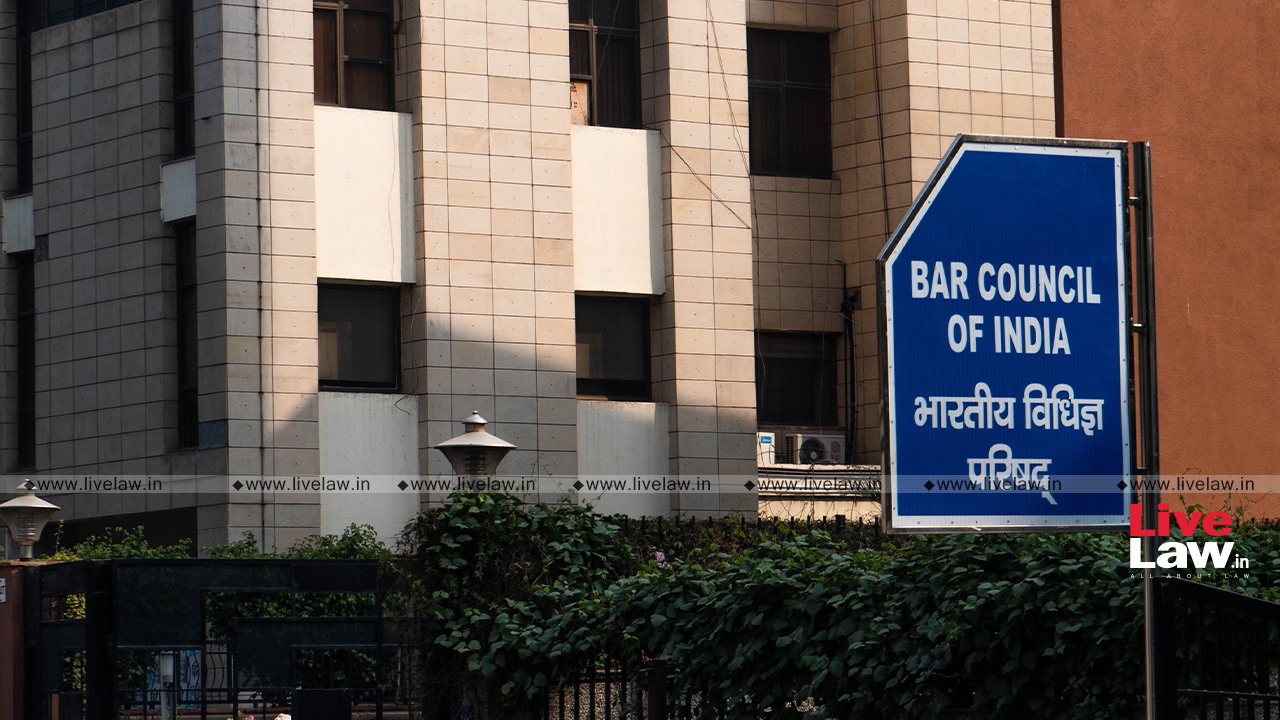
BREAKING| BCI Issues Circular To Regulate Advocates’ Social Media Use, Warns Against Promotional Reels & Solicitation

The BCI also prohibited the unauthorised video recording of court proceedings and circulation of clips from live-streams.
The Bar Council of India (BCI) has issued a comprehensive circular laying down ethical guidelines governing the use of social media by advocates, law students, interns and legal educators, cautioning against the growing trend of sensationalising court proceedings, using AI-generated content, and indirectly soliciting clients through digital platforms.
The 37-page circular, issued on July 17, states that while social media can be used for legal awareness and academic discourse, it must not be allowed to erode the dignity of courts, compromise client confidentiality or undermine public confidence in the justice delivery system.
The BCI said it had noticed a “growing and disturbing tendency” among advocates, law students, interns and legal media users to create and circulate reels, short videos, edited visual clips and personalised commentary on court proceedings and judicial hearings. It expressed concern that selective clipping, dramatic editing and out-of-context presentation of judicial proceedings often result in sensationalism, mockery of judges, counsel and litigants, thereby diminishing public confidence in courts.
The Council also flagged the increasing misuse of AI tools, including deepfakes, voice cloning and fabricated legal content, warning that manipulated judgments, fake citations, AI-generated legal advice and impersonation of judges or advocates pose a serious threat to the integrity of the legal profession.
Clarifying that the legal profession is a public service and not an ordinary commercial activity, the BCI reiterated that advocates are prohibited from advertising or indirectly soliciting work. The circular states that social media posts designed to attract clients through guaranteed outcomes, success claims, sensational thumbnails, clickbait titles or comparative superiority claims would amount to unethical solicitation.
The circular expressly advises advocates against making reels or videos inside court premises, posting promotional content featuring court buildings, robes or courtrooms, publishing client details or privileged communications, using court-related visuals for personal branding, circulating edited clips of court proceedings, or employing AI-generated images or deepfakes depicting judges, lawyers or litigants. It also cautions against publishing fabricated judgments, false legal success stories, fake testimonials and undisclosed paid promotions.
At the same time, the BCI clarified that the circular is not intended to discourage responsible legal awareness. It stated that advocates may continue to publish educational content, academic discussions, neutral case-law updates, legal reporting, public legal education and seminars, provided such material remains accurate, contextual, non-sensational and does not amount to client solicitation or breach of confidentiality.
Recognising that law students are future members of the Bar, the BCI has directed that every student enrolled in LL.B., LL.M. or diploma courses must execute an undertaking at the time of admission and again before commencing internships, affirming that they will maintain confidentiality, refrain from recording or publishing court-related content and comply with professional ethics during internships. Centres of Legal Education have been asked to maintain records of such undertakings.
The BCI has also proposed institutional mechanisms for implementation, including the establishment of Digital Ethics Committees, digital complaint portals, graded responses to violations, stakeholder declarations by Bar Associations and law colleges, and ethics modules in legal education. State Bar Councils have been requested to constitute Digital Ethics Committees to receive complaints, undertake preliminary verification and recommend appropriate action.
The circular states that violations may invite disciplinary proceedings under the Advocates Act, 1961, reporting to courts where court proceedings or premises are involved, contempt proceedings in appropriate cases, withdrawal of internship opportunities for students, and other legally permissible corrective measures. However, it clarifies that the circular does not create any new grounds for disciplinary action but seeks to reinforce existing professional obligations under the Advocates Act and the Bar Council of India Rules.
Advocates are advised to refrain from the following conduct All Advocates are advised and called upon to refrain from:
i. making reels, videos, photographs or promotional content inside Court premises, courtrooms, corridors, Bar rooms, chambers or judicial buildings in a manner inconsistent with dignity and decorum;
using bands, gowns or robes for public display, reels, posts, promotional photographs or social media performance in a manner inconsistent with Rule 5 and Rule 7 of Section I, Chapter II, Part VI, which require prescribed dress in Court and prohibit wearing bands or gown in public places except on ceremonial occasions and at such places as the Bar Council of India or the Court may prescribe;
ii. recording physical, virtual or hybrid Court proceedings, unless they are subject to applicable court rules, and in the absence of court rules, with written approval of the Court/ Registrar General, and are as per the guidelines of this circular
iii. clipping, editing or circulating live-streamed proceedings with captions, music, commentary, thumbnails or voiceovers which ridicule, mock, distort, sensationalise or scandalise the conduct of Judges, counsel, litigants or witnesses;
iv. using Court buildings, Court names, Court signage, robes, bands, briefs, cause lists, files, client documents or chamber settings as props for personal publicity or social media branding;
v. publishing content that amounts to direct or indirect advertising, solicitation, client-attraction, projection of special influence, or commercial self-promotion;
vi. disclosing confidential information relating to clients, cases, chambers, colleagues, seniors, court strategy, settlement discussions, opinions, pleadings, drafts or privileged communications;
vii. permitting interns, juniors, associates, clerks, staff or social media handlers to publish content from chambers, offices or Court premises which the Advocate himself/herself is not permitted to publish;
viii. commenting on pending matters in a manner that may prejudice proceedings, influence public perception, embarrass parties or counsel, or lower the dignity of the Court;
ix. using anonymous, pseudonymous or proxy accounts to do indirectly what professional ethics prohibits directly.
x. creating, uploading, forwarding, reposting, circulating, monetising or using AI generated images, deepfake videos, voice cloned audio, face swapped visuals, synthetic avatars, manipulated screenshots or other synthetic content depicting or purporting to depict any Judge, Court, Tribunal, counsel, litigant, witness, victim, client, Court officer, Court proceeding, chamber discussion or professional interaction;
xi. using the robe, band, Court corridors, Court premises, cause lists, briefs, chamber files, client documents, senior chambers, law firm spaces, internship access or the identity of being a lawyer as a prop for glamourised, sensational, suggestive, misleading, mocking, commercial or follower seeking social media content;
xii. publishing dressing, lifestyle, fashion, relationship, luxury or personality based videos in a manner which deliberately links such content with the status of being an Advocate, officer of the Court, intern in a chamber, law student in Court, or participant in Court proceedings, where the effect is to triidentity, imply special access to Courts or clients, or lower the dignity of the Bar
xiii. publishing or circulating fake judgments, fabricated citations, altered orders, manipulated cause lists, fictitious hearing narratives, false claims of appearance, false claims of success, fabricated client testimonials or edited material which creates a misleading impression of professional achievement, Court outcome or legal position;
xiv. using clickbait, fear based marketing or outcome guarantees, including expressions such as guaranteed bail, divorce in a few days, sure acquittal, assured stay, instant relief or similar claims which mislead the public or commodify legal remedies;
xv. purchasing fake followers, fake engagement, fabricated reviews, fabricated testimonials, bot driven amplification or paid undisclosed promotion to create a false impression of professional credibility, public trust, success rate or standing at the Bar;
xvi. failing to disclose, where material, the use of AI tools to generate or substantially modify images, videos, voiceovers, posters, avatars, captions, legal summaries or other content relating to Courts, Judges, Advocates, litigants, clients, proceedings or legal rights;
xvii. creating content which states or implies that the creator was personally present in Court, personally argued a matter, personally obtained a relief, or personally handled a client matter when such representation is false, exaggerated, AI generated or otherwise misleading;
xviii. disclosing case numbers, bail orders, orders in sensitive matters, pleadings, medical papers, identity documents, photographs, contact details, chat records, settlement communications or other client or litigant material in a manner which compromises confidentiality, privacy, privilege, safety, dignity or the administration of justice.
The Bar Council of India clarified that this circular is not intended to discourage:
i. responsible legal awareness;
ii. academic discussion of judgments;
iii. accurate legal reporting;
vii. academic lectures, articles or seminars;
viii. responsible use of official Court information;
ix. respectful discussion of legal principles arising from judgments and orders.
x. short-form legal education, including reels, shorts, brief videos, carousels, posts, threads, podcast clips or similar condensed digital formats, provided such content is accurate, contextual, non-soliciting, non-confidential, non-sensational, and does not convert complex legal questions into misleading outcome assurances
However, the BCI said that line is crossed when content becomes
viii. commercially exploitative;
ix. violative of confidentiality;
x. violative of Court rules, live-streaming rules or video-conferencing rules;
xi. inconsistent with the dignity of the profession.
xii. unsupported by statutory provisions, rules, notifications, circulars or judicial precedents where the content purports to explain a specific legal right, remedy, procedure, offence, limitation period, bail standard, matrimonial remedy, consumer remedy, property remedy or other legal consequence;
xiii. based upon fabricated judgments, fake citations, unverified screenshots, misleading excerpts, AI generated or otherwise non-existent case law, anonymous rumours or distorted summaries of Court proceedings.
Tags

