

MANILA, Philippines — (ABS NEWS) The International Criminal Court has set the opening of the trial of former President Rodrigo Roa Duterte for Nov. 30, 2026, on charges alleging crimes against humanity arising from his administration’s anti‑drug campaign, court filings show.
The ICC’s public materials say the prosecution’s charging documents present 49 illustrative incidents that correspond to 76 murders and two attempted murders and cover conduct alleged to have taken place between Nov. 1, 2011, and March 16, 2019. The court asserts jurisdiction for acts while the Philippines was a party to the Rome Statute and says domestic investigations were inadequate, allowing the ICC to act as a “court of last resort.” The ICC announced the trial date and has published the case information sheet and charging material.
The prosecution describes the listed incidents as illustrative examples of an alleged wider, systematic attack on civilians, citing police reports, autopsies, audiovisual material and witness statements in court filings. The ICC’s case materials and the charging summary are available on the court’s website. The case information sheet details the time frame and the incidents the prosecution will present.
Former President Duterte, whose allies have criticized the ICC proceedings as politically motivated, has denied criminal responsibility. His lawyers argue the deaths resulted from excessive policing rather than a policy of systematic killings, a defense noted in public reporting.
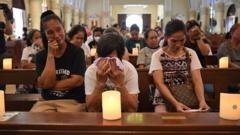
Families of alleged victims and rights campaigners say the trial offers a rare chance for accountability after years of limited domestic redress. A civil‑society Truth Commission has compiled a working dataset that records 8,320 documented killings from 2016 to 2022 and cautions that official records are incomplete and likely undercount the total. The commission published its initial dataset and said further verification is needed.
Legal and human rights organisations have previously documented high‑profile domestic cases that underscore the campaign’s impact. Human Rights Watch highlighted the 2017 killing of 17‑year‑old Kian Loyd delos Santos and the later conviction of three police officers, a case cited in court materials as evidence of some successful domestic prosecutions. Human Rights Watch reported on the campaign’s effects and the Kian case in its 2020 report.
Investigators and prosecutors have described methods used during the campaign, including police “tokhang” door‑knock operations and alleged killings by ununiformed assailants on motorbikes. Witness statements and investigative journalism cited in the ICC filings allege staged crime scenes, incentives for killings and local accounts of victims being dumped in bodies of water; the court will evaluate such evidence during trial. The prosecution’s charging material draws on multiple sources but treats many incidents as illustrative rather than an exhaustive catalogue of all alleged crimes.
Disputes over the total number of deaths persist. Official police tallies are considerably lower than some human‑rights estimates, and the Truth Commission itself warns its 8,320 figure is provisional and may omit additional cases or contain problematic records. Independent observers say varying methodologies and incomplete documentation make definitive totals difficult to establish ahead of further investigation and court proceedings.
The case raises broader questions about national sovereignty, accountability and public opinion in the Philippines. Supporters of Duterte continue to defend his drug campaign as effective policy, while victims’ families and rights advocates seek recognition and justice through the international court. The ICC will now begin assembling and testing evidence in open proceedings, and the Trial Chamber will determine how the illustrative incidents fit into the prosecution’s broader theory of criminality.
Reporting on the trial’s scheduling and the prosecutorial material is based on public ICC documents and contemporaneous reporting providing context on related domestic inquiries.
Subscribe to our breaking news bulletin

