

By Ishayu Gupta

The FIFA World Cup has always had a habit of producing storylines that feel almost scripted. This year’s final between Spain and Argentina is one such occasion. It is more than just a contest between the world’s top two ranked nations; it is a meeting of two footballing philosophies that have travelled different roads to arrive at the same destination.
For Argentina, Sunday presents the chance to achieve something no nation has managed in over six decades to successfully defend the FIFA World Cup. Since Brazil lifted consecutive titles in 1958 and 1962, several champions have arrived burdened with expectation, only to fall short. Lionel Scaloni’s side now stands one victory away from ending that wait and further cementing its place among football’s greatest international teams.
Standing opposite them is a Spanish side determined to complete another golden chapter in its history. Already crowned European champions, La Roja have the opportunity to once again unite the UEFA European Championship and the FIFA World Cup under one banner, recreating the dominance that defined their historic era between 2008 and 2012. Yet unlike that possession-heavy generation, this Spain has evolved into a more direct, dynamic and fearless attacking outfit without compromising its technical identity.
Interestingly, both managers have rewritten the accepted blueprint for international success. Neither Luis de la Fuente nor Lionel Scaloni arrived with glittering club managerial résumés. Instead, they built their reputations by understanding international football where limited preparation time often rewards clarity over complexity. Their faith in continuity, squad harmony and tactical discipline has transformed two talented groups into remarkably cohesive units.
Argentina have entertained throughout the competition. Their 19 goals underline a team that thrives on attacking freedom, quick transitions and individual brilliance. Whether overwhelming opponents early or finding decisive moments in extra time, the reigning champions have consistently found ways to score.
Spain’s campaign has been built on something equally impressive but entirely different. Having conceded just a single goal all tournament, they possess the competition’s strongest defensive record. Their ability to dictate tempo, recover possession quickly and deny opponents space has turned every match into one played almost entirely on their terms.
That contrast creates the defining tactical question of the final: can the tournament’s most productive attack unlock its most resilient defence?
Fitness may quietly become one of the biggest factors. Spain have completed every knockout fixture within 90 minutes, allowing valuable recovery time before the final. Argentina, meanwhile, have endured two emotionally and physically draining extra-time encounters. Over a tournament where margins become increasingly fine, fresher legs could prove just as decisive as tactical adjustments.
Yet finals rarely unfold according to statistical trends. They are often decided by composure rather than dominance, moments rather than momentum. A single defensive lapse, an inspired substitution or one moment of individual brilliance can outweigh weeks of preparation.
There is also the emotional dimension. For Argentina’s experienced core, another World Cup triumph would elevate this generation into truly historic territory. For Spain’s emerging stars, victory would signal the arrival of a new global powerhouse capable of dominating the international game for years to come.
Perhaps that is what makes this final so compelling. It is not simply Europe against South America, nor attack against defence. It is continuity versus renewal, experience versus youthful ambition, and two teams that have reached the summit through entirely different paths.
When the final whistle blows at MetLife Stadium, one side will leave having written another unforgettable chapter in football history. Whether Argentina extend their reign or Spain begin a new dynasty, the 2026 FIFA World Cup promises the ending that the tournament has deserved.
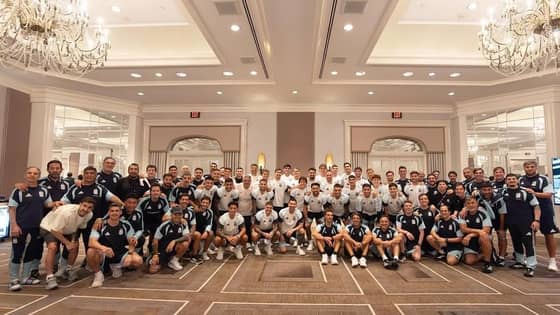
As Argentina chase world cup glory, Lionel Messi reflects on a journey for the ages
19 Jul 2026, 6:52PM
More Stories
