

Why does calcium prevent preeclampsia? A decades-old mystery comes to McMaster
Calcium intake dramatically reduces the risk of preeclampsia during pregnancy, but the reason why calcium works this way is still a mystery. Thanks to a chance meeting in 2023, researchers are coming together at McMaster to answer this long-standing question.
TwitterFacebookLinkedIn
Preeclampsia is a condition that can cause grave complications during pregnancy can be addressed with calcium. But why? Laureana Villarreal, an Argentine researcher, came to McMaster University to solve that question.
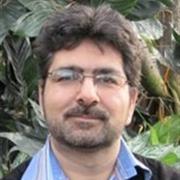
Ali A Ashkar
Jon Barrett
On an October evening in 2023, a world-famous researcher was giving a lecture in Toronto on a simple intervention that had saved the lives of thousands of pregnant people.
Argentine scientist José Belizán is known for pioneering the discovery that calcium intake dramatically reduces the risk of preeclampsia, and for translating that discovery into global clinical practice. Preeclampsia is a serious complication of pregnancy, usually marked by dangerously high-blood pressure and damage to vital organs. If untreated, the complication can be deadly.
Sitting in the audience that evening wasJon Barrett, chair of McMaster University’s Department of Obstetrics and Gynecology. But as the Belizán’s remarks unfolded, Barrett felt a sudden sense of recognition. The speaker was describing work that felt familiar. Not just scientifically, but personally.
“As he was speaking about calcium, it suddenly clicked. I realized I knew the work — and the person — from a completely different time in my life,” Barrett recalls.
Decades earlier in a rural part of South Africa, Barrett, then a medical student, was invited to join one of his professors on a field expedition to collect soil samples. The local tribe was known for having very low incidence of preeclampsia.
“One of my professors said, ‘I’m going on a week-long trip to a special African tribe. There’s this person in Argentina who believes that the reason is because the soil is poor in calcium.’ So we went to collect soil samples.”
Those samples were shipped across the ocean and for Barrett, that was the last he thought about it. That was until Barrett attended the lecture where Belizán was speaking as part of the 2023 Canada International Gairdner Awards.
“I realized he was the same person whose research I had helped with as a medical student, collecting soil samples in Africa,” Barrett recalls.
“After the lecture, I went up to him and said, ‘You don’t know me, but I collected soil samples for your research when I was a medical student in South Africa.’ And he gave me a big hug.”
With formalities out of the way, Barrett invited Belizán to share his research at McMaster.
“Preeclampsia is the holy grail of obstetrics,” says Barrett. “Nobody knows exactly what causes it, and Belizán’s work showed that something as simple as calcium could dramatically change outcomes.”
The missing link?
Belizán took his lecture to McMaster on Barrett’s invitation. During the discussion, someone in the audience spoke up. Though countless people have benefited from calcium being introduced during the pregnancy cycle, the attendee wanted to understandwhycalcium was so beneficial. Belizan explained that the biological mechanism responsible for this was still unknown.
That’s when another attendee,Ali Ashkar, chimed in. A professor in the Department of Medicine, Ashkar remarked that calcium might be acting through the immune system, specifically natural killer (NK) cells, which play a critical role at the implantation site of the placenta.
“Does calcium intake change the function of those immune cells?” Ashkar asked. “Could that be what’s affecting how the blood vessels are remodelled?”
This reframing of calcium’s role was something that had yet to be considered – even by Belizán. Barrett immediately recognized the opportunity that was now before them. The wheels started turning and by the end of the talk, Ashkar, Belizán and Barrett were giddy to explore this new possibility.
“We needed someone from Belizán’s lab,” Barrett said. “And we needed to test this properly.”
Ashkar and Barrett walked away from the talk eager to get to work and investigate the connection between calcium and the immune system. But before they could welcome someone from Argentina, they needed to figure out how to fund the project.
Help would come from another Faculty of Health Sciences member: Benicio Frey. Frey is a professor in the Department of Psychiatry and Behavioural Neurosciences, and was recently appointed the inaugural Homewood Research Chair in Women’s Mental Health and Depression.
Frey had heard about the research from Barrett and the struggle to secure funding. Frey’s response? You can have mine.
“We looked everywhere for funding. Benicio heard the story from Jon and said, ‘This is amazing. I will help,” Ashkar recalls.
With the largest hurdle out of the way – albeit nearly two years later – scientist Laureana Villarreal arrived at McMaster from Argentina in the fall of 2025.
“I had never left Argentina before and didn’t know what to expect. Luckily, the people in the lab are very kind and always willing to help, which makes everything much easier for me,” she says. “This past winter, I saw snow for the very first time.”
Villarreal found a home away from home in Ashkar’s lab, building on the research first crafted by her mentor Belizán. Her goal now is to understand how NK cells and calcium deficiency might connect with pregnancy problems.
“Although we’ve only just started this project, I believe it will give us valuable information that will bring us closer to understanding the cause of preeclampsia. Diseases like this are usually multifactorial, meaning there is probably not a single cause, but through this research we can learn more and hopefully find better ways to prevent it,” Villarreal says.
This spring, Villarreal began key experiments that will guide the next steps of the research. She describes the work as “very exciting” and how the next few months will be decisive.
The progress Villarreal is now making caps off a decades-long journey of happenstance, where leading researchers from around the globe were within the periphery of each other.
Their collective passion and pursuit of scientific understanding could very well lead to a discovery that could finally answer the question of what causes preeclampsia.

McMaster researchers use friendly viruses to tackle inflammatory bowel disease
Researchers from Health Sciences and Engineering worked together on a targeted approach using bacteriophages to disarm harmful microbes without disrupting the broader gut ecosystem.

Analysis: The ethics of being left out of health research
Research ethics boards must not become so preoccupied with the potential harm of participation that they overlook the certain harm of exclusion, write Sonia Anand, Gina Ogilvie and Vanessa Watts.

McMaster and U of T announce early-stage life sciences venture fund with Genesys Capital
The support for startups in Ontario promises to address health-care challenges, boost the Canadian economy and improve patient care.
