

A Subculture Of Its Own: How The Samurai Blue Rebranded Japan’s Global Identity | Outlook India
Advertisement
Outlook Explains | A Subculture Of Its Own: How The Samurai Blue Rebranded Japan’s Global Identity
Japan’s FIFA World Cup 2026 ended in heartbreak, but the Samurai Blue once again won hearts. Here’s how football became a reflection of Japan’s culture, shaped by respect, long-term vision and the influence of manga, anime and Brazil
Outlook Sports Desk
Updated on: 3 July 2026 8:36 pm
Summary
-
Japan’s FIFA World Cup 2026 exit showcased the country’s values, with the team’s post-match bow and supporters cleaning the stadium winning global admiration
-
Japan’s rise as Asia’s football powerhouse stems from the J.League’s long-term vision, grassroots development and Brazilian influence
-
From Captain Tsubasa to anime-inspired jersey launches, football is deeply woven into Japan’s culture and identity
There is a phrase often heard in sport – one team wins the match, the other wins hearts. Few teams embodied that sentiment more powerfully than Japan at theFIFAWorld Cup 2026
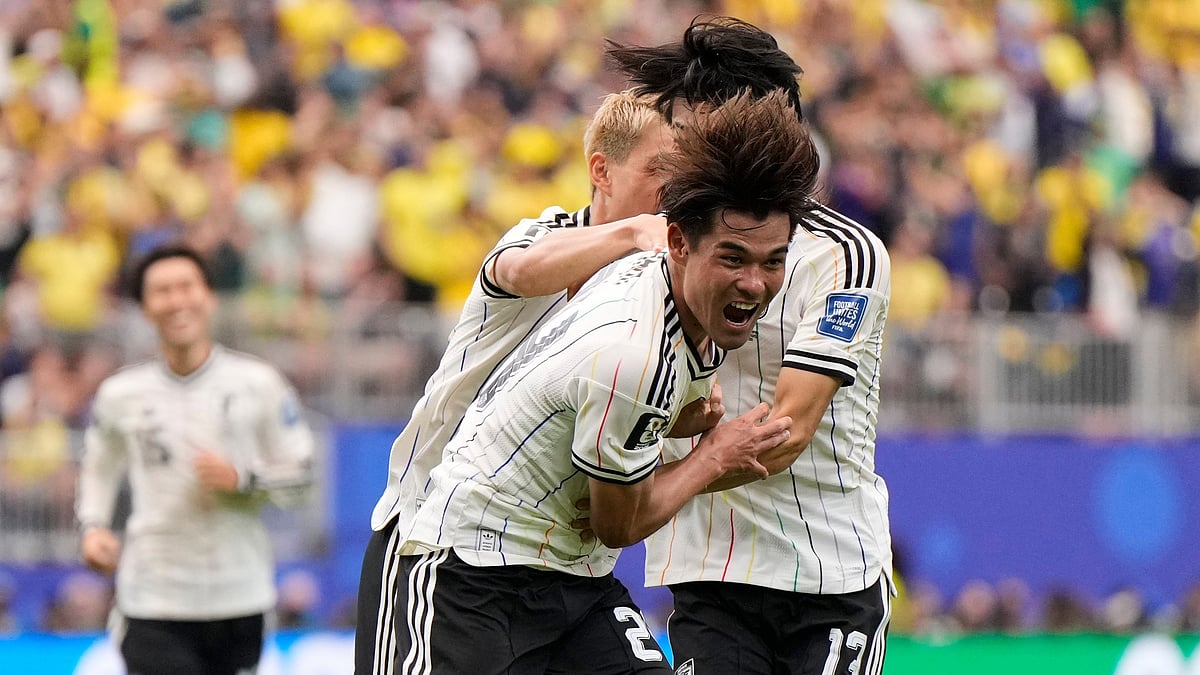
The Samurai Blue quite literally bowed out of the tournament after a heartbreaking 2-1 defeat to Brazil in the Round of 32. Kaishu Sano’s brilliant solo run gave Japan the lead before Casemiro equalised, and Gabriel Martinelli struck deep into stoppage time to end their World Cup dream
But while Brazil celebrated a place in the next round, Japan produced an image that quickly came to define their World Cup campaign
Head coach Hajime Moriyasu gathered his players in front of the travelling supporters and, together, they bowed in gratitude before leaving the pitch. In the stands, Japanese supporters stayed behind to clean their section of the stadium, with Brazilian fans joining them in a remarkable show of mutual respect

Japan players bow after the World Cup round of 32 soccer match between Brazil and Japan in Houston, Monday, June 29, 2026.(AP Photo/David J. Phillip)
Football stadiums are often places where defeated teams are booed off the pitch. Japan, instead, bowed out, both literally and figuratively. It was a moment that perfectly captured why the Samurai Blue have become one of the world’s most admiredfootballteams
In Japan, football is much more than a game; it is an expression of the country’s culture, where respect, community and humility are as important as the result itself
Football As A Reflection Of Japanese Culture
The bow after the defeat to Brazil was not an isolated gesture. Whether before kick-off, after the final whistle or during ceremonial occasions, Japanese players routinely bow to opponents, officials and supporters
Respect is not reserved for victory; it is expected regardless of the result. Hajime Moriyasu and his squad did the same after Japan’s elimination at the FIFA World Cup 2022, just as generations of Japanese teams have done before them
Advertisement
That is because in Japan, sport is not just a competition; it functions as a subculture shaped by the country’s broader values of respect, discipline and collective responsibility. The customs seen on the pitch are not unique to football; they mirror everyday Japanese life
Football may not be Japan’s oldest sporting tradition, but it has grown into one of its defining modern subcultures. While baseball has long dominated the country’s sporting imagination, producing global icons like Shohei Ohtani, the Samurai Blue have carved out their own space as cultural ambassadors, carrying Japan’s values of humility, respect and discipline onto football’s biggest stages
That connection between sport and culture extends well beyond football. Naomi Osaka has repeatedly expressed her Japanese identity through kimono-inspired walk-in outfits at Grand Slams, while the Samurai Blue have leaned into anime-inspired jersey launches that merge football with one of Japan’s most powerful cultural exports
Across sports, Japaneseathletesare increasingly presenting themselves not only as competitors, but as carriers of national identity
Advertisement
The same philosophy extends beyond the pitch. Every FIFA World Cup seems to produce another viral video of Japanese supporters cleaning the stadium after matches. While fans elsewhere are making a quick exit or celebrating late into the night, Japanese supporters quietly collect bottles, food wrappers and discarded flags before leaving
To much of the world, it appears extraordinary. To Japan, it is simply everyday life
Children grow up cleaning their own classrooms and school corridors, learning from an early age that shared spaces belong to everyone. That philosophy is reflected in the Japanese proverb Tatsu tori ato wo nigosazu (立つ鳥跡を濁さず), which translates to “a departing bird does not muddy the water.”
In essence, it encourages people to leave a place, a situation or even a relationship in a clean, orderly and respectful state, without creating problems or leaving a mess behind. It is more than just a proverb; it is a way of life, and one that naturally extends to Japanese football culture
Advertisement
Japan fans clean the stands after the World Cup round of 32 soccer match between Brazil and Japan in Houston, Monday, June 29, 2026.(AP Photo/Karen Warren)
Football, therefore, does not teach these values. It inherits them
That is why Japan’s football culture feels so distinctive. The national team is not simply representing the Japan Football Association; it is carrying the customs and principles of an entire society onto the world’s biggest sporting stage
Brazil’s Influence And Japan’s Hundred-Year Dream
There is a certain irony to Japan’s World Cup exit. The nation that ended the Samurai Blue’s campaign also helped shape the country’s football identity
Brazil is home to the world’s largest Japanese community outside Japan, creating decades of cultural exchange that extended beyond language and traditions to football itself. When Japan decided to professionalise the sport by launching the J.League in 1993, it looked towards the five-time world champions for inspiration
One of the league’s biggest statements came with the arrival of Brazilian legend Zico, who came out of retirement to join Kashima Antlers. More than a marquee signing, Zico became a mentor, helping establish professional standards while influencing coaches and young players across the country
Advertisement
He was followed by fellow Brazilians such as Bismarck and Elivelton, while several members of Brazil’s 1994 FIFA World Cup-winning squad, including captain Dunga, also played in Japan during the league’s formative years
Their influence extended far beyond attracting crowds. They helped shape the technical identity of Japanese football, blending Brazilian flair with Japanese discipline to create a style that remains evident today
Yet importing stars was never the end goal. When the J.League was founded, its architects unveiled an ambitious Hundred-Year Vision. Rather than chasing instant success, they envisioned football clubs deeply rooted in local communities, thriving youth academies and a national team capable of one day lifting the FIFA World Cup
That long-term thinking continues to guide Japanese football. The Japan Football Association’s philosophy centres around developing national teams, investing in grassroots football, educating coaches and creating pathways for young players. It is a system designed not for immediate rewards but for sustained excellence
The progress has been remarkable. Japan made their FIFA World Cup debut in 1998. Since then, they have qualified for every edition, become Asia’s most consistent performers on the global stage and produced a steady stream of footballers starring in Europe’s biggest leagues
Every milestone has been part of a plan measured not in seasons, but in generations
Manga, Anime And Football Speak The Same Language
Football’s place in Japanese society extends far beyond stadiums. It lives in bookstores, television screens and the pages of manga
Long before Kaoru Mitoma, Takefusa Kubo and Daichi Kamada became household names, millions of Japanese children were inspired by another footballer, one who existed only on paper
In 1981, manga artist Yoichi Takahashi introduced Captain Tsubasa, the story of Tsubasa Ozora, a young football prodigy determined to lead Japan to FIFA World Cup glory. At the time, Japan did not even have a professional football league, making the dream seem almost impossible
Captain Tsubasa quickly became a cultural phenomenon. Published in Weekly Shonen Jump, it reached millions of readers across the country and inspired countless children to swap comic books for football boots. Participation in the sport surged throughout the 1980s, with the number of registered players more than doubling by the end of the decade
Its influence continues to this day. Many Japanese internationals have credited Captain Tsubasa with inspiring them to pursue football, while modern manga such as Blue Lock has carried that legacy forward for a new generation
Japan’s relationship between football and popular culture extends beyond storytelling. The Japan national team’s FIFA World Cup 2026 jersey launch embraced anime-inspired storytelling rather than a conventional kit reveal, bringing together two of the country’s most recognisable cultural exports in a single campaign
Former youth coach Tom Byer recognised that potential decades ago, introducing technical skills to children through television programmes and educational manga. His mission was simple — make football accessible, enjoyable and part of everyday life
That philosophy mirrors another Japanese concept, kaizen — the pursuit of continuous improvement
Whether it is a youngster perfecting a first touch, a coach refining training methods or supporters thanking their team after defeat, Japanese football is built on the belief that greatness is achieved through countless small improvements rather than dramatic shortcuts
Brazil ended Japan’s FIFA World Cup 2026 campaign. Ironically, Brazil also helped inspire much of the football culture that makes the Samurai Blue so widely admired today
As Hajime Moriyasu and his players stood shoulder to shoulder, bowing before their supporters one final time, they reminded the football world that success is not measured only by silverware
Sometimes, it is measured by the values a team leaves behind
Brazil won the match. Japan, once again, won hearts
Published At: 3 July 2026 7:39 pm
FootballJapan National Football TeamFIFA World CupFIFA World Cup 2026
- Previous StoryFinal Score Today: Ronaldo Keeps World Cup Dream Alive; Mbappe Backs Messi In Golden Boot Battle
- Next StoryCan Cape Verde Shock Argentina? Paul Masefield Makes Bold FIFA World Cup Prediction
US

