

The impacts of a strengthening El Niño and the lingering effects of the war in Iran highlight two separate and seemingly unrelated global hazards. But in the Greater Horn of Africa, an area already beset by prolonged crisis and conflict, these factors are combining with others to potentially create a major, multicountry polycrisis.
As experts in famine, conflictandhumanitariancrises, our concerns about such a grave risk for the region in the second half of 2026 and into 2027 are based on a series of overlapping trends that include El Niño, the broader effects on food prices and fertilizer of the Iran war, internal conflicts and other localized factors. We fear the consequences could be catastrophic.
Several factors underpin this risk.
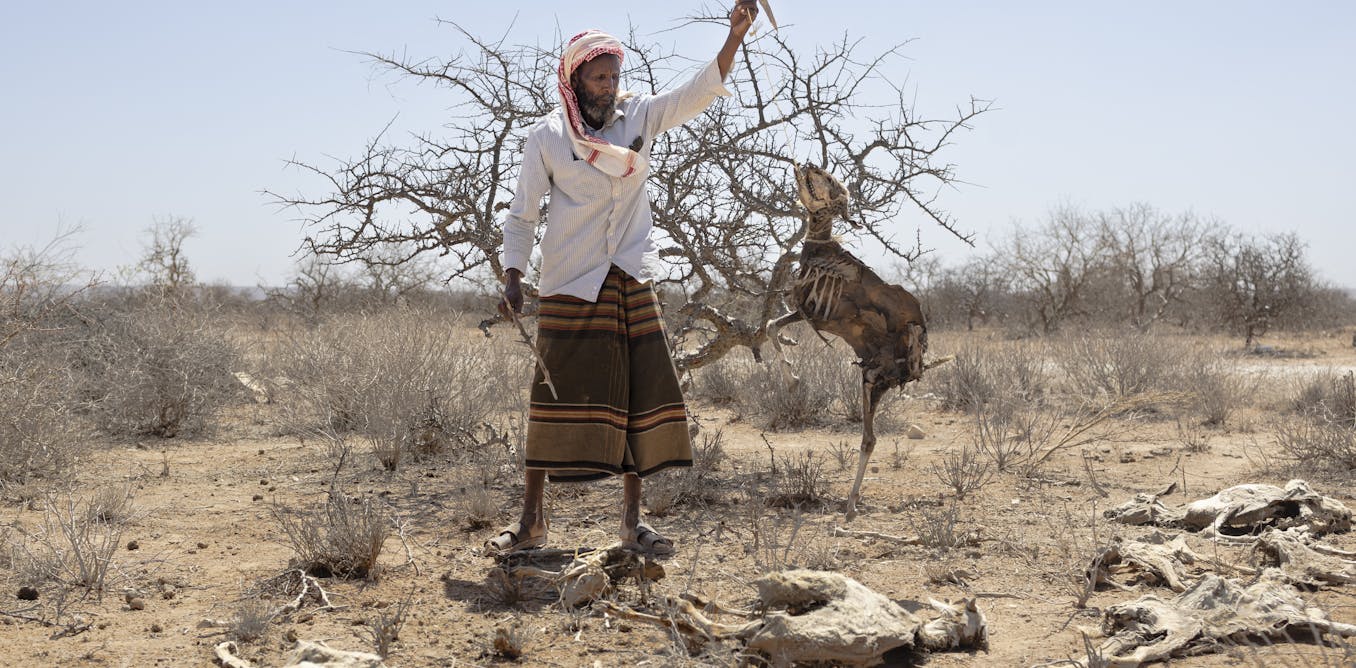
First, the short rains in the eastern Greater Horn of Africa – parts of Somalia, eastern Kenya, eastern Ethiopia – were well below average in the fall of 2025. The long rains in March to May of 2026 were also well below normal for much of that area, affecting both crops production and grazing and water for livestock, deepening the crisis of rural livelihoods.
The regional forecast for the northern Horn of Africa, where for the most part there is only one rainy season per year, is also projected to be below average. This includes the heavily populated highlands of Ethiopia, much of South Sudan and Sudan.
The super El Niño now forming could cause both drought and extensive flooding in parts of the Greater Horn of Africa, causing population displacement and tremendous loss of livelihoods.
Second, an unpredictable variant of the Ebola virus has taken hold in Congo and Uganda. Although it hasn’t yet spread to the rest of the region, the concern is that if Ebola spreads across the border to South Sudan, it will not only add a major epidemic risk but will also render the response to other shocks more difficult.
Third is the fact that all of the countries in the Greater Horn, with the exception of Kenya, are experiencing protracted, violent conflicts, with multiple parties jockeying for power and military advantage. This makes the task of dealing with the impact of climate, health and price shocks that much harder and risks further exacerbating or accelerating individual drivers.
Regional analysts have warned of an uptick in violence for Ethiopia and South Sudan. Violent conflict is a common denominator of contemporary famine, and famine or the risk of famine has already been noted in several countries in the region.
Conflict outside the region is also complicating matters. The war in Iran has already led to significant increases in transportation and food costs in the short term. But potentially more concerning is the fertilizer shortage caused by the war, which is projected to reduce harvests later in the year. If this happens, food prices will remain high long after the active conflict ends.
The Horn of Africa will be doubly affected by the fertilizer bottleneck – local production will be reduced, and global food prices will be higher. The bottleneck affects regional surplus-producing areas that might normally help to even out availability and prices in areas that do not produce enough to feed themselves. The El Niño effects, in combination with the high fertilizer costs, will likely reduce opportunities for agricultural work while also increasing the amount that food laborers – among the poorest people – have to spend on produce.
This combination of climatic, conflict, market and epidemic shocks are not simply additive but multiplicative, with each intensifying the other. Climate and epidemic shocks almost inevitably exacerbate conflict and encourage crackdowns on population movements.
A devastating aid cliff
To make matters worse, there are reasons to believe that the region will be less prepared to cope with the looming crisis than during previous El Niño years.
In the background is the deliberate gutting of much of the global humanitarian response infrastructure that people would have relied on in the past to mitigate the impacts of such a crisis.
In particular, the closure of USAID and the major cuts in spending on foreign aid – not only by the U.S. but by most Western nations – has undermined much of the international system’s capacity to respond to major shocks. Combined with longer-term political and governance challenges in eastern Africa, this conjunction of existing and anticipated factors in the Horn of Africa risks both further displacement and a rise in mortality.
There have already been calls by aid groups and regional bodies for higher levels of funding to be allocated through what remains of the international system.
But by itself, more money cannot solve this problem. Humanitarian programs have been shut down, staff have been laid off and infrastructure sold. Government-led programs in epidemic tracking and the provision of healthcare and other areas have likewise been curtailed.
Washington has recently increased its level of funding slightly, but U.S. humanitarian assistance is now more politicized and transactional, less sufficient and limited in its support of effective local systems and responses.
Local efforts addressing the problem
With the international humanitarian system compromised by funding cuts, the onus will be more heavily on governments, civil society and local communities in the Horn to mitigate anticipated shocks and their fallout.
The first responders in any crisis are usually next of kin, neighbors and local mutual aid groups. Since the collapse of the international aid system a year ago, long-standing efforts by local communities and organizations have ramped up significantly and effectively. These local mutual aid efforts are typically self-managed and financed through their own networks and diaspora remittances. But given the size of budget cuts in the formal humanitarian response system, these local initiatives can be better supported with complementary funding. Several intermediary organizations have recently emerged to support this effort.
Local mutual aid efforts can also be supported through more flexible public policies, for example, by easing restrictions on banking transfers to enable more effective diaspora support. Donors and the U.N. can also ensure that greater proportions of funding in the formal global humanitarian system go to local initiatives
Fundamentally, however, the most worrisome driver behind this polycrisis is violent conflict – wars in this region and elsewhere. In addition to the impacts of the conflicts in Ukraine and the Middle East, civil wars and ongoing insurgencies in Sudan, South Sudan, Ethiopia and Somalia have also been dragging on for years and in some cases have drawn in more countries – either directly through financial support and weapons sales or indirectly through political support.
Not only does violent conflict complicate any response to crisis, it also raises the risk of starvation being used as a weapon of war – something already alleged in Sudan and the Tigray region of Ethiopia. But for the most part, the international community has been unwilling to hold warring parties and their foreign supporters accountable for intentionally starving parts of their populations.
Finally, data and monitoring systems have also been significantly crippled by aid cuts and misinformation, making it difficult to understand the gravity of these crises or to keep actors accountable. Improved monitoring and evidence, including evidence of atrocities and the use of starvation as a weapon, need to be supported if there is to be effective assistance and accountability.
The conjunction of so many potential hazards has all the hallmarks of the proverbial perfect storm. Not only will people’s access to adequate food be devastated, it will also affect civilian protection, access and mobility. Without immediate prevention measures, the looming polycrisis will have widespread impacts on basic health, nutrition and water services – and the potential for mass mortality and displacement.
