

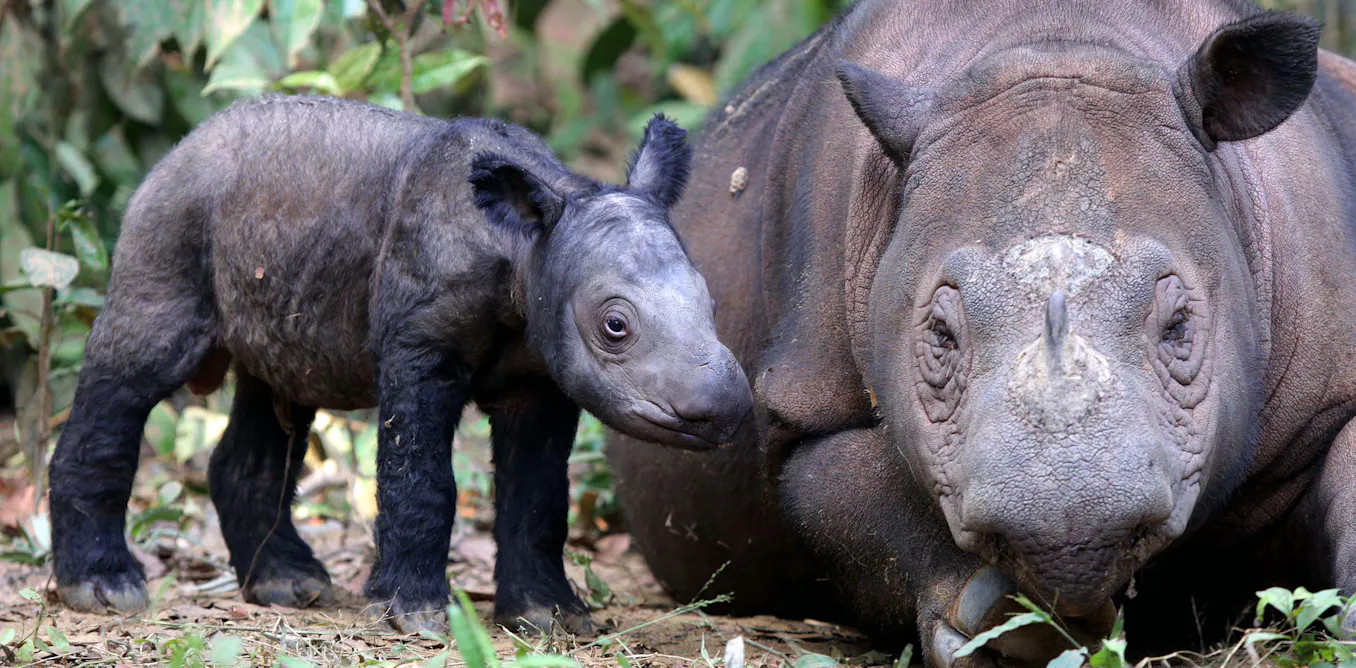
Small, hairy and cheekily charismatic.
Those words sprung to mind when I first met a Sumatran rhinoceros (Dicerorhinus sumatrensis) after traversing the maze of wooden slatted paths at the conservation centre in the dense, humid forests of Malaysian Borneo.
It was 1998 and I was an eager student volunteer at the centre. At that time, 300 Sumatran rhinos were thought to exist globally.
I saw this female rhino as a symbol of conservation hope. But today, according to the International Rhino Foundation’s 2026 State of the Rhino report, less than 50 Sumatran rhinos remain. All are found in Indonesia. The Javan rhino (Rhinoceros sondaicus) is just as rare.
While these figures rely on estimates, the trajectory is alarming.
So what is driving this decline? And how can we protect the few Sumatran and Javan rhinos that are left?
Majestic mammals
In modern culture, rhinos represent strength, power and security. We use them as sports mascots and feature them in everything from car logos to safety equipment brands.
Their ubiquity in popular culture may lead us to underestimate the urgency of their plight. Species used as marketing emblems are often considered more common than they truly are.
There are five surviving species of rhinos. I have had the privilege of getting to know all but one while working as a wildlife veterinarian in zoos, sanctuaries and the wild.
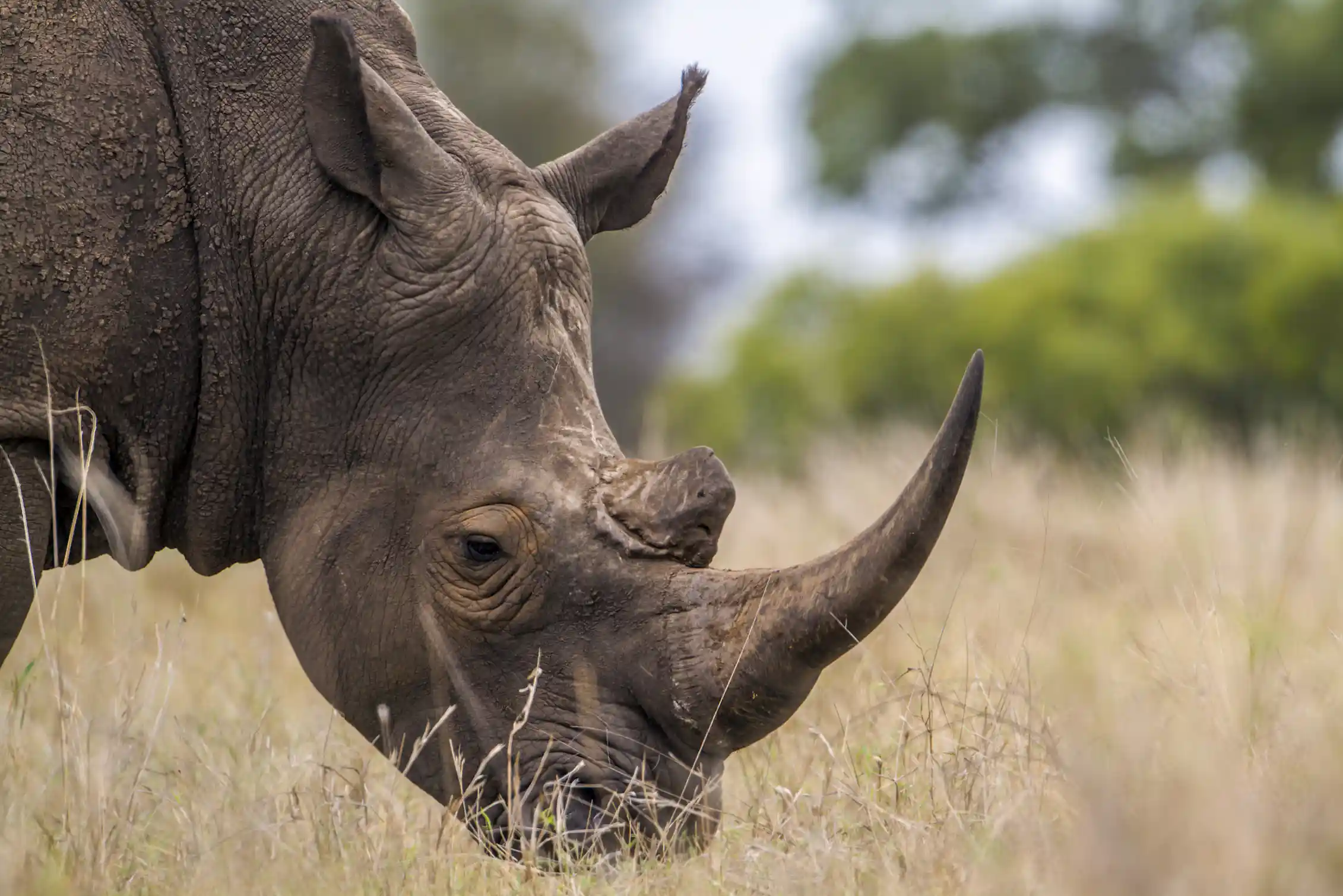
Africa is home to white and black rhinos, whose populations have fluctuated greatly throughout history. The water-loving greater one-horned rhino lives in India and Nepal and has seen a steady recovery from near extinction in the early 1900s. These three species can be found in zoos and tend to get the most public attention.
Compared to their African and Indian relatives, Sumatran and Javan rhinos typically fly under the radar. However, their critically endangered status signals these animals are in urgent need of assistance.
The rarest rhinos
According to the latest State of the Rhino report, the future of the elusive Javan rhino and the small, hairy Sumatran rhino is now especially precarious. Distribution is a major reason why.
There are roughly 50 surviving Javan rhinos. All live in a single protected area, Ujung Kulon National Park on the island of Java. Due to nearby converging tectonic plates, it is vulnerable to earthquakes and tsunamis. One natural disaster could well exterminate the Javan rhino population.
In contrast, the several dozen remaining Sumatran rhinos are scattered into many subpopulations, across two islands. This means the chance of a wild individual rhino encountering another of their kind is remote or even impossible. With no prospect of finding a compatible mate, isolated survivors are destined to be the end of their genetic line.
Searching for sanctuary
To protect this fragmented population, the International Rhino Foundation established the Sumatran Rhino Sanctuary in 1996. It is located in Way Kambas National Park on the island of Sumatra.
The sanctuary is currently home to ten intensively managed, semi-captive Sumatran rhinos. The resident animals live in large, natural rainforest habitats. They are provided with nutrition, security and regular veterinary care.
Increasing rhino numbers through natural or assisted breeding requires patience. Females give birth to a single calf after about 16 months of pregnancy. It may be several years before they have another. Infertility is a recognised problem in some rhinos.
The sanctuary has had some hard-won successes. Five Sumatran rhino calves were born there between 2012 and 2023, in part due to close reproductive management and monitoring. Excitingly, authorities have just announced two new pregnancies.
Camera-trap footage has also confirmed the births of up to five Javan rhino calves in Ujung Kulon in recent years. These precious births go some way towards recovery of these two species.
The perils of poaching
Poaching is a persistent threat to all rhino species. Worryingly, global demand for rhino horn is increasing, especially in China and Vietnam. Besides its long-standing use in traditional medicine, rhino horn now plays a role in demonstrating wealth and status, particularly in business circles. Poachers killed as many as 26 Javan rhinos between 2019 and 2023 alone.
Anti-poaching strategies include behaviour change <a href="https://absafricatv.com/carlos-queiroz-five-world-cups-and-a-ghana-campaign-with-lessons-for-africa/” title=”Carlos Queiroz – five World Cups and a Ghana campaign with lessons for Africa”>campaigns, which focus on promoting social and cultural unacceptability of horn use and purchase. Governments may also rely on intelligence-led law enforcement and disruption to large crime syndicates to stop poachers. While poaching convictions and court sentences are increasing, including in Indonesia, this is not enough to keep the world’s rhinos safe.
Proactive measures, such as protecting and restoring habitat suitable for each species, are vital to the recovery of rhino populations. This is particularly true as humans increasingly encroach on wild places.
Where to from here
Translocation – capturing and then releasing animals in a new place – is one possible way of protecting the world’s rhinos. Recent research examined whether this strategy could be used to re-establish populations of Sumatran and Javan rhinos across their former range throughout Southeast Asia. Conservation authorities can learn from past translocations of African rhinos, which show finding suitable habitat, anti-poaching protection and careful planning are crucial to the success of these efforts.
More broadly, effective rhino conservation relies on having an army of supporters. Local communities should tangibly benefit from living alongside rhinos, for example through job creation and by sharing in the proceeds of ecotourism. Even from afar, people can help by supporting conservation organisations and avoiding the purchase of products that contribute to tropical deforestation.
Sustainable funding and political commitment are crucial to protecting the few Indonesian rhinos that remain. It’s my wish that younger generations, including my future students, have the privilege of meeting a small, hairy rhinoceros for themselves.

