

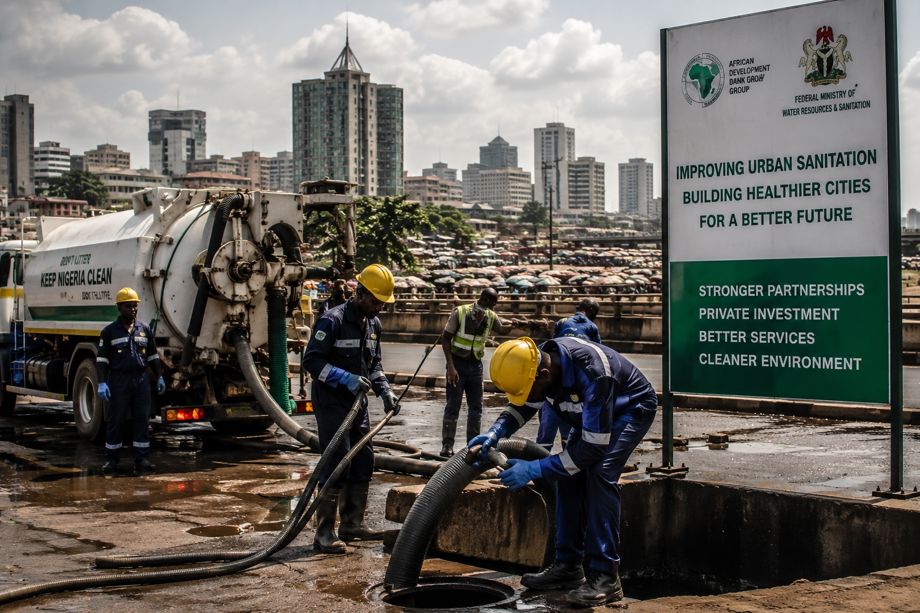
The African Development Bank’s latest sanitation diagnostic positions urban sanitation as a strategic infrastructure and economic priority for Nigeria, urging stronger governance, policy reforms, and greater private-sector investment. If implemented effectively, its recommendations could improve public health, urban resilience, and sustainable city development while attracting long-term infrastructure financing.

Nigeria’s urban sanitation challenge is increasingly becoming an economic and governance issue rather than simply a public health concern. The African Development Bank Group’s (AfDB) latest Nigeria Urban Sanitation Sector Diagnostic Report signals a strategic shift in how sanitation is being positioned within the country’s development agenda. Instead of focusing only on expanding toilets and sewer networks, the report calls for reforms that strengthen institutions, attract private investment, and integrate sanitation into broader urban planning. As Nigeria’s cities continue to grow rapidly, the findings provide policymakers with a blueprint for addressing one of the country’s most pressing infrastructure gaps while creating opportunities for sustainable economic development.
A Blueprint for Building Healthier and More Competitive Nigerian Cities
Nigeria’s urban population is expected to exceed 400 million by 2050, placing enormous pressure on water supply, wastewater treatment, housing, and sanitation infrastructure. Without significant improvements, overcrowded cities could face rising environmental pollution, disease outbreaks, flooding, and declining quality of life. Poor sanitation also imposes substantial economic costs through higher healthcare spending, lost worker productivity, contaminated water resources, and reduced investment attractiveness.
The AfDB diagnostic, therefore, reframes sanitation as an essential economic asset rather than merely a social service. Well-functioning sanitation systems support healthier communities, improve labour productivity, protect natural reAs Nigeria seeks to diversify its economy and accelerate urban development, sanitation infrastructure is becoming an important pillar of long-term competitiveness
The report also aligns with broader African efforts to strengthen urban resilience. By participating in the AfDB’s assessment covering 12 African countries, Nigeria has an opportunity to benchmark its policies against regional best practices while positioning itself for future infrastructure financing initiatives.
Why Policymakers Face a Critical Window for Reform
One of the report’s strongest messages is that government funding alone cannot meet Nigeria’s sanitation needs. This places greater responsibility on policymakers to create an enabling environment that encourages private-sector participation while improving governance and regulatory certainty.
Federal and state governments may now need to prioritise reforms that strengthen sanitation utilities, clarify institutional responsibilities, modernise regulations, improve project preparation, and establish financing mechanisms capable of attracting commercial investors. These reforms are likely to become increasingly important as international development finance shifts towards blended finance and public-private partnership (PPP) models.
The report also encourages policymakers to move beyond a one-size-fits-all infrastructure strategy. While conventional sewer networks remain necessary in densely populated urban centres, affordable on-site sanitation systems can provide faster and more cost-effective solutions in informal settlements and peri-urban communities. This flexible approach could help Nigeria expand access more rapidly while making better use of limited public re
Equally important is governance. Improved coordination between federal ministries, state governments, local authorities, regulators, and utilities will determine whether investment translates into better service delivery rather than fragmented projects.
Private Sector and Development Partners Could Play a Larger Role
The emphasis on innovative financing creates significant opportunities for a wide range of stakeholders. Engineering companies, construction firms, sanitation technology providers, water utilities, commercial banks, infrastructure funds, and impact investors could all benefit if Nigeria develops a stronger pipeline of bankable sanitation projects.
The African Urban Sanitation Investment Initiative (AUSII), which aims to mobilise US$7 billion in sanitation investments across Africa over the next decade, demonstrates that development finance institutions increasingly view sanitation as a viable infrastructure investment sector. Nigeria, supported by more than US$805 million in AfDB water and sanitation investments over the past decade, may be well positioned to leverage future regional financing if it successfully implements the report’s recommendations.
Development partners also stand to benefit from greater coordination. Rather than financing isolated sanitation projects, multilateral institutions and donor agencies may increasingly support integrated programmes that combine infrastructure development, institutional reforms, capacity building, and regulatory improvements. Such an approach could improve project sustainability while reducing duplication of re
For civil society organisations and local communities, stronger stakeholder engagement could lead to better service planning and greater accountability in sanitation delivery. However, ensuring that investments remain affordable and inclusive will remain essential, particularly for low-income urban households.
Implementation Will Determine Whether the Vision Becomes Reality
While the diagnostic report provides a comprehensive roadmap, its success will ultimately depend on execution. Nigeria has historically faced implementation challenges in large infrastructure programmes, including financing constraints, overlapping institutional responsibilities, and inconsistent policy coordination across different levels of government.
Another challenge will be balancing commercialquire predictable revenue streams and regulatory stability, while governments must ensure sanitation services remain affordable for vulnerable populations. Designing policies that satisfy both objectives will require careful regulatory planning and transparent governance
Questions also remain regarding the pace of reform. The report identifies investment opportunities and institutional priorities, but converting these into funded projects, enforceable regulations, and measurable improvements in sanitation access will require sustained political commitment over many years.
Nevertheless, the report represents an important shift in how Nigeria approaches urban development. Rather than viewing sanitation solely as a health intervention, it positions the sector as critical infrastructure that supports economic growth, environmental sustainability, climate resilience, and social development. If policymakers can translate the recommendations into coordinated reforms and attract greater public and private investment, Nigeria could strengthen the resilience of its rapidly expanding cities while creating a more sustainable foundation for future urban growth.
