




HOME
NEWS
FOCUS
OPINION
GBA
VIDEO
ADVANCED
Published: 12:13, July 16, 2026
China introduces rules to rein in AI companion bots
By Xinhua

BEIJING – China on Wednesday rolled out a set of regulations aimed at curbing emotional dependency on AI-powered companion bots, marking a new step in efforts to regulate this rapidly growing sector.
AI companion services, which have been used in areas ranging from customer service and mental health support to childcare and elderly care, have gained popularity by simulating human personalities and conversations. But concerns over emotional dependency and other risks have fueled calls for tighter regulation.
The new rules require platforms to detect emotional distress, intervene in crisis situations, limit excessive use, give users full control over their personal data, and prevent the misuse of user information.
The regulations define AI companion services as those offering “sustained emotional interaction” through text, images, audio or video, while excluding task-oriented AI applications such as customer service, work assistance, education and scientific research.
The rules, China’s first dedicated effort to regulate AI-based anthropomorphic interactive services, were jointly formulated by the Cyberspace Administration of China and four other government bodies.
China’s major AI content-generation platforms, including Doubao, Qwen and Yuanbao, have recently announced the suspension of their AI agent features.
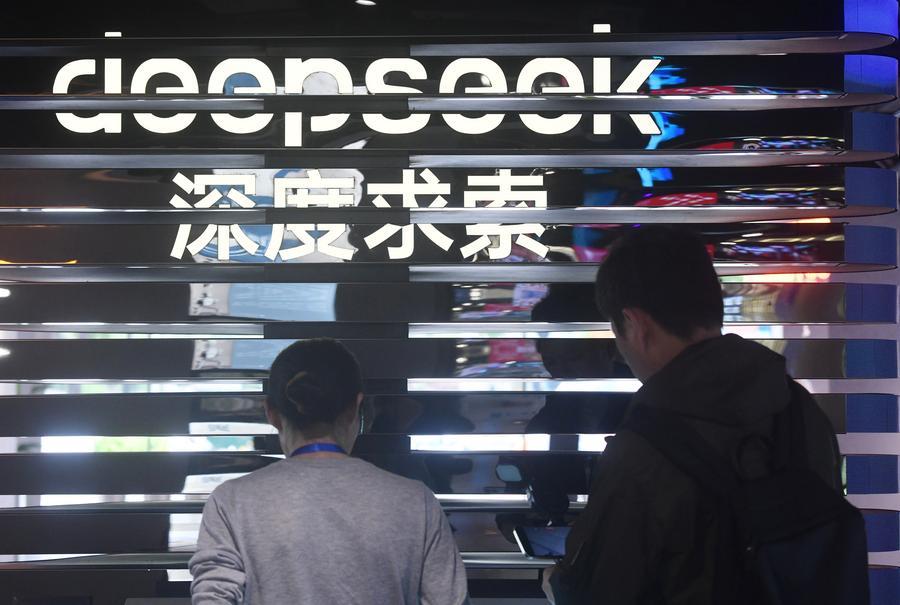
AI companion bots, a swiftly growing segment of the AI landscape, have become part of many people’s daily lives, but problems are beginning to surface.
These virtual companions can create deep emotional bonds, with young users seen as particularly vulnerable to overuse and retreat from real-world relationships.
In 2025, the China Youth and Children Research Center surveyed more than 8,500 minors across the country. The results showed that over 60 percent had used AI, while more than 20 percent said they “only wanted to chat with AI and did not want to talk with real people”.
While children and older adults may not use AI the most, they are more prone to developing emotional attachments to it because AI is always available, endlessly patient and unfailingly compliant, said Wang Zhechen, an associate researcher at the Department of Psychology, School of Social Development and Public Policy at Fudan University in Shanghai.
Experts warn that prolonged immersion in the conflict-free communication zone created by AI could weaken people’s ability to navigate real-world relationships, potentially leading to a broader decline in social connection.
To address this issue, the new rules explicitly prohibit AI systems from encouraging addictive use, requiring mandatory reminders after more than two hours of continuous use, pop-up interventions when signs of dependency are detected, and intervention mechanisms in cases of extreme emotional distress.
“When users begin to confuse virtual emotional connections with real-world relationships, systems should provide appropriate reminders: ‘This is a machine, not a real person,'” said Liu Xiaochun, an associate professor at the University of Chinese Academy of Social Sciences in Beijing.
She believes these users should be encouraged to spend more time interacting with people in the real world and talking with their friends and family.

To protect users’ interaction data, the document requires providers of AI-based interactive services to adopt measures such as data encryption and access controls, and prohibits them from sharing users’ interaction data with third parties without consent unless otherwise required by law.
It also stressed that users have rights over their interaction data, including the ability to copy or delete chat histories and other records of past interactions, safeguarding their legitimate interests.
While protecting users’ privacy and personal information, the regulations also call for the establishment of risk intervention mechanisms to prevent extreme behavior.
Zhang Jiyu, executive director of the Law and Technology Institute at Renmin University of China, said technical tools could help identify potential risks and enable timely intervention.
For general risks, AI systems could offer supportive responses, while in more serious cases, they could alert designated contacts. Such mechanisms, he said, could help provide stronger safeguards as they are adopted more widely.
China’s AI market has continued to expand, driven by broader adoption across industries. It was expected to surpass 1.2 trillion yuan ($177 billion) in 2025 and is tipped to exceed 1.8 trillion yuan by 2028, according to the latest research.
In recent years, China has strengthened AI legislation and established a multidimensional regulatory framework covering areas like data, algorithms and applications.
Chen Liang, dean of the School of Artificial Intelligence and Law at Southwest University of Political Science and Law, located in Chongqing municipality, said the new regulations provide an important opportunity to upgrade and transform the industry.
The rules will encourage companies to shift their focus from maximizing user immersion and engagement to developing healthier and more responsible human-AI interaction models, thereby helping channel rendustry’s orderly development, Chen noted
TRENDING
1
Asia’s first durian experience center opens in Kuala Lumpur2
Beijing court to hear LV’s case against China’s IP authority3
DSE sees record 24 top scorers, 16,000 meet university thresholds4
S. Korea president calls stock market ‘unstable’ after wild swings5
Yemen’s Houthis claim retaliatory missile, drone attack on Saudi airport
TOP
VISUAL NEWS
ALSO READ
More
US pays back $81b in tariffs after SC orderAsian shares slump on chipmaker drag, bonds cheer cooler inflationChinese shares open lower ThursdayS. Korea president calls stock market ‘unstable’ after wild swingsChina giving MNCs strategic forteShanghai gears up to sharpen BCI edgeAccor to double China hotel portfolioGuangxi floods hit jasmine sector hard

NEWS
Hong Kong
Nation
Asia
World
Business
Science
Sports
FOCUS
Life & Art
In-depth China
Quirky
Photo
Graphics
Data
Culture HK
Global Weekly
Eye on Asia
Special
From PR Newswire
OPINION
Editorials
Columnists
Joephy Chan
Bill Condon
David Cottam
Grenville Cross
Richard Cullen
Dong Yu
Michael Edesess
Wilson Lee Flores
Tom Fowdy
Fu Kin-chi
Henry Ho
Ho Lok-sang
Ken Ip
Regina Ip
Tony Kwok
Lau Siu-kai
Dominic Lee
Virginia Lee
Liu Ningrong
Christine Loh
James Ockenden
Quentin Parker
Tu Haiming
Xiao Ping
Roy Ying
GBA
GBA Guide
GBA Life
GBA in Figures
GBA Pulse
VIDEO
News
Asia Featured
CDHK In-Depth
China Daily DOCS
Drone and Phone
Girl City
Peak Talk
Tech Asia
The Gold
ePaper
Hong Kong Edition
Global Weekly
More
RoundtableCampus News Awards
Newsletter
Lifestyle Premium
COMPANY
About Us
Services & Products
Advertise on Site
Contact Us
Subscriptions
Join Us
Accessibility Statement
Privacy Policy
Follow Us
Download Our App
CHINAGLOBAL EDITION
Copyright 1995 – 2026. All rights reserved. The content (including but not limited to text, photo, multimedia information, etc) published in this site belongs to China Daily. Without written authorization from China Daily, such content shall not be republished or used in any form.
