

©
The profile of social activism in North Africa is changing. Young people in the region shifted away from demanding regime change after the thwarted hopes of the 2011 Arab uprisings and the 2019 Hirak movement in Algeria. Now, they tend to seek practical improvements in their social and economic conditions rather than wholesale political reform.
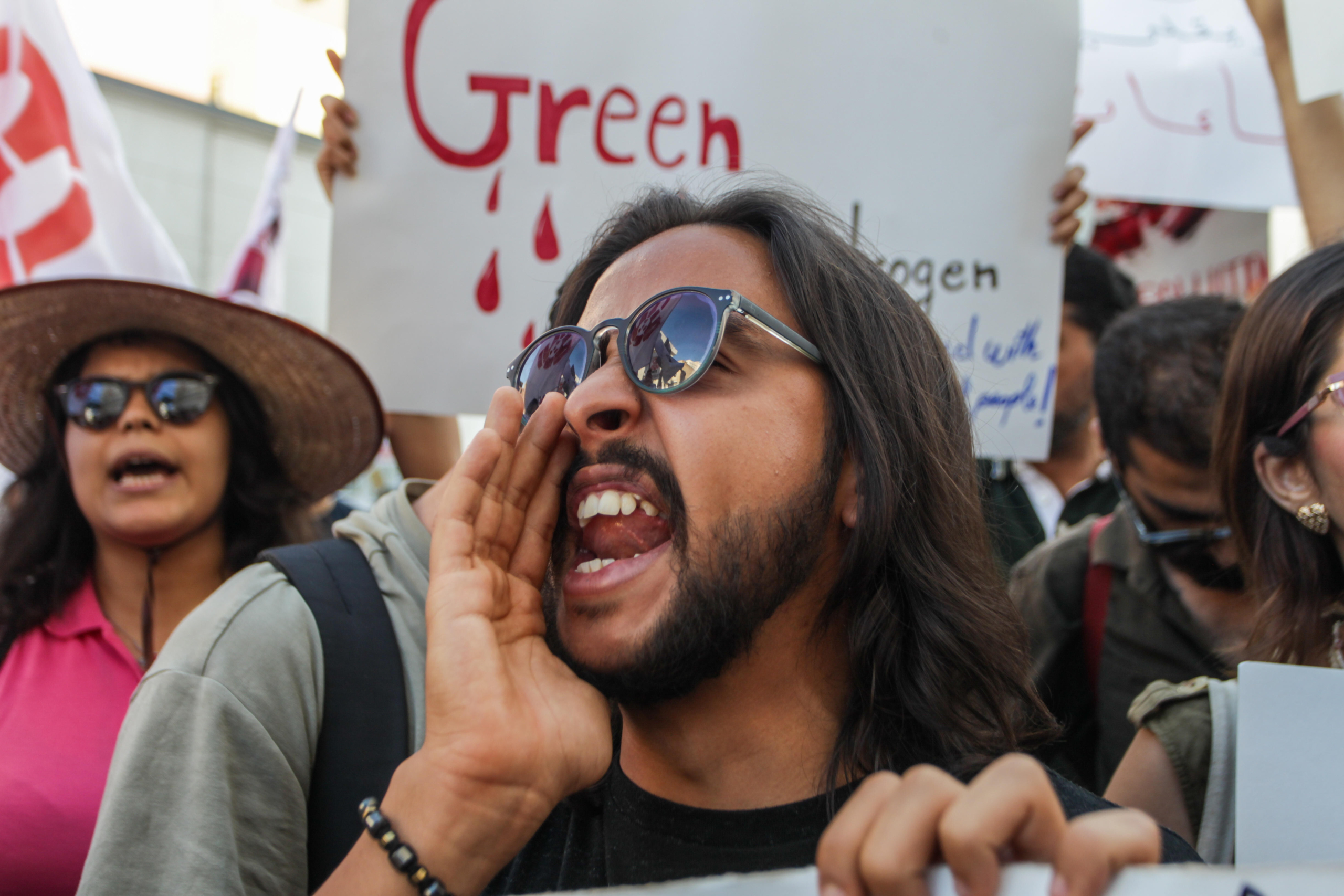
Many of these new social movements focus on environmental concerns, and increasingly on the impact of global warming. North Africa is among the regions in the world most affected by climate change. But its countries are also some of the most promising sites for renewable energy generation, given their abundant sunshine and proximity to the European market. Activists have targeted some renewables projects, testifying to a feeling that authorities are failing to ensure energy transitions are fair and meaningful.
These trends in activism in North Africa match a recent turn in European engagement with the region, away from support for political reform and towards socioeconomic issues. This includes cooperation on clean energy projects. But Europeans should bear in mind that cooperation with North African governments on projects that ignore local interests will fall short of the objective of promoting greater opportunity and long-term stability in the region. This underlines the importance of including local businesses and civil society representatives in initiatives from the very start.
The Arab uprisings and Hirak protests were driven in large part by social and economic concerns, and sought a political remedy by calling for a change of government. But hopes for better politics have since foundered across North Africa. The region’s protests and social movements now tend to focus on practical and often locally based demands for a more effective state and better services for communities. The 2025 Gen Z protests in Morocco, for example, began as a response to failings in maternity health care before swelling into wider calls for social justice. The shift to more issue-based activism reflects North Africans’ disappointment in past attempts at political reform as well as long-simmering social tensions. These include anger at poor governance and the strain rapid urbanisation puts on jobs and housing.
But climate change is also encroaching ever more on North Africans’ quality of life. Historically a water-scarce region, North Africa is now experiencing <a href="https://mei.edu/publication/managing-threats-food-security-water-and-agricultural-resilience-north-africa/” rel=”nofollow noopener” target=”_blank”>extreme temperatures, rising sea levels, drought and desertification. Once-fertile agricultural land is becoming barren, and flooding from extreme weather events exacerbates the problems for farmers and food supplies. Climate change is also contributing to power cuts and water shortages, as well as catastrophes from flash floods to wildfires. One opinion poll in 2024 showed that one in six people in North Africa had experienced harm from climate change in the previous two years (or knew somebody who had), and that 71% of North Africans saw it as a threat.
With governments often failing to implement policies to mitigate climate impacts, social movements have adopted an environmental focus. These movements sometimes blend protest with community self-help initiatives, and are often local rather than national. Their less explicitly political nature brings them a measure of tolerance by authorities, as does the fact that the movements often pursue environmental objectives that governments also embrace. But activists still face similar restrictions to all civil society movements in North Africa, at times drawing surveillance and repression.
Changing the environment
Such climate-related movements have sprung up across North Africa. In Morocco, a group of Tangier-based NGOs and unions halted a building development that would have involved deforestation, and they now publish an annual report on local environmental issues. Youth for Climate Tunisia trains young people to mobilise on climate issues and organises digital campaigns. The Egyptian group Greenish promotes climate education and capacity building for local communities. Algeria has several community-based groups that work on improving access to water and countering desertification.
Other groups focus on wider environmental concerns. Egypt’s VeryNile pioneered efforts to work with local fishers to collect and recycle plastic pollution from the Nile. In Tunisia, local protests against the impact of phosphate processing in Gabès snowballed after a series of toxic gas leaks in October 2025, becoming a mass movement that continues almost a year later.
But North African social movements also mobilise when green transitions disadvantage local communities and marginalised groups. As North African countries increasingly seek foreign investment in renewable energy projects, some communities worry that land and water resources will be diverted to benefit wealthy elites and foreign investors. In Tunisia, solar projects have aroused local opposition because they take land out of community use and reinforce regional inequalities. In Morocco, solar megaprojects such as the plant in Ouarzazate have prompted anger in nearby communities because of the amount of water they consume.
Changing European policy
One thing that unites these disparate movements is that activists seek concrete improvements in quality of life, as well as a bigger role in determining their countries’ futures. This aligns with an increasing sense in Europe that the best way for the EU and member states to promote rights and opportunity in North Africa is through a focus on socioeconomic development.
As the EU’s 2025 Pact for the Mediterranean showed, European policymakers aim to cooperate with North African partners on tangible initiatives that match local government priorities, including in green energy and water management. But the environment-focused social movements should remind European policymakers that working only with governments is not enough to ensure progress on economic and social rights, as I argued in an ECFR policy brief last year. The EU must frame its projects in a way that gives local populations as much agency as possible, by breaking down barriers for small businesses and including civil society in project design and planning.
The EU must also ensure that the projects it supports genuinely offer mutual benefit. In climate policy, the pact’s logic of “a partnership of equals” means European support for renewable energy projects including solar and wind power and the production of green hydrogen. Such projects would then supply clean energy for Europe and promote North African development as well as reduce local energy costs. In turn, greater opportunities and lower prices in the region could help promote the stability that European policymakers also seek.
But not all climate and environmental projects meet these goals—as the local criticisms show. To fulfil the promise of clean energy projects for both sides, Europeans must complement their investment in power generation with other measures to limit environmental trade-offs and to help benefits to flow to local communities. These should include infrastructure development and technology transfer to build up a local clean energy ecosystem. That is the best way for Europe to help ensure that the aspirations expressed in North African environmental movements are met.
The European Council on Foreign Relations does not take collective positions. ECFR publications only represent the views of their individual authors.
Author
Anthony Dworkin@AnthonyDworkin on X
Senior Policy Fellow

