

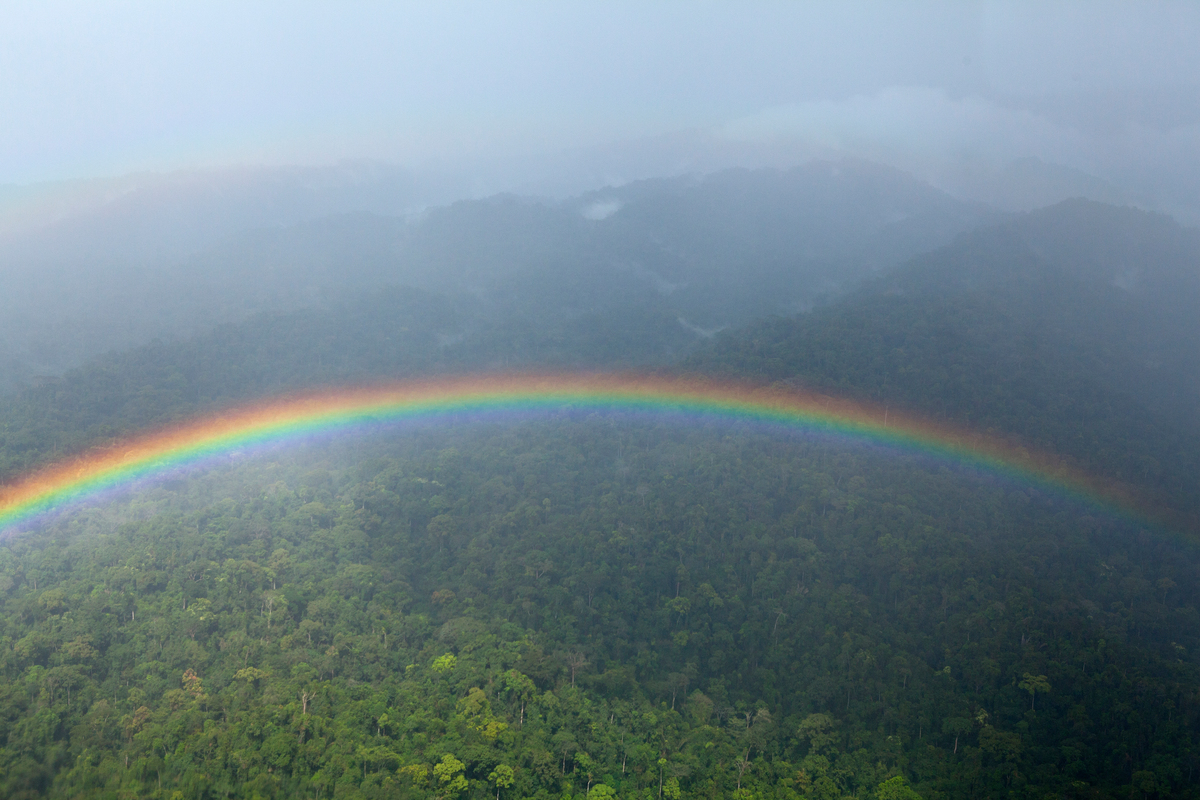
A new scientific study based on more than one million historical weather observations spanning 1908 to 2023 confirms a sustained warming trend in the Democratic Republic of the Congo (DRC), particularly during the 1961 – 1990 period. Greenpeace Africa calls on governments to strengthen forest protection, invest in climate research, and place communities at the heart of climate adaptation policies.
Kinshasa, 23 November 2026 – Greenpeace Africa is drawing attention to the findings of a new scientific study published on 12 October 2026 in the journal Earth System Dynamics, which reveals a persistent rise in temperatures and an increasing frequency of extremely hot days in the Democratic Republic of the Congo (DRC).
Entitled “From paper to proof: revealing Congo Basin warming through rescued climate archives,” the study, conducted by Derrick Muheki and fellow researchers, draws on more than one million historical weather observations from 37 meteorological stations across the DRC.
The findings reveal a median increase in daily maximum temperatures of 0.22°C per decade, equivalent to approximately 0.7°C over 30 years, alongside rising average and minimum temperatures across the historical records analysed. Even more concerning, the annual frequency of extremely hot days nearly doubled between the 1960s and the 1980s in the aggregated observations examined.
A new scientific warning for the Congo Basin
For Greenpeace Africa, these findings represent another strong evidence about the climate crisis unfolding in a region whose forests play a vital role in regulating the climate and preserving biodiversity.
As the Congo Basin continues to face mounting pressures from deforestation, expanding extractive activities, and ecosystem degradation, this new study reinforces the urgency for stronger environmental protection and climate adaptation policies.
Scientific evidence must drive political action
Beyond the observed climate trends, the study also highlights the importance of preserving and modernising climate research infrastructure in Central Africa.
Researchers digitised 9,885 historical weather records preserved at the National Institute for Agronomic Study and Research (INERA) in Yangambi, DRC.
“This initiative demonstrates that valuable scientific information already exists but often remains difficult to access and insufficiently used to inform public policies. For Greenpeace Africa, closing this knowledge gap is essential, alongside accelerating measures to protect ecosystems and vulnerable populations.” said Toussaint Molenge, Project lead for the Forest Campaign, at Greenpeace Africa.
Greenpeace Africa calls for five priority actions
In response to these findings, Greenpeace Africa calls on Congo Basin governments, regional institutions, and international partners to:
- Strengthen the protection of forests and sensitive ecosystems, particularly primary forests and peatlands, by restricting industrial activities that threaten their ecological integrity.
- Accelerate national climate adaptation policies, paying particular attention to communities exposed to extreme heat, heavy rainfall, and other climate-related risks.
- Invest in climate research and meteorological observation systems, including the modernisation of weather stations, digitisation of historical records, and production of accessible climate data.
- Guarantee direct and equitable access to climate finance for Indigenous Peoples, local communities, and organisations implementing locally led adaptation solutions.
- Strengthen regional cooperation and government accountability, ensuring that scientific evidence is effectively integrated into forest, climate, and development policies.
Climate Justice Must Be at the Heart of the Response
Greenpeace Africa reiterates that responses to the climate crisis must recognise the rights, knowledge, and essential role of Indigenous Peoples and local communities in protecting ecosystems.
Indigenous Peoples and local communities, whose livelihoods are closely connected to natural re
Greenpeace Africa calls on decision-makers to recognise forest protection not only as a conservation priority but also as an essential component of climate resilience and social justice.
Safeguarding the Congo Basin requires an integrated approach that combines forest conservation, reduced extractive pressures, sustainable economic alternatives, and stronger community resilience.
Ahead of upcoming international climate negotiations, Greenpeace Africa urges governments and financial partners to move beyond declarations of intent and adopt ambitious, measurable, and adequately funded measures.
The warming of the Congo Basin is now documented through decades of meteorological observations. Scientific evidence must translate into political decisions that match the scale of the challenge, protecting forests, communities, and future generations.
Contact:
Raphael Mavambu, Communications & Storytelling Manager, [email protected],
Greenpeace Africa
Notes to Editors
Scientific reference: Muheki, D., et al. (2026). From paper to proof: revealing Congo Basin warming through rescued climate archives. Earth System Dynamics, 17, 1455–1511.
DOI: https://doi.org/10.5194/esd-17-1455-2026
Want to see more from Greenpeace?

