


© picture alliance / Matrix Images | Matrix Images
Higher Demand and Unstable Supply in Re
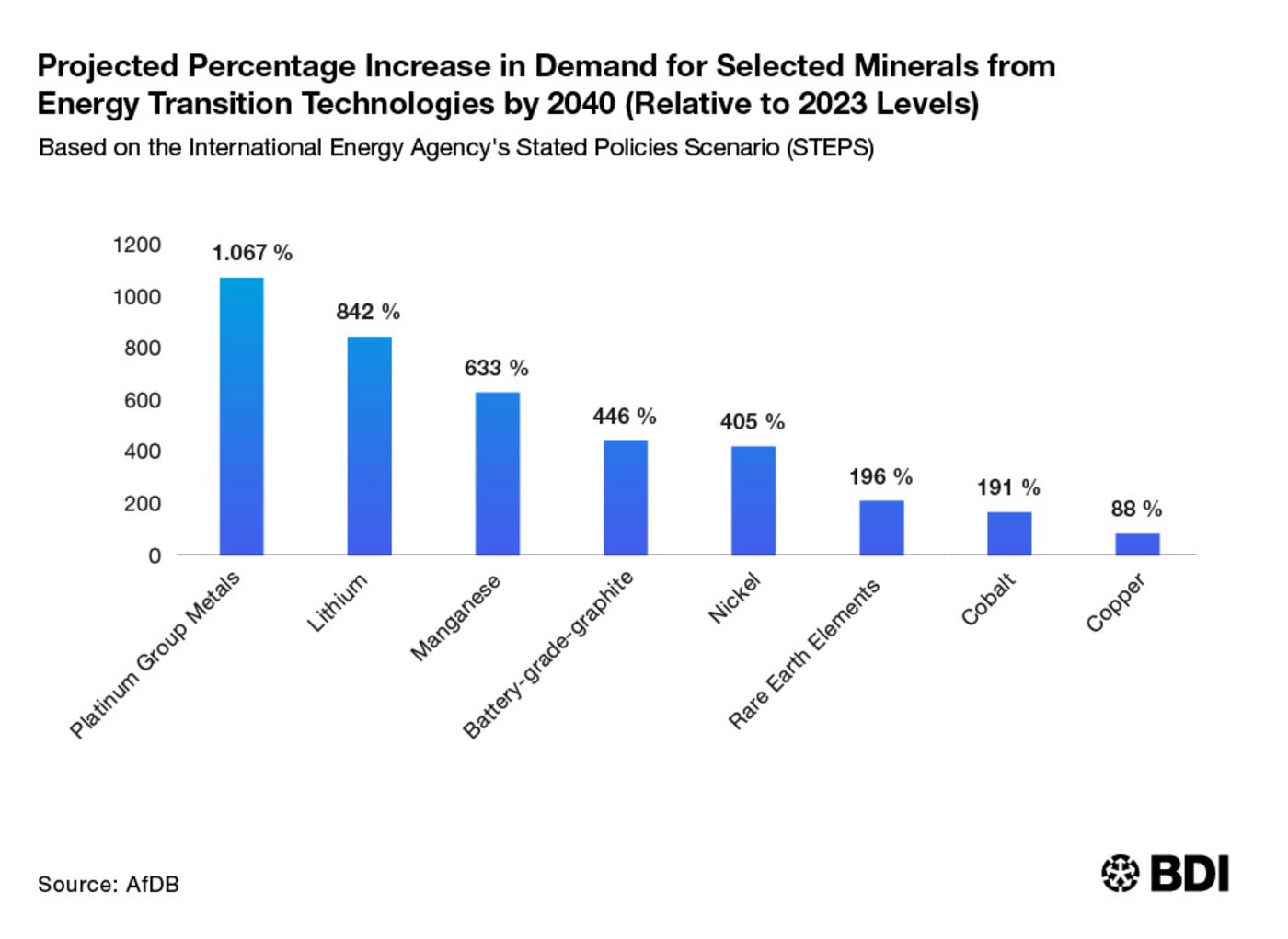
The security of raw material supplies has been increasingly at risk for some time now. Two developments in recent years have strained global raw material markets. First, the energy and mobility transitions, computing power for artificial intelligence, and the massive expansion of global defense capabilities are driving demand skyward, which must still be followed by the development of the associated mining and processing capacities.
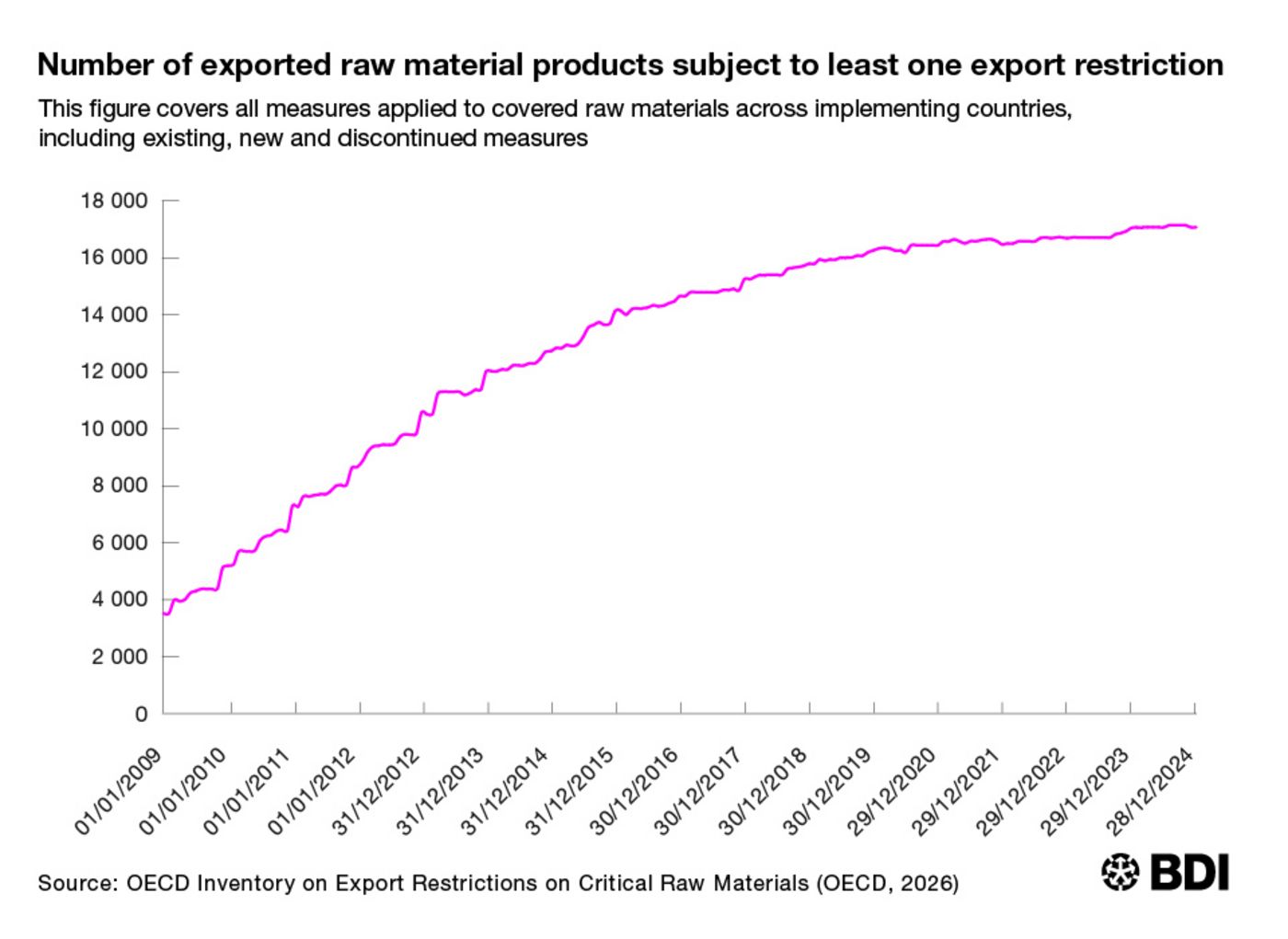
Secondly, the growing geopolitical nature of commodity markets increases the likelihood of supply chain disruptions, a risk further exacerbated by the concentration of processing capacity (in particular). The geopolitical dimension is reflected in the restriction of raw material exports to advance political and strategic interests. Since 2009, according to the OECD, the number of raw material products exported that are subject to at least one export restriction has more than quadrupled. This pressure, caused by concentrated risks in the supply chain, reached its peak in 2025, when China restricted exports of heavy rare earths and related permanent magnets, which caused significant stress to industrialized countries all over the world.
Diversification as a Strategic Imperative for European Industry
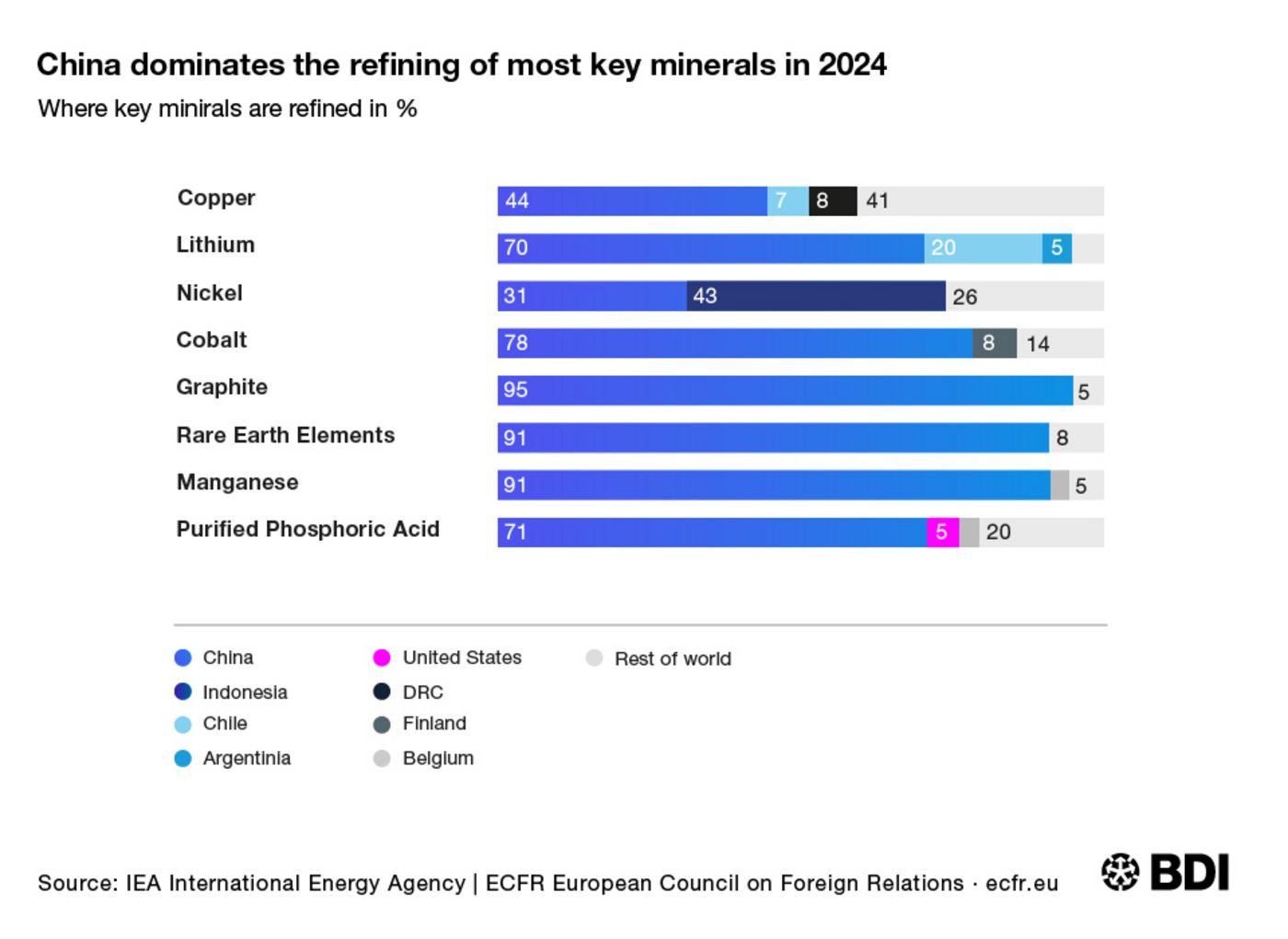
To prevent supply chain disruptions for raw materials, diversifying raw material sources is one of the most important elements for European industry. So far, so simple – in theory. For companies, however, implementing a diversification strategy is challenging in practice, since a) they must identify alternative sources that actually reduce risk in their supply chain, and b) these alternatives must meet both price and quality criteria. In raw material value chains that are highly concentrated in processing and refining, this means that alternative sources must be established. This is especially the case, for example, with the processing of rare earths, graphite, copper, manganese, cobalt, lithium, and other raw materials, for which China accounts for a large portion of global production within its own borders.
Even though establishing alternative value chains is both capital- and time-intensive, this step remains an absolute necessity. In 2024, BDI and Roland Berger calculated that the macroeconomic costs to Germany in the event of a Chinese export ban on lithium and lithium-containing products would amount to 115 billion euros, thus, not diversifying will eventually be the more expensive scenario. Similar to other countries like Japan and recently also the US, the EU and its member states therefore adapted their raw materials-related policies and instruments (like the CRMA or the German Raw Materials Fund) to invest in mining, processing and recycling capacities as well as innovation to support and de-risk companies’ diversification efforts.
Africa’s Own Ambitions
This is why Europe is turning its attention more strongly towards Africa: The continent is home to approximately 30 percent of the reserves of critical raw materials, including strategically important resources such as copper, cobalt, platinum group metals, manganese, bauxite, and lithium. At the same time, African countries rich in raw materials are implementing industrial policy measures, such as export restrictions on unprocessed minerals and local-content requirements, to gain a larger domestic share of the value added. Rather than remaining exporters of raw commodities, governments seek to increase fiscal revenues, strengthen foreign-exchange earnings, create skilled employment, and foster industrial diversification through downstream activities such as refining, smelting, battery component production and manufacturing.
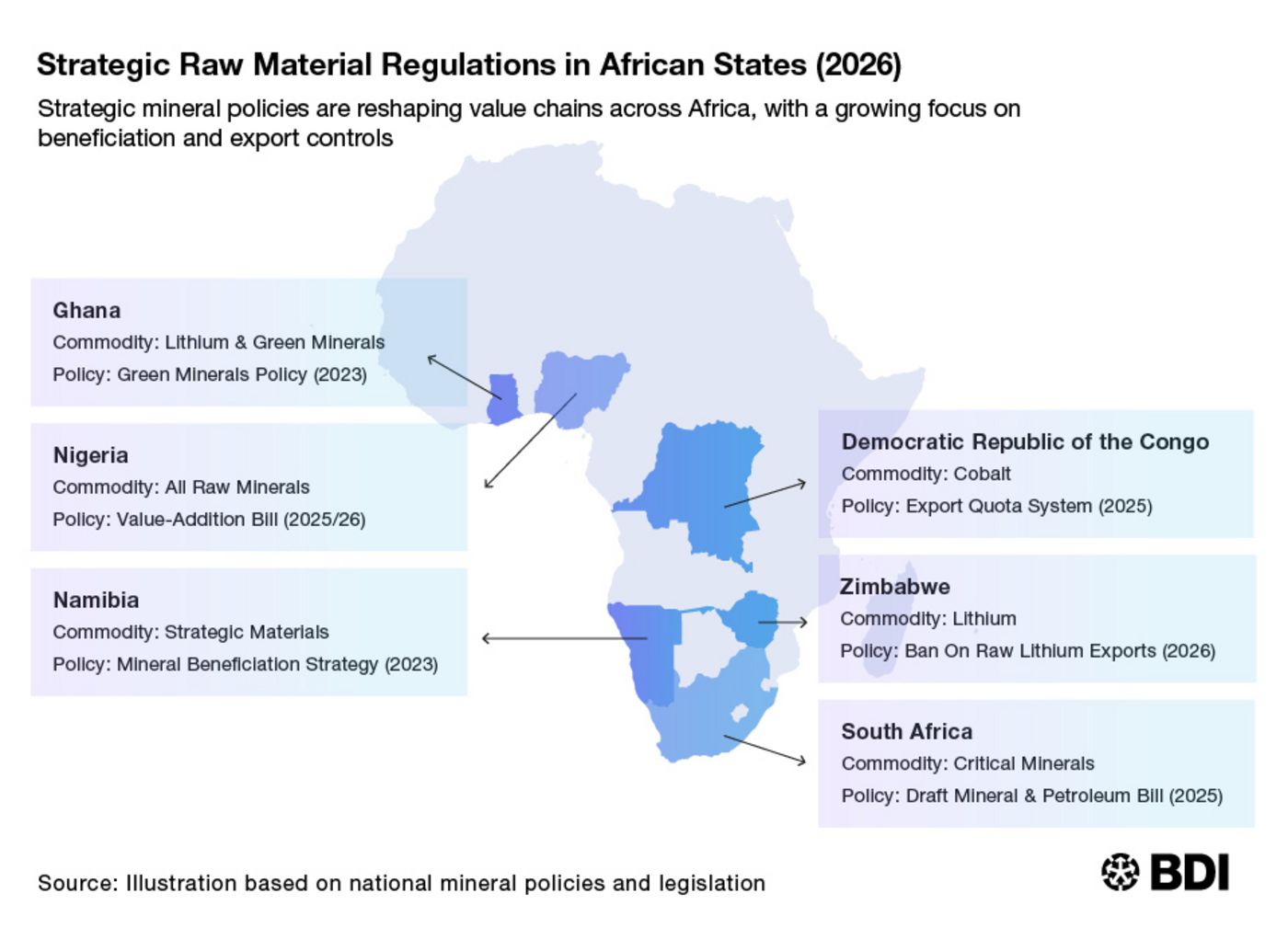
Since local processing goes hand in hand with knowledge and technology transfer, infrastructure development, and the adaptation of legal frameworks for the needs of industrial value creation, it can serve as a facilitator for the overall industrialization of African countries.
Mixed Feelings About African Industrial Policy, Yet Great Potential
European industry is watching the implementation of industrial policy instruments in African countries with mixed feelings. On the one hand, market interventions, such as export controls or bans, can lead to supply shortages and additional bottlenecks in raw materials markets. Furthermore, as African countries build processing capacities and refineries, they are increasingly entering direct competition with European raw materials companies.
On the other hand, the industrial ambitions of African producer countries need not be at odds with Europe’s diversification objectives. In fact, both sides increasingly share an interest in reducing the concentration risks that characterize today’s critical raw material supply chains. While African governments seek greater domestic value creation, European companies are looking for alternative sources of processing and refining capacity beyond existing market hubs. The development of commercially viable processing industries in Africa can therefore create a degree of strategic alignment: African countries expand their industrial base and economic participation in global value chains, while European industry gains access to more diversified and resilient supply networks. This convergence of interests also creates new business opportunities. The construction of refineries, smelters, battery-material plants and related industrial facilities requires advanced engineering, industrial equipment, digital solutions, automation technologies and technical expertise. European companies possess longstanding capabilities across these segments and can contribute machinery, technical know-how, training and operational expertise. Such cooperation can improve the competitiveness of African downstream industries while simultaneously creating long-term commercial partnerships and reducing supply chain concentration risks.
From Re
The increasingly shared interest in diversification and industrialization is already reflected in a growing number of partnership models between Europe and Africa. Rather than focusing exclusively on the extraction of raw materials, cooperation is gradually expanding towards the development of entire industrial ecosystems.
One example is the emergence of strategic raw materials partnerships and investment frameworks that seek to link European demand for critical minerals with African industrial development ambitions. Initiatives such as the EU’s Global Gateway strategy increasingly emphasize infrastructure, energy generation, transport corridors, skills development and industrial processing capacities alongside mining projects. Such investments can help address some of the structural bottlenecks that have historically limited value addition in resource-rich economies.
At the commercial level, long-term offtake agreements, joint ventures, and project financing structures can help reconcile the interests of both sides. For European companies, such arrangements improve supply security and facilitate diversification. For African governments, they can reduce investment risks and support the development of domestic processing industries. While not every project will prove commercially viable, these partnership models offer a more balanced framework for cooperation than traditional resource-export relationships.
The Reality Check: Can Africa Deliver Supply Chain Diversification?
Despite the undisputed potential of such an approach, many challenges remain. One should therefore not underestimate the difficulty of building competitive processing industries for critical raw materials. The establishment of refineries, smelters or precursor-material plants typically takes longer than a single legislative cycle. Industrial capabilities, supplier networks, regulatory frameworks and skilled labor pools are inevitably built up gradually over many years. Experiences from established refining locations in Asia demonstrate that industrial ecosystems emerge over decades rather than years.
At the same time, this industrial expansion is a very capital-intensive and risky endeavor. Modern mineral processing facilities require billions of euros in upfront capital expenditure, long planning horizons and a high degree of investor confidence.
Perhaps the most important challenge concerns infrastructure. Competitive mineral processing requires reliable access to energy, transport corridors and logistics networks. At the same time, many African governments face limited fiscal space and therefore depend on foreign investors to finance large-scale industrial projects. This creates an inherent tension between the desire for greater national control over value chains and the need to attract international capital. Whether such a balancing act can be achieved depends on the bargaining power that African countries bring to the table. That, in turn, depends on whether their own natural resource reserves are large enough or whether the ore content is high enough to provide strong incentives for foreign investors to invest.
Even if these challenges are overcome, African refiners and smelters must still enter markets that are already highly consolidated and characterized by significant economies of scale. This is particularly evident in copper processing. Over the past decade, smelting capacity – especially in China – has expanded much faster than the availability of copper concentrate. As a result, competition for feedstock has intensified dramatically. The most visible indicator of this development is the collapse of treatment and refining charges (TC/RCs), a key revenue source for smelters. In 2025, spot TC/RCs fell into negative territory. In practical terms, this means that smelters were effectively paying miners for access to concentrate rather than being paid for processing it.
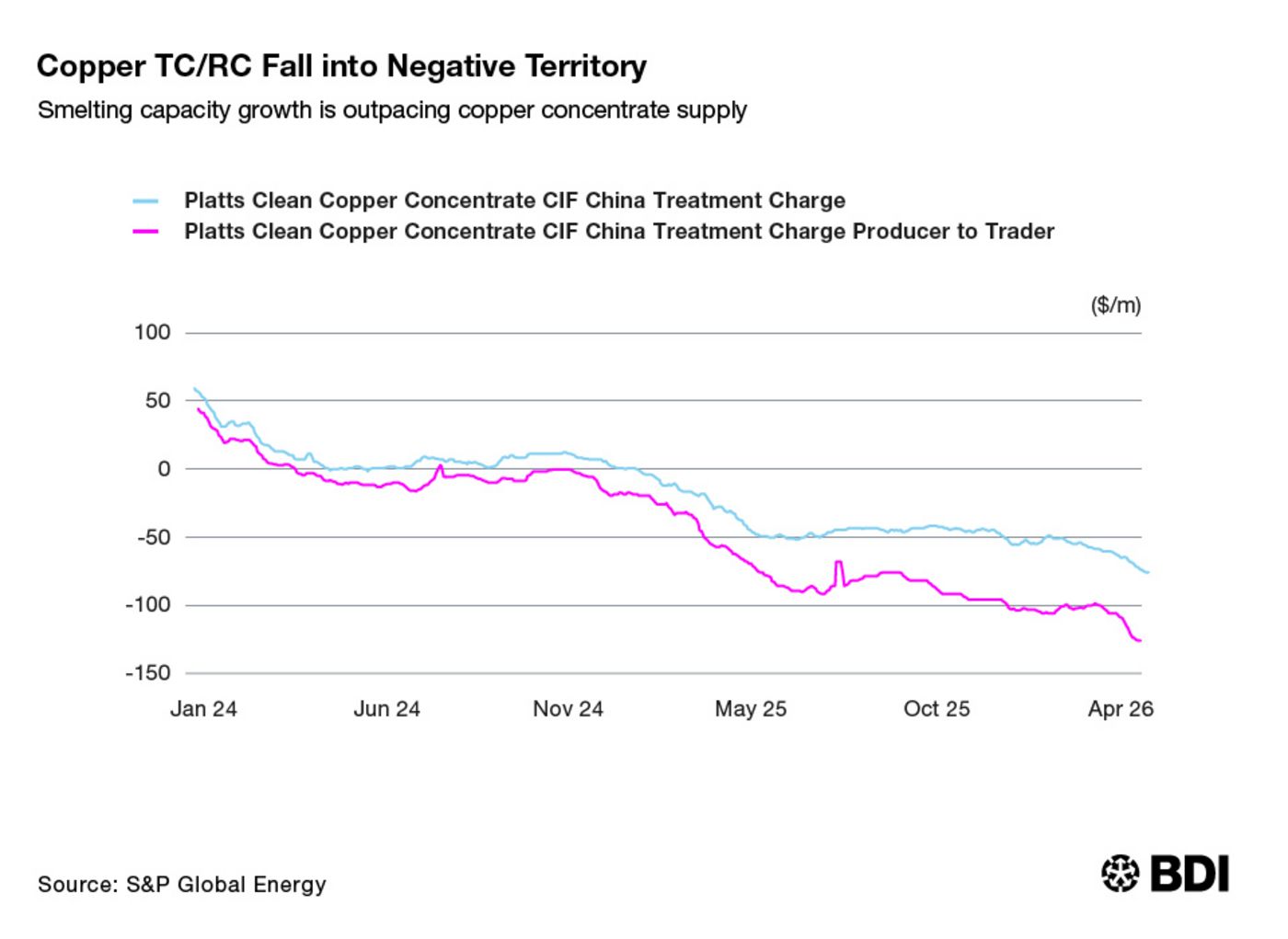
For countries seeking to establish new smelters, these developments constitute a significant warning signal. Entering an industry in which established operators are already struggling with profitability substantially increases commercial risks for new market participants. Moreover, incumbent refining hubs benefit from integrated supply chains, large domestic markets, extensive technical expertise and strong economies of scale that are difficult to replicate. The challenge for African countries is therefore not merely to build processing facilities, but to ensure that these facilities can – in the long run – operate competitively and profitably in highly contested global markets. Ultimately, the prices at which African producers can offer processed and refined raw materials determine whether European companies are willing to pay a certain premium in order to diversify their sources (to a certain extent) away from Chinese suppliers.
Despite these constraints, the strategic logic underpinning closer European-African cooperation on critical raw materials is likely to persist. The status quo entails considerable risks for both sides: European industry remains exposed to highly concentrated supply chains, while many African economies continue to capture only a limited share of the value generated from their natural re
But Africa and Europe still have a long way to go. Neither diversification nor industrialization can be achieved overnight. Building alternative raw material value chains takes time and ties up capital.
And yet, given the risks that maintaining the status quo poses for European industry and the limited returns that African countries derive from the global raw materials sector, pursuing a stronger partnership between both continents is in mutual interest. The great potential for European-African Raw Materials Partnerships lies in partnerships that combine Africa’s resource endowment with European technology, capital and industrial expertise. Where commercially viable conditions exist, investments in processing capacity, industrial infrastructure, skills development and integrated value chains can simultaneously strengthen Europe’s supply security and support Africa’s industrial ambitions. In this sense, the often-cited “partnership among equals” is not a political commitment, but rather an economic imperative for reaching the industrial policy goals of both sides.
Opinions expressed reflect the views of authors, not necessarily those of the organisations partnering in the project, The Future of African-European Relations.
Jonathan Kaupenjohann is the Sub-Saharan Africa expert at the Federation of German Industries (BDI).
The Future of African-European Relations examines how the two regions can build stronger partnerships in an era of geopolitical fragmentation, economic competition and changing global power dynamics. It is a collaboration between the African Futures & Innovation Programme at the Institute for Security Studies (ISS), the Federation of German Industries (BDI), the Hanns Seidel Foundation and the Megatrends Afrika consortium, comprising the German Institute for International and Security Affairs (SWP), the German Institute of Development and Sustainability (IDOS) and the Kiel Institute for the World Economy. Drawing on the expertise, research and analytical frameworks of the participating institutions, the project explores how different global futures could shape trade, investment, development cooperation and shared prosperity between Africa and Europe – and it aims to develop policy recommendations for different stakeholders.
