

[ad_1]
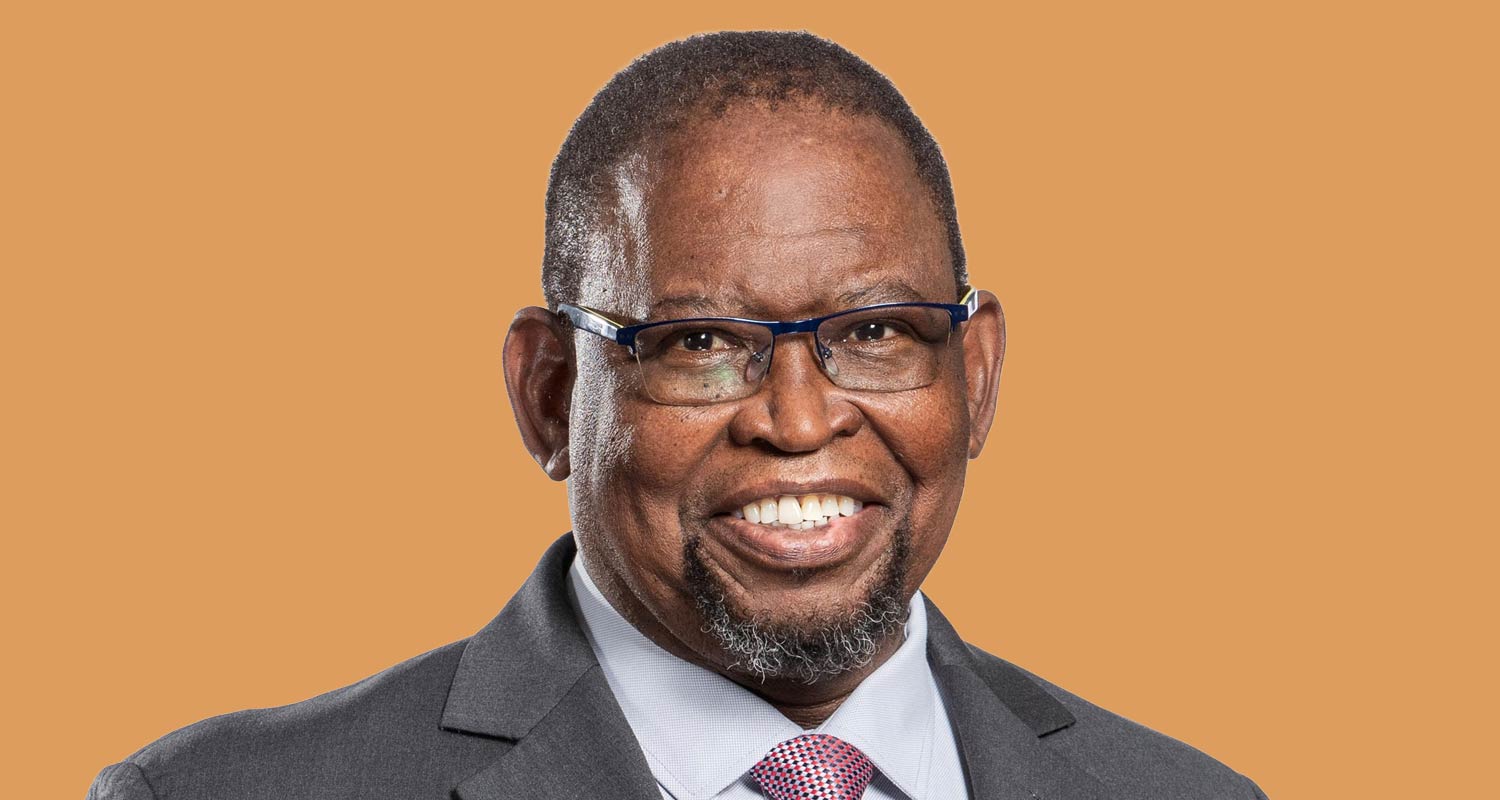
Finance minister Enoch Godongwana has been urged to reduce taxes on electric cars in Wednesday’s budget speech and to deliver the policy clarity the sector has waited two years for.
The taxes make electric cars more expensive than petrol vehicles, while a lack of policy around new-energy vehicles is slowing adoption and pushing investment in manufacturing to rival markets, including Morocco.
The industry wants the minister to cut the ad valorem tax on EVs, align import duties with those on petrol and diesel cars, and provide direct support for buyers.
An ad valorem tax is a luxury levy imposed on a vehicle’s declared value. Imported EVs currently face a 25% duty, while petrol and diesel cars attract duties of 18%.
“If I had to summarise it in two words, it would be ‘ad valorem’, because the landed cost of new-energy vehicles is, on average, significantly higher than that of equivalent internal combustion engine vehicles. The ad valorem tax exacerbates an already uneven playing field,” said Dex Machida, head of automotive consulting at KPMG South Africa.
In February 2024, Godongwana announced that manufacturers producing electric or hydrogen vehicles locally could claim up to 150% of qualifying investment spending in the first year. That incentive takes effect on 1 March 2026.
The core problem
No consumer-facing support has followed. The industry says the gap between the manufacturing incentive and the taxes buyers face is the core problem government must fix.
“You cannot incentivise EV production on one hand and penalise EV adoption on the other. Without urgent tax reform and infrastructure funding, South Africa risks constraining domestic EV demand at precisely the moment it is trying to attract EV investment,” said Joubert Roux, co-founder and chairman of Charge (also known as Zero Carbon Charge), the company deploying off-grid EV charging stations on South Africa’s national highways.
Read: South Africa’s new car market roared back to life in 2025, with NEVs gaining ground
South Africa sold fewer than 3 500 electric vehicles in 2025 in a total new vehicle market of nearly 597 000 units, representing less than 1% of all new car sales. Hybrid and electric passenger vehicle sales rose 8.1% year on year in the first 10 months of 2025, reaching 13 358 units after a 105% surge in 2024.
KPMG South Africa said the most effective tool Godongwana has to grow the EV market is tax relief that directly reduces the price buyers pay.

“Any incentive government considers must ultimately stimulate demand for new-energy vehicles, because many of the challenges South Africa faces are resolved only once scale is achieved,” said KPMG’s Machida.
Zero Carbon Charge wants Godongwana to help fund the roll-out of public charging infrastructure in South Africa, too. It wants the budget to confirm the tax treatment of EV charging equipment, allow accelerated write-offs for battery storage assets and open access to long-term finance through development finance institutions.
“Demand is growing, but it will stall if drivers do not see charging stations where they need them. Without a visible, reliable network, especially along major highways and freight corridors, consumers will lack the confidence to buy electric vehicles,” said Roux.
Charge operates a fully off-grid, solar-powered fast-charging site in Wolmaransstad and is expanding along the N3 corridor with a R100-million investment from the Development Bank of Southern Africa. “Government does not need to build the network, but it must create the conditions for the private sector to scale it,” said Roux.
Machida, meanwhile, said the industry’s biggest concern is not any single tax but rather the absence of a stable, predictable policy framework that investors can plan around.
“The most important lever available to South Africa may not be any single policy intervention but rather long-term policy certainty. Capital naturally gravitates towards environments that offer stability and predictability,” he said.
Consistent policy
Morocco overtook South Africa as Africa’s largest vehicle producer in 2024, manufacturing 560 000 vehicles against South Africa’s 350 000 after drawing more than US$10-billion in EV investment through consistent tax policy and targeted incentives.
Read: BYD supercharges South Africa’s electric future
“Markets perceived to provide consistent, well-signalled policy frameworks are better positioned to attract long-term investment and support re-industrialisation. This is essential if the country is to position itself as a competitive manufacturing hub capable of servicing the broader African automotive market,” said Machida. – © 2026 NewsCentral Media
Get breaking news from TechCentral on WhatsApp. Sign up here.
[ad_2]
Source link
